BRICS Currency News: Is Trade Shifting From the Dollar?

BRICS Currency News: Could the Dollar Face a Global Shake-Up?
NEW DELHI — The 18th BRICS Summit is scheduled for September 12-13, 2026, in New Delhi, under India's chairship.
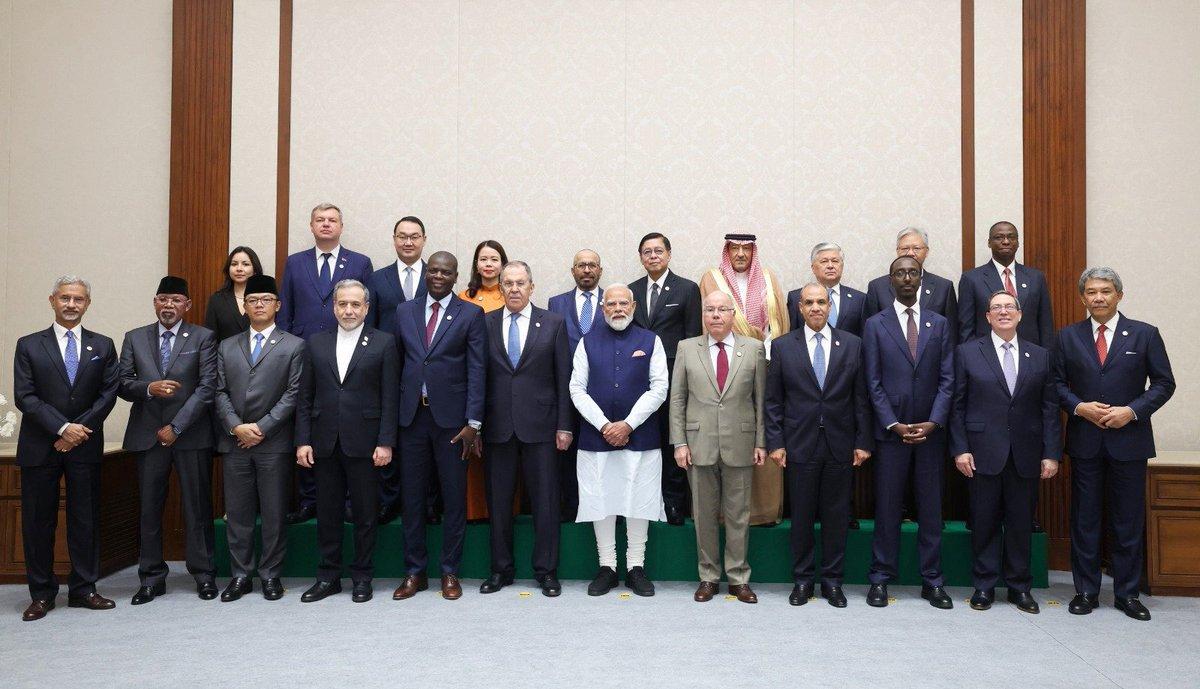
This round of BRICS currency news centers on one question: is global trade quietly shifting away from the US dollar and Europe and toward Asia instead? Here is what each member country has said, why the meeting matters for global markets, and whether it can even go smoothly.
What's Actually on the Table
The bloc is not launching a single shared unit to replace the greenback. The plan on the table is narrower: linking each country's own payment systems together so trade can settle directly in national currencies instead of routing through the dollar every time.
No common shared coin for the bloc is being proposed.
The goal is direct settlement, for example, India paying Russia in rupees or rubles instead of dollars.
Analysts describe the shift as slow and uneven, not one dramatic event.
Source: Official India 2026 summit
Country-by-Country: Where Each Member Stands
Country | Position | Source |
India (Chair) | Focused on digital finance and Global South cooperation, officials say there is no policy to replace the greenback | BRICS India 2026 |
Russia | Pushing hardest for independent payment rails, citing risk from Western-controlled infrastructure | Russian Ministry of Foreign Affairs |
China | Coordinating quietly through security and diplomatic meetings; favors gradual yuan internationalization over a shared alternative | China's Ministry of Foreign Affairs |
South Africa | Frames this as broader economic reform, not a currency confrontation | The Presidency of South Africa |
Brazil | Historically supportive of local-currency trade, but quiet on record in 2026 so far | — |
Iran | Most aggressive push: proposed a dedicated BRICS financial corridor and full NDB membership | Iran's government account |
India: Hosting, But Playing It Cautious
As chair, India has centered its public messaging on digital finance, development finance, and Global South cooperation, most visibly through a finance think-tank conference.
India's own officials have gone further than any other founding member in ruling this out, stating plainly there is no policy to move away from the greenback as the world's reserve asset.
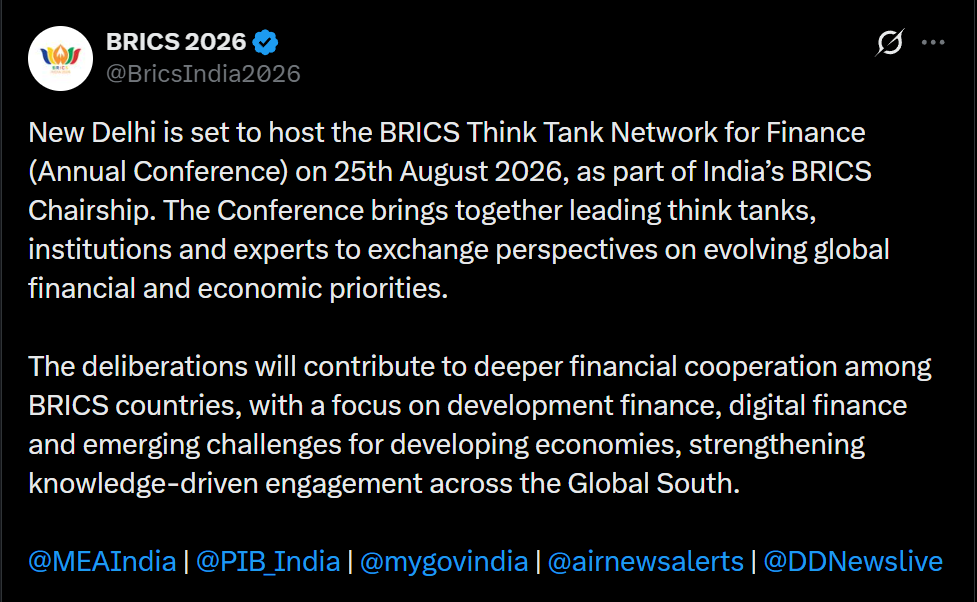
Source: Brics India 2026
Russia: The Loudest Voice for Independent Payment Systems
Russia's language centers on building a multipolar world and expanding the bloc's role, tied to its participation in the foreign ministers' meeting.
Separately, Russian leadership has flagged the risks of depending on Western-controlled payment infrastructure and reserve assets, a stance shaped directly by sanctions since 2022.
China: Coordinating Quietly, Committing to Little Publicly
China's involvement has stayed procedural, participating in coordination meetings such as the bloc's national security advisors' meeting, rather than making bold statements on monetary policy.
Beijing tends to favor internationalizing the yuan gradually rather than backing a shared alternative.
South Africa: Reform Framing, Not a Currency Fight
South Africa's president has spoken about economic cooperation and reforming the global economic system broadly, rather than framing this specifically as a move against the greenback.
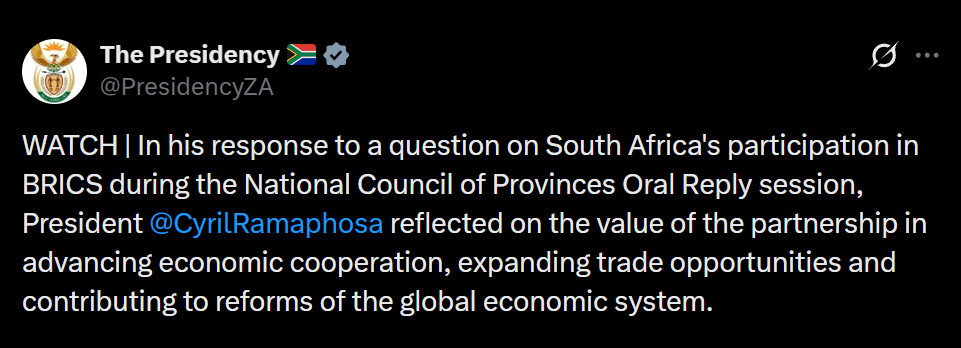
Source: The Presidency of South Africa
Brazil: Quiet on the Record Lately
Brazil has generally supported local-currency trade arrangements in the past, but recent 2026-specific public statements on this exact topic have been limited, a notable silence next to Russia and Iran's vocal positioning.
Iran: Pushing the Hardest, By Far
Iran's central bank governor, speaking at a BRICS finance meeting in Jaipur in August 2026, proposed a dedicated financial corridor for the bloc, called for interconnecting national payment systems, pushed for greater use of national currencies over the greenback, and requested full membership in the New Development Bank.
Technical and legal groundwork is reportedly already underway.
Years of sanctions and ongoing Iran-US tensions, including the broader Iran-US war The USA's dynamic has made Iran the most motivated member of the bloc to build payment systems independent of US-controlled infrastructure.
Egypt, Ethiopia, and the UAE have attended related meetings but made no comparably direct statements.
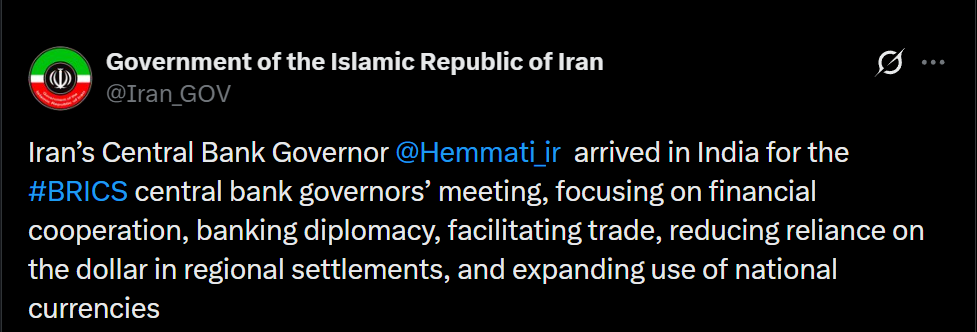
Source: Iran's government account
The United States: Notably Silent So Far
US government accounts have not posted anything specifically addressing the 2026 summit's currency and payments discussion.
The White House, State Department, and Treasury have stayed active on other topics, including Iran-related sanctions.
Washington's clearest prior signal came through tariff threats against countries seen as working to weaken the greenback's role, not direct commentary on this summit.
The absence of a fresh statement may indicate the US is waiting to see how much of this is actually built before responding.
Why This Meeting Matters for Global Markets
This BRICS currency news story carries weight beyond diplomacy for three reasons:
Members of the bloc together represent a large and growing share of global trade, so even incremental settlement shifts move real money away from greenback-clearing banks over time.
The summit lands amid sanctions, tariff threats, and regional conflicts, all pushing countries toward greater financial independence.
Whatever is agreed on, or fails to be agreed on, on payment infrastructure will influence whether other emerging economies outside the bloc build similar workarounds.
For markets, the signal to watch isn't a monetary announcement; it's whether payment-linking systems move from pilot programs into daily use.
Will the Summit Even Go Smoothly?
That's the part of this BRICS currency news story that remains genuinely uncertain.
China and India carry their own rivalries and border tensions.
Russia's sanctions position and Iran's confrontational stance with the West sit uneasily next to India's cautious, greenback-friendly public position.
An earlier preparatory meeting reportedly struggled to produce a fully unified statement due to disagreements over unrelated conflicts.
Expect modest, real progress on payment systems rather than one unified breakthrough all ten members fully agree on.
What This Could Mean for the Dollar, the Euro, and Trade Flows
Not overnight, but a slow shift is realistic: a growing share of trade between member nations settling directly in national currencies, sidestepping the greenback and, at times, the euro, for that specific transaction.
That differs sharply from the dollar losing its role as the world's main reserve asset, a far bigger and slower process.
A quieter technology angle is worth watching too. Some payment systems under discussion lean on digital currency and blockchain-style settlement tools, including central bank digital assets designed to link across borders.
Cryptocurrency-adjacent technology keeps surfacing in how these systems are being built, even though the summit itself isn't a crypto event.
The bigger open question is where trade activity concentrates next. More trade among member nations routing through Asian financial centers and national settlement systems, instead of greenback-clearing banks based in the US or Europe, would mark a real shift in where global trade "lives," even without one dramatic currency event to point to.
Conclusion
This BRICS currency news story ends without a clean resolution. Nobody serious is proposing a single shared unit to replace the greenback.
But the push to settle trade in national currencies is real and moving from talk to technical work, led hardest by Iran and backed cautiously by Russia and China, while India keeps its host role notably measured.
Whether the summit runs smoothly, and whether this genuinely pulls trade activity toward Asia and away from the US and Europe, are the two stories to watch out of New Delhi on September 12-13.
Disclaimer
This content is for informational purposes only and is not financial, investment, legal, or tax advice. Cryptocurrency markets are volatile and risky; conduct your own research and consult a qualified professional before making decisions
Also read:









