Crypto ATM Fraud Warning: CFTC Flags Rising 2026 Scam Losses

Crypto ATM Scams Surge: CFTC Warning, Losses, and Rules in 2026
Crypto ATM scam losses jumped to more than $388 million in 2025, based on FBI complaint data, nearly double the $247 million reported the year before. That number sits at the center of a fresh advisory from the Commodity Futures Trading Commission, issued August 27, 2026, warning the public to slow down before feeding cash into one of these machines.
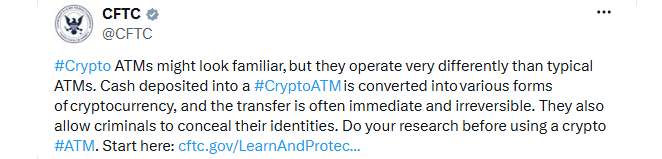
Source: Official Announcement
In crypto news today, this warning stands out because it targets a corner of the market most people walk past without a second thought: the kiosk sitting inside a gas station or corner store.
Crypto ATM 2026 Update: What The New CFTC Warning Actually Says Today
The CFTC Crypto ATM advisory draws a clear line between a crypto ATM and a regular bank machine. Cash dropped into a cryptocurrency machine gets converted into digital coins right away, and the transfer moves on the blockchain almost instantly.
Once that happens, it generally cannot be pulled back. The agency also flagged a second concern: these kiosks can let someone hide who they really are on the receiving end, which is exactly why scammers favor them.
Major Highlights of This Crypto ATM News Today
Cash-to-crypto transfers are immediate and irreversible
The setup can let someone hide their identity on the receiving end
FBI-reported cryptocurrency ATMs scam losses: $247 million in 2024, over $388 million in 2025
More than 13,400 related complaints filed in 2025 alone
Crypto ATMs 2026: How They Work and Their Features in Everyday Life
A crypto ATM, sometimes called a Bitcoin ATM, is a kiosk that turns cash into digital currency, mainly Bitcoin, though some handle coins like Ethereum too. The very first one opened on October 29, 2013, at a coffee shop in Vancouver, Canada.
A US version followed a few months later in New Mexico. From there, the machines spread quickly into gas stations, malls, and convenience stores across the country. How cryptocurrency ATMs work and what they offer:
A user scans a QR code linked to a digital wallet
Cash goes into the machine
Coins land in the wallet within minutes, sent over the blockchain
Some machines only sell cryptocurrencies; two-way models also buy it back for cash
No bank account is needed, which appeals to people without easy banking access
Transactions are fast, often done in under five minutes
Privacy is somewhat higher than a fully verified online exchange, though ID checks have grown stricter over time
Why Crypto ATM Scams And Fraud Losses Keep Rising: Trends in 2026
Fraud did not rise on its own. Scammers posing as government agents, tech support staff, or online romantic partners talk victims into pulling cash from the bank and feeding it straight into a kiosk. Once the machine sends the coins, the funds land in the scammer's wallet and cannot be recovered. A few factors driving the trend:
Adults over 60 make up a disproportionate share of victims
Median losses land near $10,000 per case
High fees, often 5% to 20% above market rate, mask the true cost until it is too late
Machine counts briefly hit close to 39,000 worldwide in early 2026, giving scammers wide geographic reach before the network began shrinking
What Comes Next For Crypto ATM Rules And Wider Industry Oversight
Regulation is tightening fast. Indiana became the first state to ban cryptocurrency ATMs outright in early 2026, and Tennessee, Minnesota, and Vermont followed with their own restrictions.
Other states are adding transaction caps, fee limits, and stricter ID checks instead of full bans.
The network itself has also contracted sharply, dropping from near 39,000 machines into the mid-to-high 20,000s after Bitcoin Depot, the largest US operator, filed for Chapter 11 bankruptcy in May 2026 and pulled close to 9,500 machines offline.
Between the CFTC's fresh warning and that bankruptcy fallout, tighter federal guidance and more state-level bans look likely over the coming months, while online exchanges keep gaining ground as the cheaper, more common way most people buy digital asset.
Disclaimer: This article is for informational purposes only and does not constitute financial or investment advice. Cryptocurrency markets carry significant risk. Always do your own research before making any investment decisions.









