XRP ETFs Maintain Inflows as $1.8B Boosts XRP’s $2 Target

XRP ETFs Maintain Inflows as Institutional Demand Builds Toward $2
XRP opened the new month in the green, trading near $1.38 and up about 2.1% over the past 24 hours.
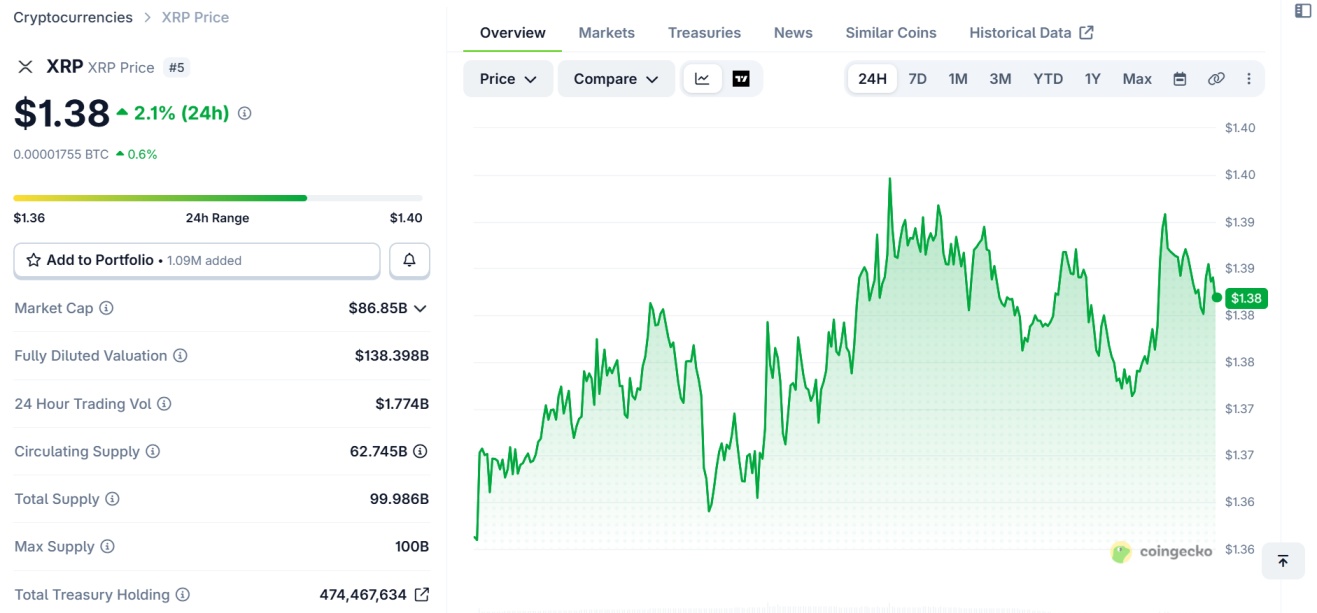
Source: pricing on CoinGecko
That small bounce comes right as XRP ETFs Maintain inflows on a steady climb, backed by fresh institutional data showing a market that seems to be quietly building rather than losing steam.
The bigger question now is whether this kind of slow, sustained buying could realistically push the price toward $2 before 2026 ends.
A Bumpy August Gives Way to a Green Start
Last month was rocky, with a sharp rally followed by an equally sharp pullback before prices settled into their current range.
The market cap sits at roughly $86.85B, the fully diluted valuation is close to $138.4B, and trading volume over the past day came in around $1.77B.
Out of a hard cap of 100 billion coins, 62.745 billion are currently circulating, meaning just under 37% of everything that will ever exist is still held back.
XRP ETFs Maintain Inflows as Cumulative Total Crosses $1.8 Billion
This is where the real story sits. Citing data from Bloomberg Intelligence, it points out that money going into these funds has been unusually resilient, moving almost entirely in one direction since launch and now adding up to roughly $1.8 billion in total net inflows.
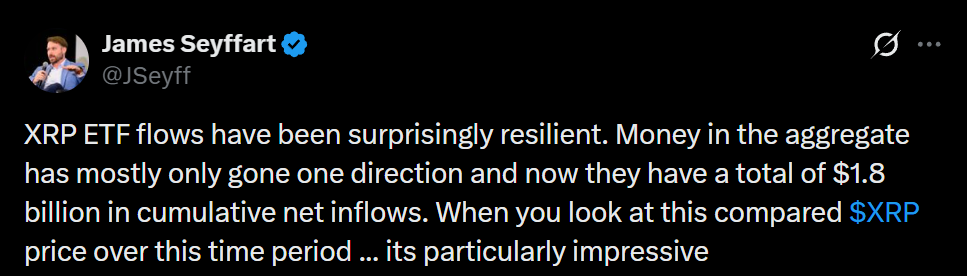
Source: trader JSeyff
The chart shared alongside that post traces the climb clearly: about $150 million shortly after launch in November 2025, past $1.45B by mid-January, and up to $1.79B by August 26, 2026.
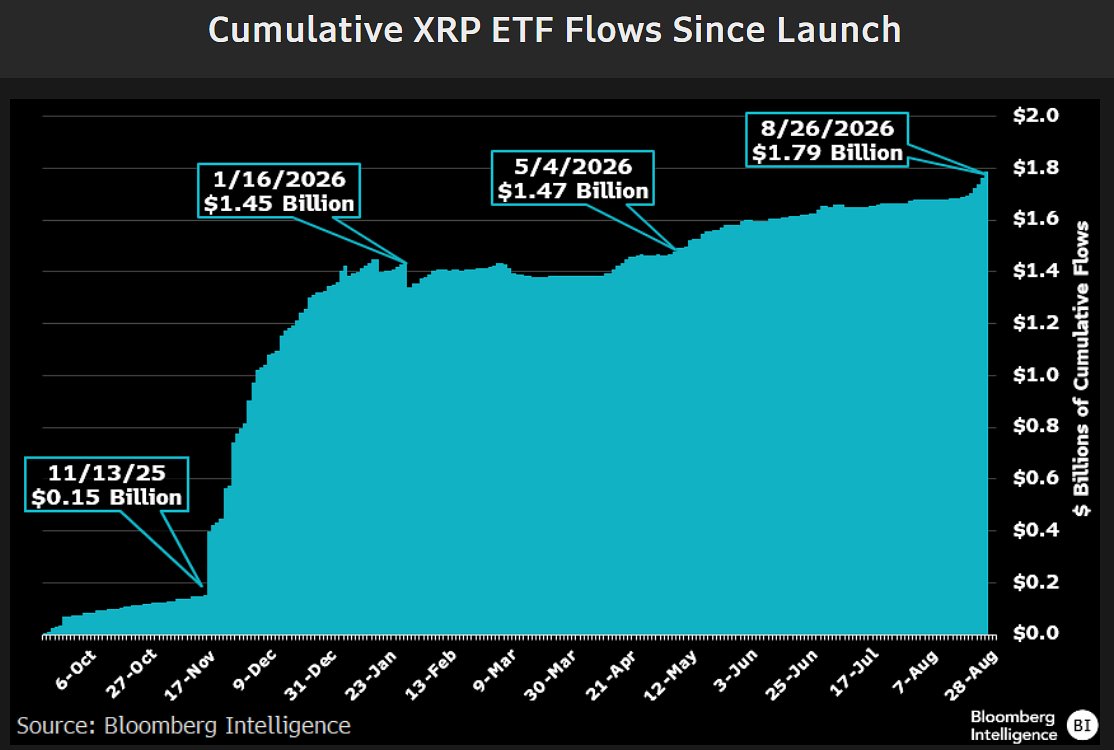
What stands out is how steady that climb has been. Instead of one big spike followed by a long flat stretch, the line rises in a fairly consistent slope.
In other words, XRP ETFs maintain inflows even during weeks when the price itself was flat or falling. When fund buying and short-term price movement stop matching up like that, it's often a sign of patient, longer-term buyers rather than short-term traders chasing momentum.
A more recent snapshot, dated August 31, 2026, shows the daily total net inflow at $5.64 million and cumulative total net inflow at $1.67 billion, with $18.57 million in total value traded that day and total net assets sitting at $1.45 billion, equal to about 1.67% of XRP's overall market cap.

Source: SosoValue data
Wall Street's Footprint Keeps Growing
Part of the reason XRP ETFs Maintain inflows, so more types of buyers keep showing up.
A separate dataset from Bloomberg Intelligence, shared in the same round of posts, breaks down 13F filings, the reports large investment firms are required to submit showing what they hold, for funds built around XRP.
Goldman Sachs Group tops the list with about $87.4 million in exposure, followed by Jane Street Group at roughly $16.6 million and Millennium Management at close to $16.2 million.
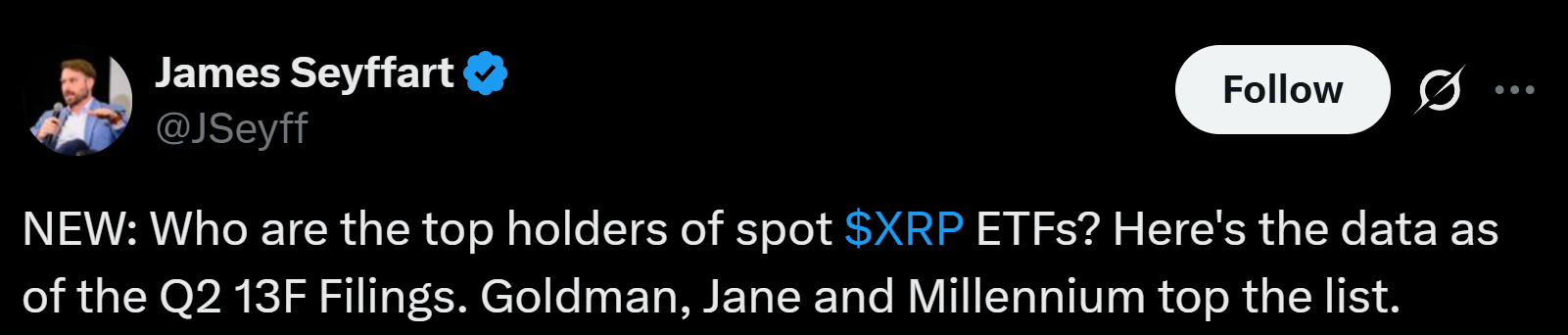
Source: James seyffart on X
Further down the list, the pattern continues:
-
Intesa Sanpaolo, Marex UK Holdings, and Ironbridge Private Wealth all hold multi-million-dollar positions.
-
Smaller firms such as Kaleidoscope Capital, Wolverine Asset Management, and Bain Capital Private Equity show smaller but still meaningful stakes.
-
Most firms increased their positions from the prior quarter, with only a few, including Citadel Advisors and Flow Traders US, pulling back slightly.
Several dozen firms show up on this list in total, suggesting the buying isn't coming from just one or two big names but from a genuinely wide slice of institutional finance.
Ripple Still Holds Over 30 Billion Tokens in Escrow
Institutional buying only tells part of the supply story. According to on-chain tracking data from XRP Insights, about 32.28B tokens, close to a third of total supply, are still locked in Ripple's on-ledger escrow as of September 1, 2026.

That number comes directly from reading the ledger's escrow records rather than from an estimate.
Ripple can release up to 1 billion tokens from escrow on the first of each month, but most of that has historically gone straight back into new escrow contracts instead of hitting the open market.
Based on how fast tokens are actually entering circulation, XRP Insights estimates the full balance could take eight or more years to clear out, pointing to a slow, gradual release rather than a sudden flood of new supply.
Could the Price Realistically Reach $2 by Year-End?
Put these pieces together: steady fund demand, a growing list of institutional buyers, and a supply setup where nearly a third of all coins remain locked away rather than freely available to trade.
None of that guarantees a move to $2, and this isn't meant as a prediction, just a look at what's actually changed recently.
Getting there from current levels would need demand to keep growing well beyond August's pace, and crypto markets can just as easily stall out or reverse as they can keep climbing.
Conclusion
XRP ETFs Maintain Inflows as August draws to a close; institutional filings show more firms getting involved, and a large share of total supply remains locked in escrow rather than sitting on exchanges ready to sell.
Those are the facts as they stand today. Whether they add up to a move toward $2 by the end of 2026 depends on demand holding up in the months ahead, which is worth watching rather than assuming.
Disclaimer
This article is for educational and informational purposes only and should not be considered financial or investment advice. Always conduct your own research before making investment decisions.
Also read:






