BullZilla ($BZIL) Presale
BullZilla ($BZIL) Presale Crypto
BullZilla Presale 2026: BZIL Claim, Price, Staking and Launch
BullZilla Presale has ended. The Ethereum meme coin is now in its after-sale stage. The project said token claiming would start on February 27, 2026. Earlier buyers can get their BZIL tokens through the official claim portal. The sale had 24 stages, token burns, and a staking plan that advertises 70% APY. Today, readers should check trading, liquidity, supply, and reward rules, not old presale ads.
This guide explains what the project offers, how its token system works, and which details still need a check by others.
BullZilla Presale Quick Facts
Here are the key facts about BullZilla, including its completed sale, token supply, and claiming arrangements. Readers exploring crypto presale projects can compare ongoing and completed sales, token prices, blockchain networks, and launch details. Some BullZilla Presale figures come from its whitepaper and remain independently unverified. Always check official sources and blockchain records before buying, claiming, or transferring tokens.
- Project name: BullZilla
- Token symbol: $BZIL
- Main category: Meme coin
- Blockchain: Ethereum (ERC-20)
- status: Ended
- completion: Announced in February 2026
- Token claim start: February 27, 2026
- Total supply: 159,999,999,910 BZIL (according to the whitepaper)
- Presale allocation: 50%
- Published launch price: $0.00527141 (old project target)
- Current price: Not checked by others
- Presale stages: 24 chapters
- Staking: Advertised 70% APY
- Burn reserve: 5% of the original supply
- Referral offer: 10% referral reward and 10% buyer bonus during the presale
- Team allocation: 5%, with a claimed two-year lock
- Trading: The official website has Buy Now and Chart links
- Exchange listings: No central exchange listing confirmed by others
- Contract address: Must be checked against official project links
- Audit: The project claims an audit; a full independent report is not found
- Official website: BullZilla Website
- Official whitepaper: BullZilla Whitepaper
- Claim portal: BZIL Token Claim
What Is BullZilla (BZIL)?
BullZilla is an Ethereum-based meme coin built around a fictional monster and community storytelling. Unlike many meme coin presales that rely mainly on community excitement, BullZilla also promoted token burns, staking, and referral rewards during its 24-chapter sale. Its BZIL token follows the ERC-20 standard. The project is not a separate Layer 1 blockchain or decentralized exchange, and its future activity depends on maintaining community interest and token utility.
Many crypto projects build loans or payments. This one mostly relies on token rewards, scarcity, and community joining. So its reward plan and supply care matter a lot when you judge how long it can last.
Is the BullZilla Presale Still Live?
No. The official social-media post said the presale was over and that claiming would start on February 27, 2026. The website now points visitors to buying, charts, and claiming. It does not point them to new entry. Older pages may still show presale prices, countdowns, or words written before the sale ended.
So the original sale has closed. Any new purchase should be seen as a market trade after launch, not as entry into the old staged sale.
BullZilla Presale Price and Launch Price
BullZilla used a staged pricing system during its 2025 token sale. The asking price increased when fundraising milestones were reached or after set time intervals. Earlier BullZilla September 2025 presale sponsored coverage discussed the project's initial stage and meme coin promotion. The whitepaper later described 24 themed chapters, with token burns linked to stage changes. These historical details explain how the campaign operated, but they do not represent an active sale in October 2026.
- Every $100,000 raised during the presale.
- Every 48 hours when the money goal was not reached.
The published launch price was $0.00527141 per BZIL. This old target is not today's trading price. A live price depends on liquidity and real trades. To find a reliable price, check the right contract, an active trading pool, and recent market activity.
BullZilla Tokenomics: Total Supply and Allocation
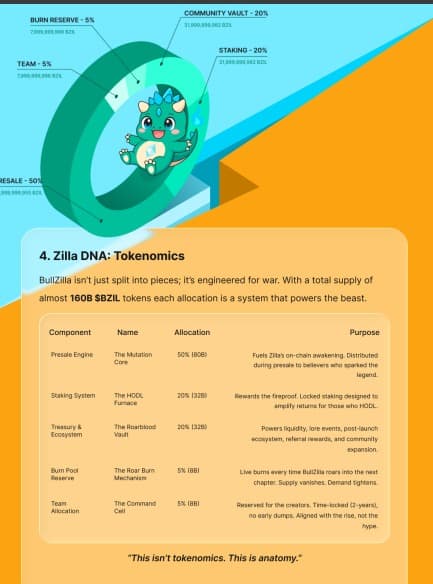
The whitepaper reports an original total supply of 159,999,999,910 BZIL. Half went to the presale. The rest was split among staking, the treasury, burns, and the team. These numbers show the first plan. They are not today's circulating supply, because burns, sharing, and locked tokens can change what is available to trade.
- Presale: 50% (79,999,999,955 BZIL)
- Staking: 20% (about 32 billion BZIL)
- Treasury and Ecosystem: 20% (about 32 billion BZIL)
- Burn Reserve: 5% (about 8 billion BZIL)
- Team: 5% (about 8 billion BZIL)
- Total: 100% (159,999,999,910 BZIL)
The whitepaper also says the team's tokens are locked for two years. The lock contract and its current status should be checked by you.
How Does the BullZilla Roar Burn Mechanism Work?
Roar Burn is the project's way of burning tokens. The project set aside 5% of the original supply as a reserve to be removed for good when presale stages changed. Each event was meant to cut the number of tokens from that reserve. Burning can lower supply, but it does not make the price go up by itself.
For a burn to count, check that tokens really went to a burn address or were destroyed by the contract. Good proof includes transaction hashes, burn dates, token amounts, and a new supply count.
BullZilla Staking: What Is the HODL Furnace?
The HODL Furnace is the staking tool. Its official page advertises a 70% yearly reward rate, called APY, for eligible people who lock BZIL. After you connect an Ethereum wallet, the screen lets you stake, unstake, and claim rewards. The site also mentions a reward lock after launch. Check the current withdrawal rules before you lock any tokens.
But the advertised APY is not a promised return. Rewards may depend on pool funding, reward plans, token supply, and contract rules. Even if you earn more tokens, their market value could fall.
What Is BullZilla Roar-to-Earn?
Roar-to-Earn was the referral reward plan during the sale. People could get a referral code after a qualifying buy of at least $50. The published terms gave a 10% reward to the person who referred and a 10% BZIL bonus to an eligible new buyer. Referral and staking rewards had separate unlock rules.
Since the presale has ended, do not assume these buyer rewards are still open. Any later referral plan needs its own new notice and eligibility rules.
How to Claim BullZilla Tokens After Presale
The official website has a claim portal for buyers. In general, you connect the wallet you used for the first purchase and check if tokens are ready to take out. Wallets such as MetaMask, Trust Wallet, and Coinbase Wallet may work, based on the connection method. The portal being open does not prove that every past buyer has received tokens.
- Visit the official website.
- Open the Claim section from the menu.
- Connect the Ethereum-compatible wallet linked to your presale purchase.
- Review the BZIL amount and claim eligibility shown.
- Read the transaction details and the Ethereum network fees.
- Confirm the claim only after you check the transaction permissions.
- Check that the tokens arrived, using a trusted blockchain explorer.
Never type your wallet seed phrase into a claim website. A real wallet connection never asks for your recovery words.
Where Can Users Buy or Trade BullZilla?
The official website now shows a Buy Now option and a link to a trading chart. This shows the project is pointing visitors to market activity after the presale. But a buy link does not prove deep liquidity, steady trades, or a confirmed central exchange listing. Before you buy, check the exact Ethereum contract, the trading pair, pool reserves, fees, and recent trades.
Blockchain explorers show more than one asset that uses the BullZilla name or the BZIL ticker, each with a different supply. Match the contract to a current official project link. A similar ticker or logo is not enough.
BullZilla Smart Contract Audit and Security
The website says its smart contract has been audited. But a full independent report tied to the current token was not found in this review. A good audit claim should come with a public report. It should name the auditor, contract address, date, findings, and whether problems were fixed.
Users should also check liquidity locks, owner permissions, token concentration, and the staking contract on their own. A token audit does not automatically cover the claim portal, the referral system, or the staking tools.
BullZilla Roadmap and Project Development
The published roadmap splits the project into four phases. Treat later steps with care. Finished exchange links, liquidity locks, and all reward payouts should each be checked on their own.
Phase 1 – The Awakening: Q2 2025
The project planned its first brand look, community tools, smart contract work, and early security checks. This phase also included building a whitelist system, preparing how the token sale would work, and starting its make-believe storyline. It was the base for the steps that came after, so it focused on setup, not trading.
Phase 2 – Presale Mutation: Q3 2025
The project launched its rising price system and ran the token sale across 24 chapters. This phase also brought in Roar Burn events and the Roar-to-Earn referral plan. It was the main sale stage, where buyers joined, prices moved up at set goals, and tokens were burned as chapters changed.
Phase 3 – Zilla Takes Form: Q4 2025
The roadmap turned to staking, the logic for paying rewards, and more token-burning events. The HODL Furnace was shown as the main way for people to take part for a long time. This phase aimed to give holders a reason to keep tokens, instead of selling them soon after buying.
Phase 4 – Final Mutation: Q1 2026
The project planned to finish the presale, begin claiming and token sharing, add market liquidity, and look for exchange access. Its February 2026 notice that the presale was done supports the move into this stage. But whether exchange links, liquidity locks, and all rewards are complete still needs a separate check.
What Makes BullZilla Different From Other Meme Coins?
BullZilla combined several features to keep its community engaged during the presale. Its staged pricing model increased token prices as fundraising progressed, while the 24-chapter storyline added a game-like experience. Roar Burn aimed to reduce token supply, and staking and referral incentives encouraged participation. Readers exploring cryptocurrency blogs can learn more about meme coin tokenomics, staking mechanisms, and crypto investment risks. These features explain BullZilla's promotional strategy but do not guarantee lasting demand or financial returns.
Its next challenge is to show that its token economy can stay useful and liquid after the presale rewards end.
Can BullZilla Price Recover or Increase in 2026?
BullZilla's future price cannot be predicted from its historical presale price or advertised staking rewards. Its market value depends on liquidity, buying demand, circulating supply, holder concentration, and broader cryptocurrency trends. Readers following latest cryptocurrency news can track market developments, investor sentiment, and major events that may influence meme coin trading. Token burns could reduce available supply, but their impact depends on verified burn transactions and actual market demand.
Do not use the old $0.00527141 launch target to guess today's price. A fair check needs real pool data, trade activity, and the right contract.
Main Risks of Holding BZIL After Presale
Several risks remain even after a token sale ends. Readers comparing the best crypto presales should examine smart contract audits, liquidity, token distribution, vesting terms, and project activity before making decisions. For BullZilla holders, these checks are still important when claiming, staking, or trading BZIL. The following risks explain what users should verify to reduce avoidable mistakes.
- Low liquidity: A coin may have a trading pair but too little money in it to support bigger trades at the prices you expect.
- Token identity confusion: Several contracts with similar branding can lead you to buy or send the wrong coin.
- Reward uncertainty: A high advertised APY does not mean the project has steady income to match it.
- Concentrated ownership: Big holdings in a few wallets can push prices when tokens move.
- Unverified token burns: Burn plans must be backed by transaction records before they count as done.
- Technical exposure: Claiming, staking, and trading may use different smart contracts, and each has its own risks.
- Changing project activity: Future work, community activity, and exchange support may not match old roadmap hopes.
What Should Users Watch Next?
The most useful BullZilla updates would include verifiable token claims, trading liquidity, staking payouts, and confirmed exchange announcements. Users should also look for transparent treasury wallets and evidence of completed token burns. Other crypto teams preparing new token sales can submit a crypto presale to CoinGabbar for editorial review and potential listing. BullZilla itself should now be judged by its post-launch activity rather than promotional claims made during the 2025 presale.
Disclaimer
BullZilla is a high-risk meme coin. Token prices, trading liquidity, and staking rewards may change or stop. Old presale prices and advertised yields do not promise future returns. You could lose all your money. This article is for learning only. It is not financial advice.