Crypto in the Global South: Why Use Differs in Developing Economies

What Does the Global South Mean in Digital Money Terms?
Two people can hold the same token for opposite reasons. One sees an investment. The other sees a way to send money home, or to keep savings from losing value. So how real is that split? Crypto in the Global South is the test case, and the data gives a more careful answer than the popular story.
The data supports part of the story. Stablecoins and low-value transfers show payment motives, and remittance costs matter.
But rich countries also rank high, and Argentina shows that payment convenience can beat inflation. The real difference is the job crypto does, not only where you live.
What Does Global South Mean in Digital Money Terms?
Global South is a broad political and economic term, not a strict map. It usually points to developing and emerging economies in Asia, Africa, Latin America and Oceania.
These countries differ widely in income, banking access and rules. They are not one economy.
So this guide names a region or country wherever the data allows.
How Is Crypto in the Global South Used Differently From the West?
Partly. The same coins play two roles everywhere, investment and payment. The BIS studied flows between 184 countries from 2017 to 2024. They peaked near $2.6 trillion in 2021, and stablecoins, covered in our what is a stablecoin guide, made up close to half.
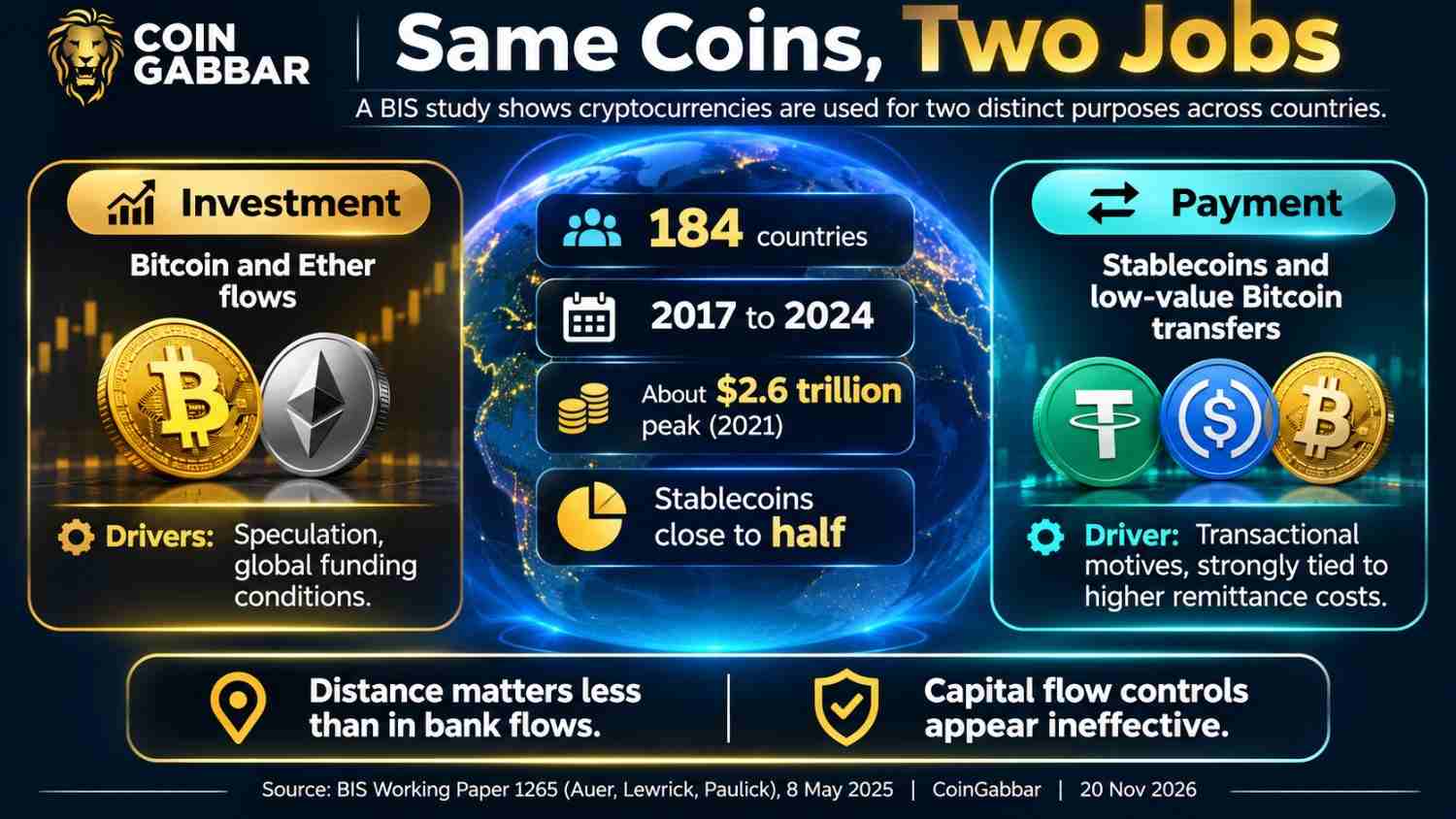
The authors link Bitcoin and Ether flows mainly to speculation and global funding conditions. They link stablecoin and low-value Bitcoin flows to payment motives, with a strong tie to higher remittance costs. Read the BIS paper.
Distance matters less than in bank flows. Capital flow controls also appear ineffective.
Is the Difference Real or Just a Popular Story?
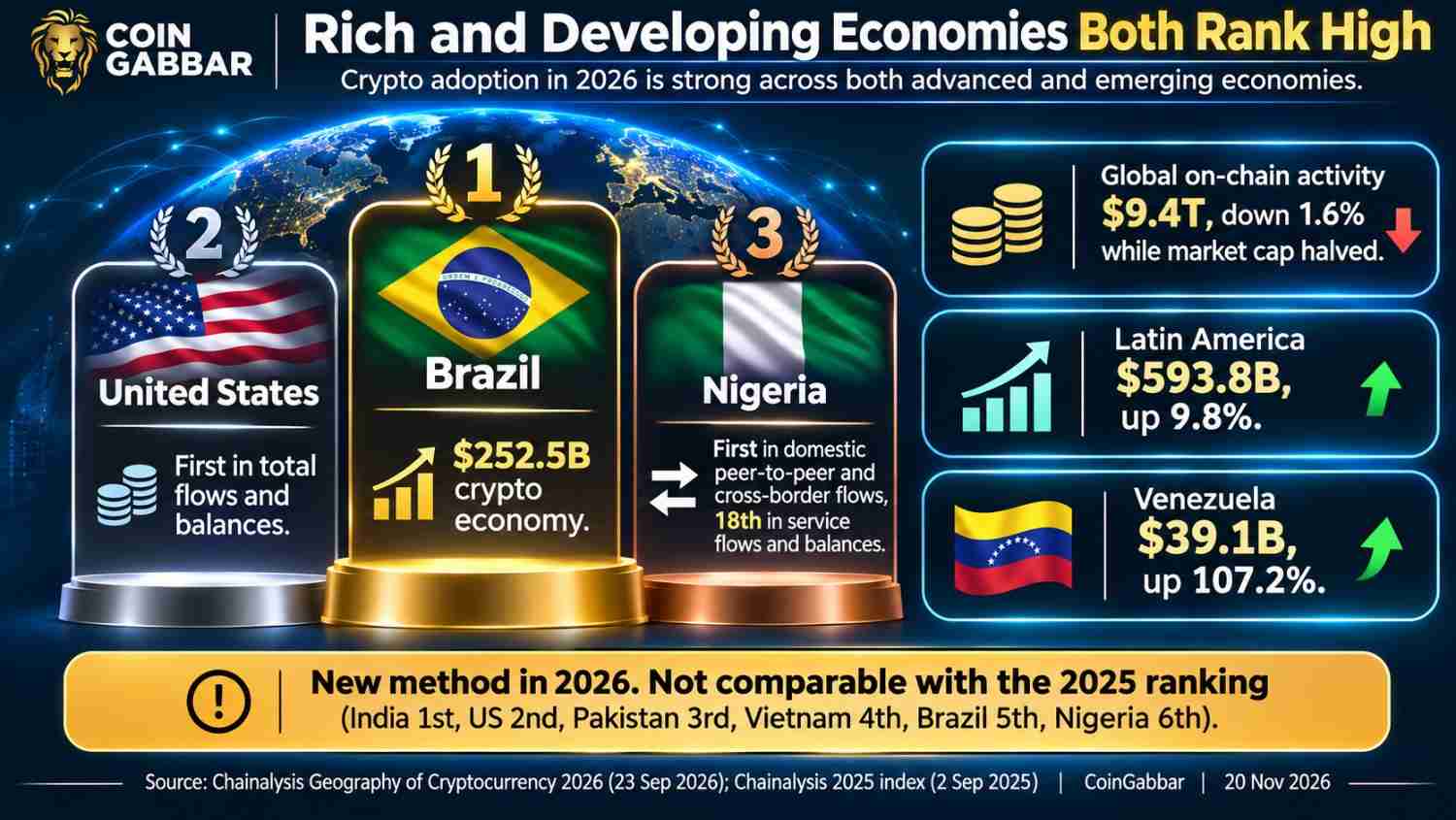
It is real in part. Chainalysis ranked Brazil first in its 2026 index, with a $252.5 billion crypto economy. The United States came second and Nigeria third.
Rich and developing economies both rank high. The method changed, so the 2025 ranking is not comparable. Counting on-chain activity has limits, as our on-chain analysis explained guide notes.
An IMF paper estimated stablecoin flows in 2024. North America moved $633 billion and Asia and Pacific $519 billion. Against GDP, flows were 7.7% in Latin America and the Caribbean and 6.7% in Africa and the Middle East. See the IMF working paper.
Why Do Remittance Costs Push People Toward Stablecoins?
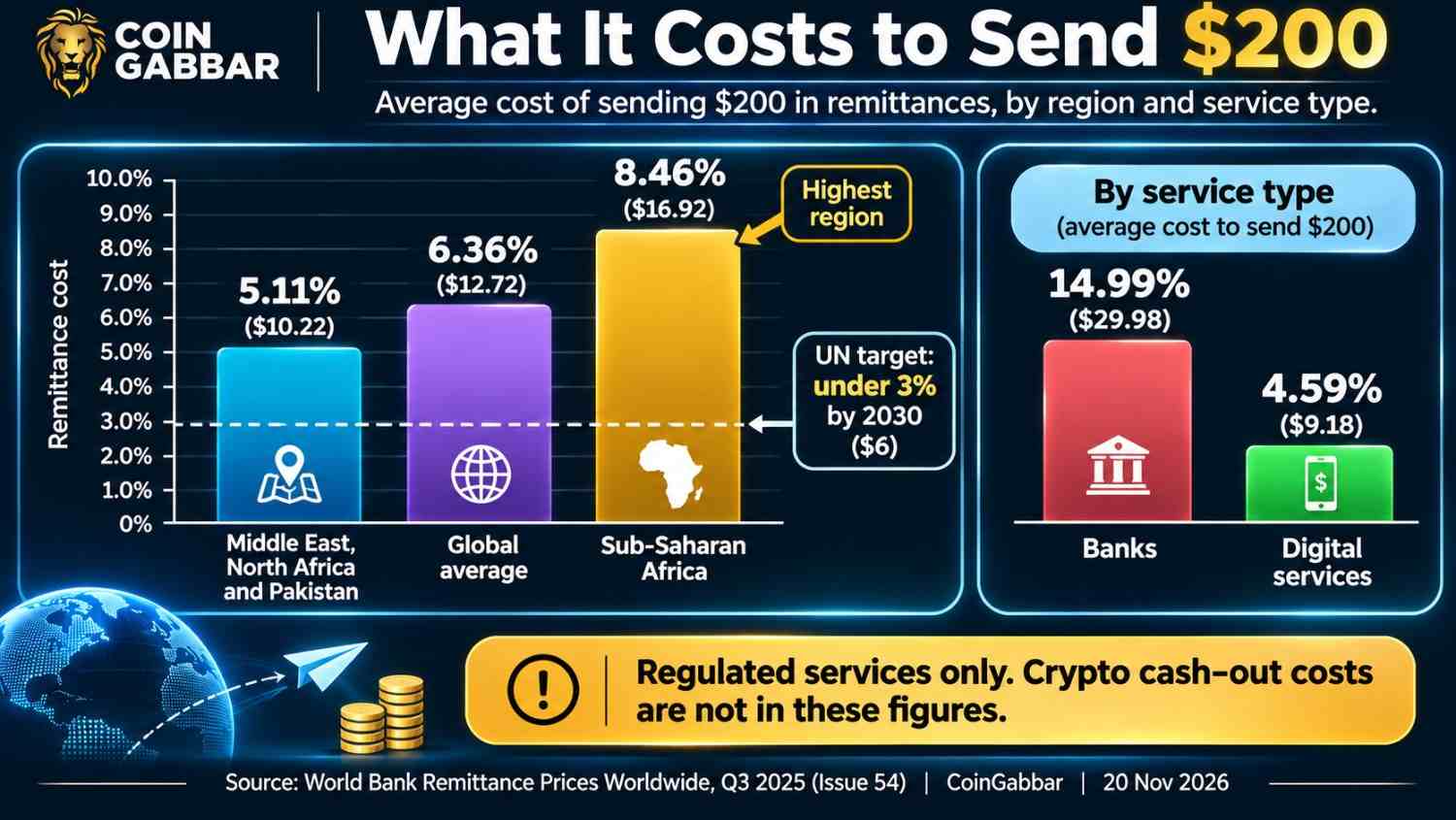
Because sending money can be expensive. World Bank data for Q3 2025, as reported, puts the global average at 6.36% of $200, or $12.72. Sub-Saharan Africa averaged 8.46%, or $16.92, the highest of any region.
Banks averaged 14.99% and digital services 4.59%. The World Bank target is under 3% by 2030.
Those figures cover regulated services, not crypto. A token transfer may be cheap, but cash-out can cost more. See our remittances guide for the options.
What Happens When a Local Currency Weakens and Dollars Are Scarce?
Stablecoins can become a stand-in for dollars. An IMF paper from December 2025 says they may contribute to currency substitution. It says the risk is higher with high inflation, weaker institutions or low trust in the local currency.
The BIS says over 99% of stablecoins are dollar-based. It warns of stealth dollarisation, where a foreign currency slowly replaces the local one.
Issuers can also freeze tokens, as our stablecoin freeze explained page shows.
Some central banks answer with a central bank digital currency.
What Did Argentina Show About Why People Use Crypto?
That payments can matter more than inflation. A March 2026 report from a regional exchange tied the 2025 surge in Argentine crypto use to payments. Many Argentines used stablecoins through apps linked to Brazil’s Pix system while on holiday in Brazil.
Inflation fell to an eight-year low in 2025, according to BBVA Research as cited. The exchange also says Argentina has four times as many users as in 2021.
That report comes from a company selling token services, so treat it as one view.
Which Job Does Crypto Do: Save, Send, Spend or Speculate?
CoinGabbar sorts use into four jobs. Speculate: BIS ties Bitcoin and Ether flows to it. Send: stablecoin flows link to remittance costs. Save: the IMF flags currency substitution. Spend: stablecoins were 96% of domestic peer-to-peer value in the 2026 Chainalysis report.
Cross-border stablecoin value rose 77.5% to $220.3 billion in that report. Latin America received $593.8 billion, up 9.8%.
For readers, the job sets the risk. Speculating risks price swings. Sending risks cash-out costs. Saving in dollars risks freezes and policy changes.
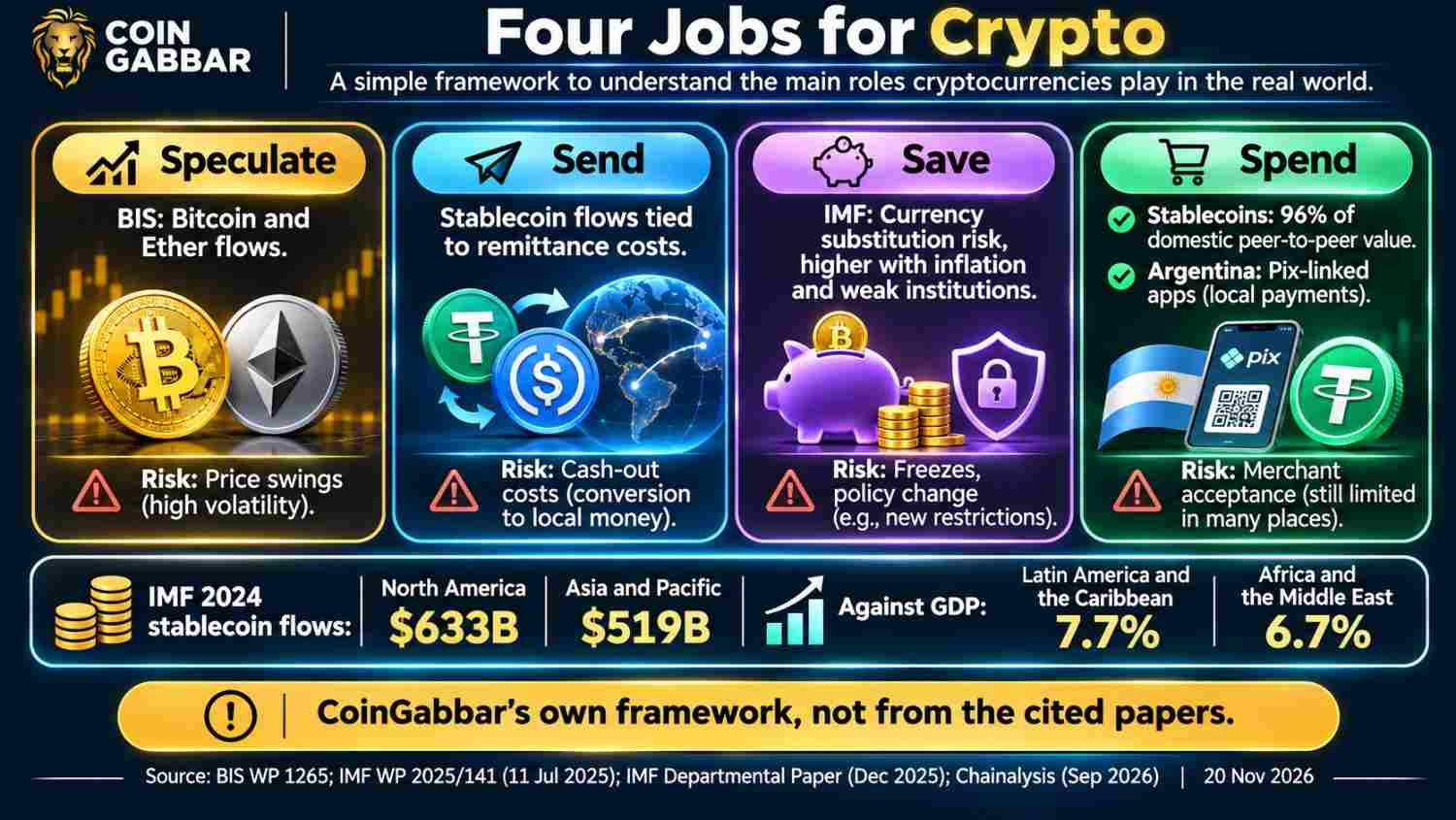
This framework is our own analysis. It is not from the cited papers.
Which Key Terms Should You Know Before Reading the Data?
Currency substitution means people use a foreign currency instead of the local one.
Peer-to-peer means direct trades between people, without a business in the middle.
A capital flow management measure is a rule that limits money moving across borders. A remittance is money sent home by a worker abroad.
Expert Opinion: Is Token Use Really Split by Where You Live?
CoinGabbar analysis suggests crypto in the Global South is best read as four jobs, with stablecoin payments and dollar access the clearest regional pattern.
This view rests on the BIS 184-country study, the IMF stablecoin papers, the Chainalysis indices and the Argentine case.
The weak link is data. No source here splits use by income group.