What Is a Crypto Margin Call and How Do You Respond?


What Is a Crypto Margin Call and How Do You Respond?
An exchange alert arrives at midnight. Your leveraged trade is bleeding, and the clock is running.
Knowing what is a crypto margin call helps you act before an exchange closes your trade for you. It's the warning stage, and what you do next decides whether you keep the position or lose it.
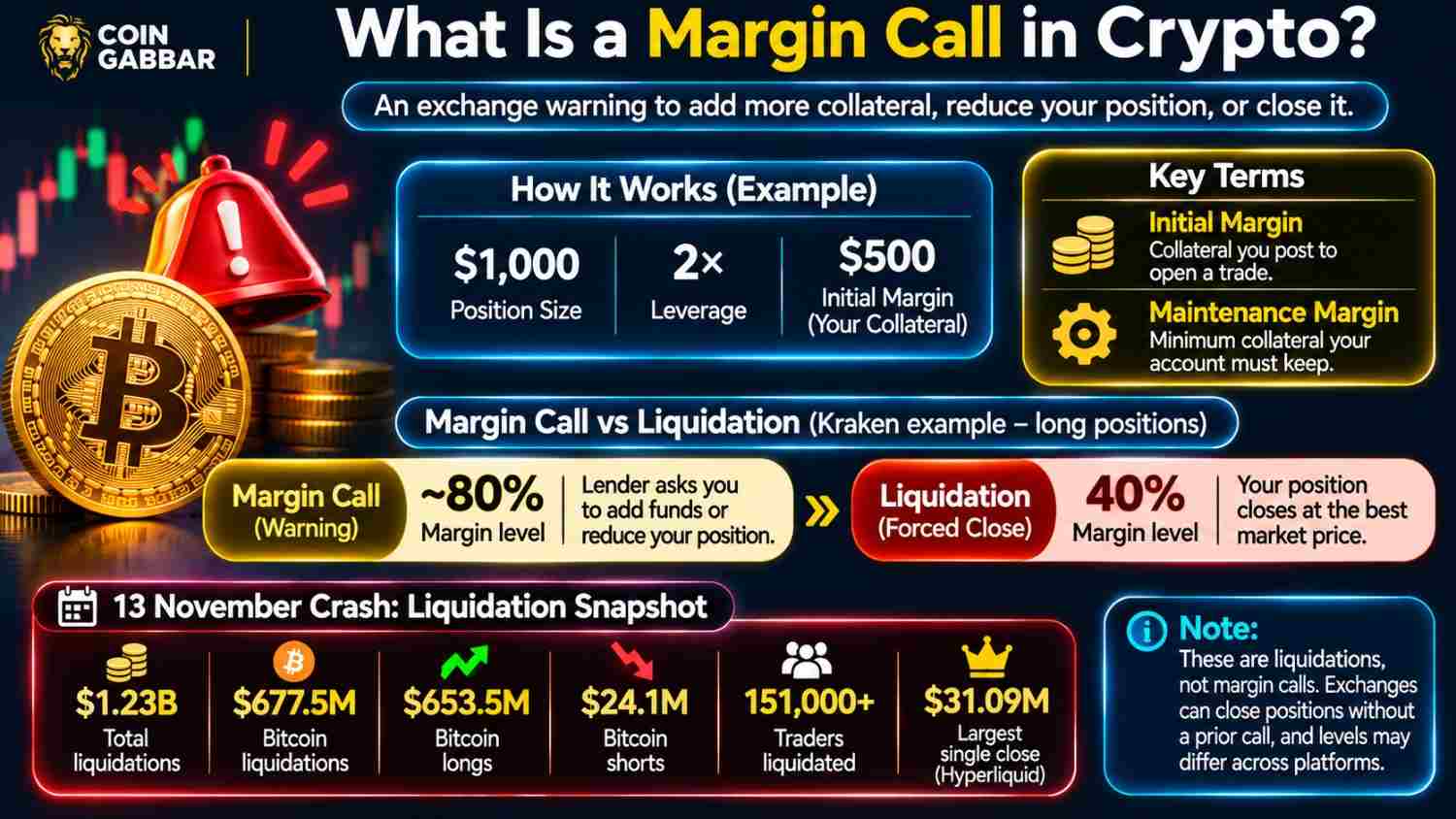
In short, the platform is telling you that your collateral has slipped below the level the trade needs.
What Is a Margin Call in Crypto, and Why Do Exchanges Send One?
A margin call is a lender's demand for more collateral in an account that holds borrowed funds. It follows a price move against your leveraged position. That puts the loan at risk, as Kraken's guide explains.
Two terms matter here. Initial margin is the collateral you post to open the trade. Maintenance margin is the minimum your account must keep afterwards.
Kraken divides account equity by the margin used and calls the result margin level. A $1,000 position at 2x leverage uses $500 of margin.
How Is a Margin Call Different From Liquidation?
Think of the call as the warning and liquidation as the forced close. The call asks you to add funds, close positions, or both.
If you don't, the lender closes positions to cover the shortfall. Some platforms skip the warning, so don't count on one.
Stage | Kraken level (long positions) | What happens |
Margin call | About 80% | The lender asks for more collateral |
Liquidation | 40% | Positions close at the best market price |
Other platforms set their own levels. Unsure about a term? Our crypto dictionary covers the basics.
What Triggers a Crypto Margin Call on a Leveraged Trade?
Your equity shrinks faster than your collateral can cover. A falling price is the usual cause. Higher leverage makes it happen sooner.
Leverage sets how much of the trade is your own money. At 2x, half is. At 10x, only a tenth is, so a small dip can eat the cushion.
On many platforms, fees and funding payments chip away at equity too, especially if you hold for days.
How Did the 13 November Crash Show Margin Risk in Action?
Bitcoin fell below $70,000 for the first time since August. Leveraged longs paid for it.
Figure | Amount |
Total liquidations | About $1.23 billion |
Bitcoin liquidations | About $677.5 million |
Bitcoin longs | About $653.5 million |
Bitcoin shorts | About $24.1 million |
Traders liquidated. | More than 151,000 |
Largest single close | $31.09 million, Hyperliquid |
Longs made up over 96% of the bitcoin total. Reports pointed to a stronger dollar, bets on a December Fed rate hike, and ETF outflows. They also cited MSCI's plan to drop Strategy from its indexes, which our Strategy index exit report covers.
These are liquidations, not margin calls. Exchanges can close trades without a call, so the numbers count forced exits.
What Should You Do After a Margin Call Hits Your Account?
Act fast, but don't act blind. Check your margin level first. It shows how far you are from the forced close.
Then pick one of three moves:
Add margin. Deposit funds to lift the level. It buys time, but it puts fresh money behind a losing trade.
Reduce size. Close part of the position to cut the borrowed amount.
Close it. Take the loss on your terms, not the exchange's.
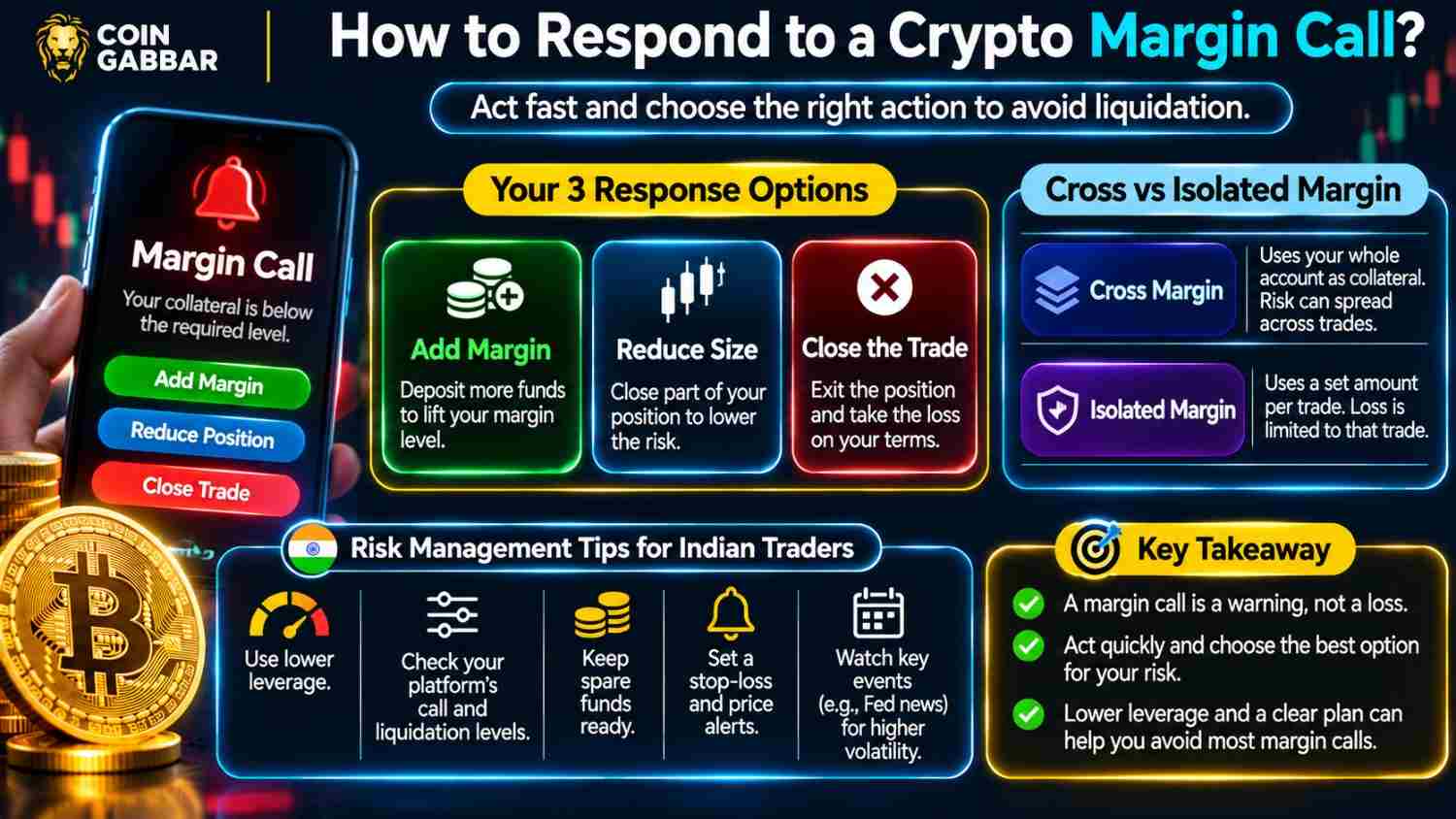
Next time, set a stop-loss and price alerts, and keep spare funds ready. Kraken's guide recommends all three habits.
What Happens if I Ignore a Margin Call on a Leveraged Trade?
The lender closes your positions to cover the shortfall. It can happen without further notice.
Closes run at the best available market price. In fast or thin markets, that price can be worse than you hoped. The loss gets deeper.
If only some positions close, Kraken's guide says the usual order is first in, first out. Older, profitable trades may go first.
How Do Cross and Isolated Margins Change the Risk?
Cross margin pools your whole balance as collateral for every open trade.
Feature | Cross margin | Isolated margin |
Collateral | Whole account | Set amount per position |
Loss exposure | Can spread across trades | Limited to that trade |
Suits | Experienced, closely watched | Newer or cautious traders |
Cross gives a losing trade more room, but one bad position can drain everything.
Isolated caps the damage, yet it can't borrow strength from your winners. Neither fits everyone.
How Can Indian Traders Lower the Risk of a Margin Call?
Start with leverage. Lower leverage means a bigger cushion, so the same dip is less likely to trigger an alert.
Check your platform's own rules before you trade. Call levels, liquidation levels, and alerts differ.
Then watch the calendar. Volatility often jumps around Fed news, and our bitcoin price outlook tracks the bigger picture.
Keep spare funds, use stops, and size the trade so you can sleep through a bad night.
What Does the Expert View Say About Margin Calls?
CoinGabbar analysis suggests margin calls do their job for lenders and exchanges. They flag risk early. They keep one bad trade from becoming the lender's loss.
The other side is harder on traders. Adding funds without a plan can turn a small loss into a large one, and a rebound isn't promised.
This analysis considers exchange rules, collateral mechanics, liquidation data and past volatility.
Disclaimer: This article is for information only. It isn't financial or investment advice. Leveraged crypto trading is volatile. You can lose all the funds in a position, and on some platforms more. Market data changes fast, and no result is promised. Speak with a licensed advisor and read your platform's rules before you trade.
















