Google Cloud Blockchain Shutdown: Check Key Dates and Migration Steps

Google Cloud Blockchain Node Engine Shutdown News: What Users Must Do?
Google Cloud has set a firm end date for its node hosting tools. Blockchain Node Engine and Blockchain RPC will shut down on December 15, 2026, according to the official documentation. As of October 6, 2026, about ten weeks remain.
Teams that run wallets, decentralized Apps, or data tools on these services need a plan now. Any workload that still points to an old endpoint will fail after the deadline. The company recommends moving to its partner, Quicknode.
This guide explains what is changing, who is affected, and the steps to take before the date arrives.
At a Glance
-
Shutdown date: December 15, 2026
-
Services affected: Blockchain Node Engine and RPC
-
Recommended partner: Quicknode
-
Existing endpoints: Deleted automatically on December 15
-
Main action: Migrate, update configurations, and test workloads
Google Cloud to Shut Down Blockchain Node Engine and RPC Services
Blockchain Node Engine is a Google Cloud managed service for hosting nodes. The RPC service gives apps access to networks through standard APIs. Both services fall under the same shutdown notice.
The release notes list the event as the complete deprecation of Blockchain Node Engine. The company asks all customers to finish migration before the date to avoid service failure.
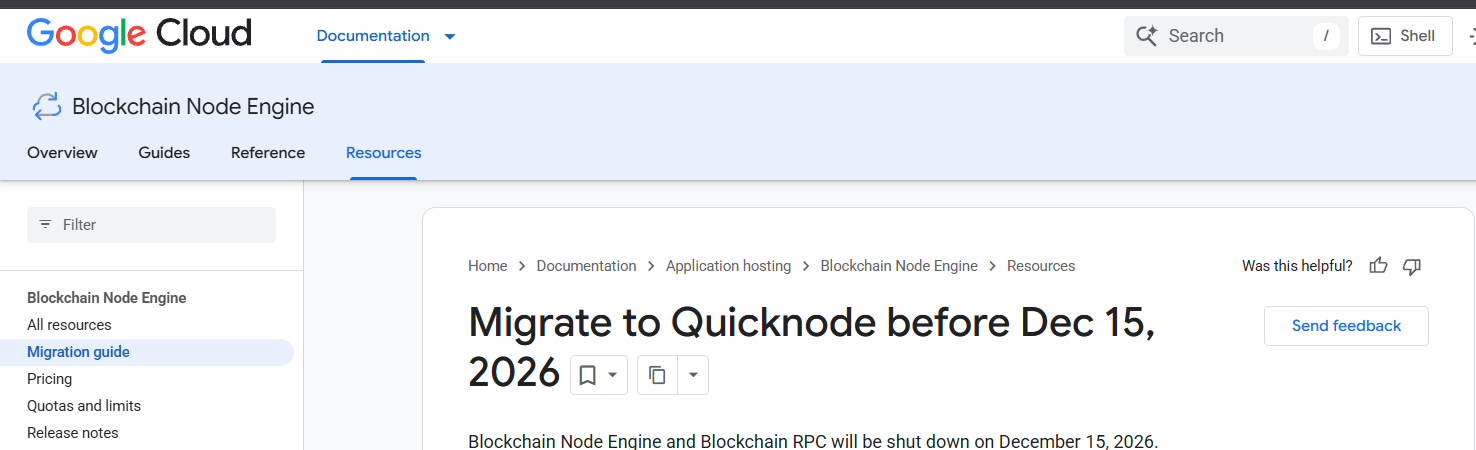
Sources: Google Cloud Node Engine migration guide and release notes
Why the December 15 Shutdown Matters for Users
The impact is direct. Existing nodes and endpoints will be deleted on December 15, and workloads that depend on them will fail after that date.
New sign-ups stopped earlier. Creating new nodes and provisioning new endpoints has been disabled since June 15, 2026. That means teams cannot simply spin up more capacity on the old platform to buy time.
Waiting until the last day is risky. A migration needs time for setup, testing, and fixes.
Quicknode Becomes the Recommended Migration Path
Google Cloud has partnered with Quicknode, an infrastructure provider, as its recommended RPC partner going forward. The company says Quicknode is built to meet specific node needs without service disruption.
Users have two options. They can provision nodes and endpoints through Quicknode's offering on the Google Cloud Marketplace, or they can sign up on the Quicknode platform directly. The Marketplace route includes incentives available through the cloud provider. Customers should contact their sales representative for details, since pricing and terms are not public in the notice.
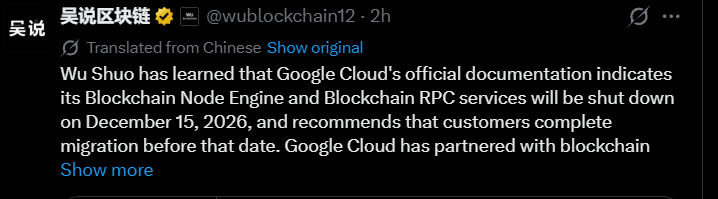
Source: Wu Blockchain Report
What Users Need to Do Before the Shutdown
The migration guide lays out four steps.
-
Provision new nodes or endpoints. Create what you need through Quicknode, either on the Marketplace or the Quicknode platform.
-
Update configurations. Point your apps and services to the new Quicknode endpoints.
-
Validate workloads. Test that everything works on the new setup, including read calls, transactions, and monitoring.
-
Decommission legacy resources. Delete your old Node Engine nodes in the Google Cloud console. The remaining RPC endpoints will be removed for you on December 15.
Do not treat step three as optional. Create the replacement early, run both systems side by side if you can, and switch traffic only after tests pass.
Cloud Node Engine Shutdown Timeline: Key Dates
| Date | What Happens |
| June 15, 2026 | New nodes and endpoints are disabled |
| October 6, 2026 | Users still have time to migrate existing workloads |
| Before December 15, 2026 | Apps and services should be moved to Quicknode and fully tested |
| December 15, 2026 | Blockchain Node Engine and RPC shut down |
| December 15, 2026 | Existing nodes and endpoints are deleted, and dependent workloads can fail |
The release notes confirm both the June 15 limited-support phase and the December 15 complete crypto shutdown.
What Happens If Users Do Not Migrate Before December 15?
The outcome is simple. Existing RPC endpoints will be deleted on December 15. Legacy Node Engine resources will no longer be available. Apps that rely on them may stop working, and users could see failed requests, broken wallets, or missing data.
For that reason, migration should be treated as a required infrastructure change, not an optional upgrade. Teams with many services should list every endpoint in use, since a forgotten one can cause an outage on the final day.
Conclusion
The deadline is clear, and Quicknode is the recommended path. Start provisioning now, update your configurations, and leave enough room to test. Teams that finish early will avoid last-minute stress and protect their users.
YMYL Disclaimer: This article is for information only and is not technical, legal, or financial advice. Infrastructure and migration decisions should be checked against official Google Cloud documentation and your own deployment needs. Cryptocurrency and crypto infrastructure services carry risk, so always do your own research before making decisions.









