Solana Blockchain Updates: What Changed After the Latest Update

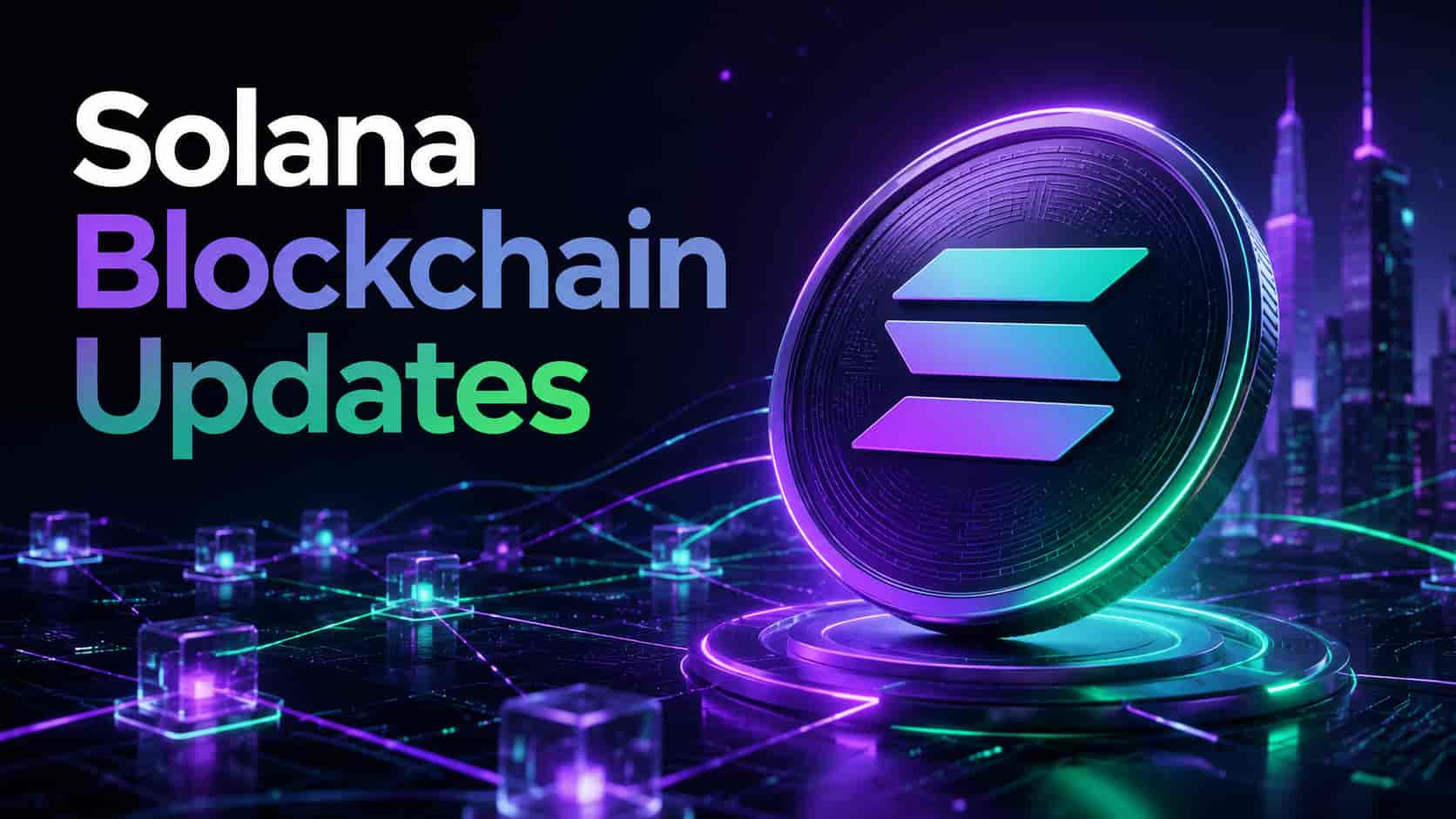
Solana’s latest developer update shows a continued focus on speed, reliability, validator efficiency, and better developer tools. The July 9, 2026 Solana Changelog reported new releases across Agave, Firedancer, Superbank, Solana Go, and LiteSVM, along with ongoing work on validator clients, RPC 2.0 coverage, language clients, and testing frameworks. Rather than a visible redesign for users, the update brings infrastructure improvements aimed at making the ecosystem more stable, scalable, and easier to build on.
Key Releases in the Latest Update
The July 9 changelog listed several new release tags across the Solana engineering stack. These included Agave v4.2.0-beta.0 and v4.1.1, Firedancer Mainnet v0.1005.40100, Superbank v0.5.0, Solana Go v2.0.0-rc, and LiteSVM v0.13.1.
The most important takeaway is that Solana development is moving on several tracks at once:
-
Validator software, including Agave and Firedancer.
-
RPC infrastructure for applications and data providers.
-
Developer libraries for web and backend builders.
-
Testing tools that help teams detect problems before deployment.
This matters because blockchain performance does not depend only on one protocol feature. It depends on validators, clients, APIs, testing environments, and developer experience working together. In a digital world where users expect real-time information as naturally as fans check hockey live scores, blockchain applications need data access that is fast, structured, and dependable.
Validator Performance: Faster Processing and Better Efficiency
One of the main areas of progress is validator client work. According to Solana’s changelog, Agave added Wincode serialization for banking stage snapshots. This change intended to make mapping bank snapshots to system memory more predictable and faster. The same update also noted work to optimize SigVerify, the stage that deduplicates transactions and verifies signatures. Improvements there can help transactions get into blocks faster.
Agave is also working on dropping invalid packets faster through XDP-related networking improvements. XDP, or eXpress Data Path, is a Linux kernel technology that lets validators process network packets more efficiently. Solana’s network upgrade page says XDP is available in Agave 3.0 and later. This can reduce latency by up to 200x when properly enabled by validator operators.
For everyday users, these changes are mostly invisible. However, better validator efficiency can support a smoother experience during high-demand periods, especially when wallets, decentralized exchanges, NFT platforms, games, and payment applications are all competing for block space.
RPC 2.0 and Better Access to On-Chain Data
RPC infrastructure is another important part of the update. RPC endpoints are how wallets, applications, dashboards, and indexers read blockchain data and submit transactions. The latest changelog reported expanded RPC 2.0 coverage across Superbank and Cloudbreak. Also including work on methods such as getEpochSchedule, getTransfersForAddress, and simulateTransaction.
Better RPC coverage can improve the reliability of applications that depend on accurate data. For example, a wallet needs transaction history, a DeFi app needs account and token information, and a developer tool may need transaction simulation before sending an instruction on-chain.
In practical terms, stronger RPC support helps with:
-
More consistent wallet and app behavior.
-
Better transaction previews and simulations.
-
Easier indexing of transfers and account activity.
-
Improved infrastructure for exchanges, analytics tools, and explorers.
Developer Tools: Why Builders Benefit
The update also included developer-facing improvements. Solana’s changelog noted new transaction planning and sending hooks in @solana/react, allowing web developers to manage transaction behavior through React hooks instead of writing raw Kit functions. LiteSVM is also implementing an interface to getProgramAccounts, helping developers test whether program-derived accounts are created correctly in a test harness.
These changes are important because stronger testing and cleaner front-end tools reduce the chance of user-facing bugs. For builders, the benefits include:
-
Faster development cycles.
-
Better testing of program accounts.
-
Cleaner integration between wallets and web interfaces.
-
More predictable transaction planning in applications.
Conclusion
The latest Solana update is best understood as an infrastructure upgrade cycle rather than a single headline feature. New releases across Agave, Firedancer, Superbank, Solana Go, and LiteSVM show steady progress in validator performance, RPC coverage, developer tooling, and testing. For users, the result is a network ecosystem moving toward better reliability and scalability. For builders, it offers a more capable foundation for the next generation of Solana applications.










.jpg)