How to Verify Binance Proof of Reserves After a Breach

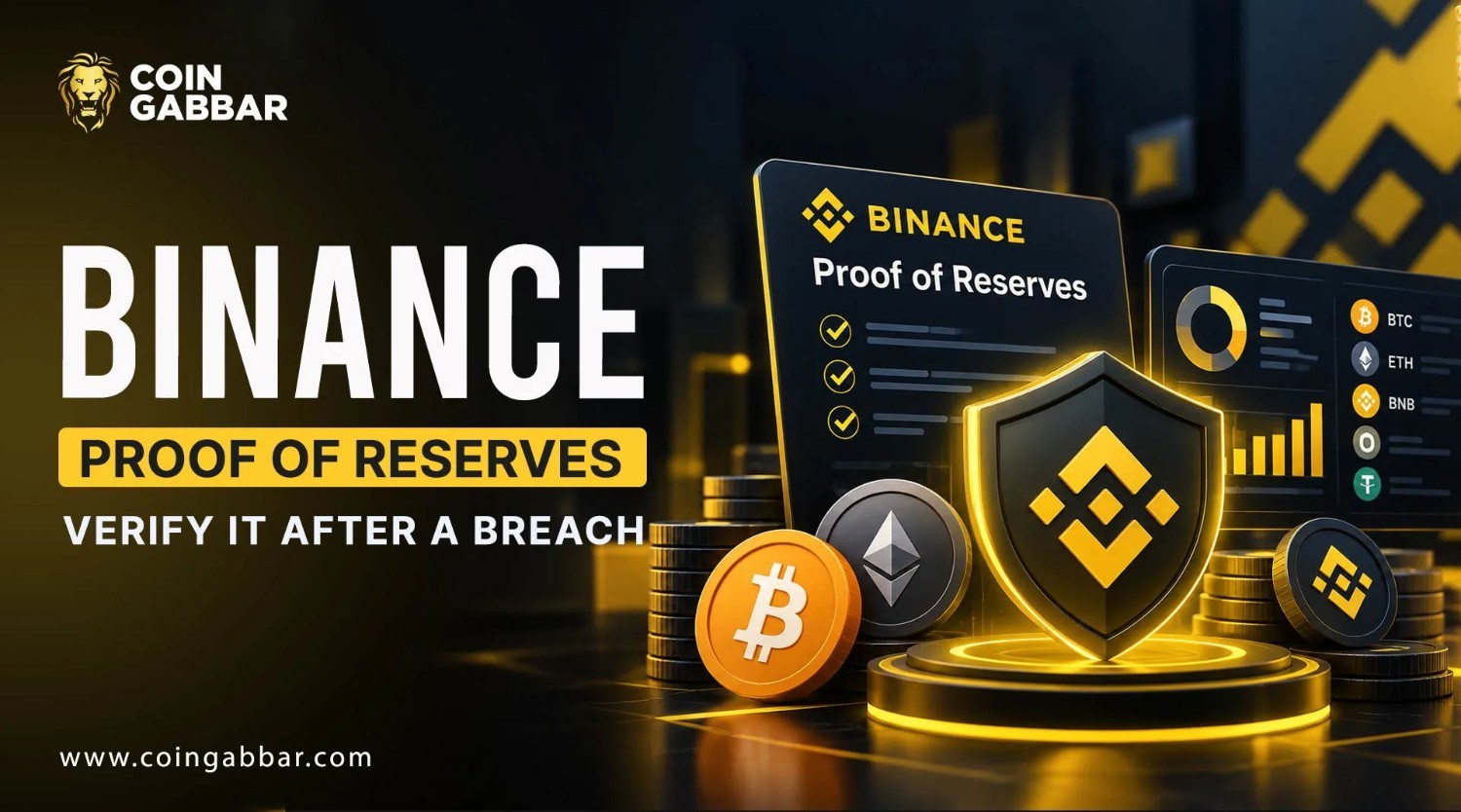
Why Proof of Reserves Matters More After a Binance Breach
Can an exchange really prove it holds every coin people deposited? Binance Proof of Reserves is the public check made to answer that, and people turn to it when a hack, a bridge exploit, or a rush of withdrawals shakes trust. Basically, it’s a report that puts the coins Binance holds on-chain next to the amount users are owed.
As of October 30, 2026, the official pages reviewed for this article don’t mention any new breach of customer funds, but the reasons to check are still there. This guide explains how the system works, how a user can check a balance, and where the gaps are, which helps anyone reading a Binance review or following Binance wallet news.
How Does Binance Proof of Reserves Work?
It starts with a snapshot, which is a record of every customer balance at one exact moment. Binance says each user ID and balance gets turned into a leaf, a short digital fingerprint, and those fingerprints are joined step by step into a Merkle tree. At the top sits one value called the Merkle root. Change a single balance and the root changes too, so faking it is hard.
Then comes ownership. Auditors need to be sure the wallets listed as reserves truly belong to the exchange, and what is proof of reserves in Binance Academy lists three ways to do that: signing a message with the wallet’s private key, moving a set amount of funds at a chosen time, and matching addresses on public blockchain explorers.
Binance also uses zk-SNARK proofs, a kind of math that proves something is true without showing the private data behind it. The official page says the circuit checks that every balance is counted in the total, that no account has a negative net balance, and that the Merkle root is updated honestly. The project says all this adds up to customer assets backed 1:1 with extra reserves, no debt, and a SAFU emergency fund for hacks. Those are Binance’s own claims until someone checks the numbers.
What Features Make the System Useful?
Self-check: each user can find a personal Record ID and Merkle leaf in the account, which shows the balance was counted without exposing anyone else’s data.
Public address list: Binance lets visitors download the full list of reserve wallet addresses, so on-chain balances can be compared with the audit totals.
Regular reports: Binance Academy says big exchanges publish reports monthly or quarterly, and that Binance’s zero-knowledge checks covered 45 asset groups and over $162 billion in user assets by late 2025.
How Can a Balance Be Verified Step by Step?
Turns out, the check takes a few minutes. The steps below follow the UK version of the official page.
Log in to the Binance website and open the official Proof of Reserves page.
Go to Wallet, then Verification.
Pick the audit date to inspect, ideally the newest report published after the incident.
Open the Merkle Leaf and Record ID, which lists the assets covered and the balances recorded on that date.
Cross-check the published reserve wallet addresses and the zk-SNARK validation to confirm the backing ratio.
A matched leaf proves the balance was counted, but it doesn’t prove the reserves exist. Here’s the thing: step five matters most, because comparing the wallet addresses with the stated totals on a blockchain explorer is what tests the backing. So does a matching leaf mean the money is safe? Not by itself.
What Did the Binance Hack Teach the Market?
In 2022, attackers broke into BSC Token Hub, a bridge between two Binance networks, and created about 2 million extra BNB. Binance said roughly $100 million to $110 million was taken. That Binance hack hit a bridge, not the exchange’s customer wallets, yet the lesson holds.
When something breaks anywhere in an ecosystem, users start asking if their deposits are safe, and the Binance Coin, or BNB, felt that heat when the chain was briefly halted.
And that’s when reserve reports matter most. A fresh report after an incident shows whether balances still match the listed wallets.
What Causes and Risks Sit Behind a Reserve Gap?
A shortfall can start with stolen hot wallet keys, an exploited bridge, weak internal controls, or customer deposits being lent out without consent. But a clean report isn’t a promise of safety either. Binance Academy names the limits: an audit is a picture of one moment, it depends on the auditor being independent, and it can’t see off-chain debts that were never disclosed.
Posting wallet addresses can show an exchange’s holdings to anyone watching, which is part of why zero-knowledge methods are catching on. And the system isn’t perfect, since outside researchers found a bug in the zk-SNARK circuit in 2023 that was fixed soon after. Binance Proof of Reserves cuts down blind trust, though it can’t remove risk.
Does Product News Change the Picture?
Binance Agent OS, launched on August 20, 2026, lets developers connect AI agents to trading and wallet tools through separate sub-accounts, and social features such as the Binance Red Packet keep pulling in casual users.
But Binance Proof of Reserves only covers assets held in custody for users. If an AI agent loses money, or a gifting feature gets misused, that’s a different risk from whether the exchange holds enough reserves.
Expert Take: What Should Readers Watch?
At first, full backing sounded like the end of the story, but the missing debt question changed that view. The stronger signal is steady reporting, since one report says little while a long run of reports with matching wallet balances builds a record that’s hard to fake. The main worry is the gap between audits, because balances move every second.
The biggest unknown is off-chain debt, which standard proof of reserves doesn’t cover. It’s a gap worth keeping in mind for anyone following India crypto news. On balance, the system deserves more credit than doubt, but only when users run the check themselves and compare the numbers.
Conclusion
Binance Proof of Reserves gives users a practical way to test whether customer balances are backed, using Merkle trees, zk-SNARK proofs, and published wallet addresses.
What stands out is the self-check feature, and what stays uncertain is everything between audits plus debts outside the blockchain. The next step is simple: run the check and compare the wallet addresses with the totals.
Disclaimer
This article is for informational purposes only and isn’t financial advice. Crypto assets are volatile, and deposits on any exchange carry risk, so readers should research independently and confirm details on official pages before making any decision.