HumidiFi WET: How Liquidity and Pool Fees Work

HumidiFi WET: DEX Liquidity, Pool Fees, and Token Risk
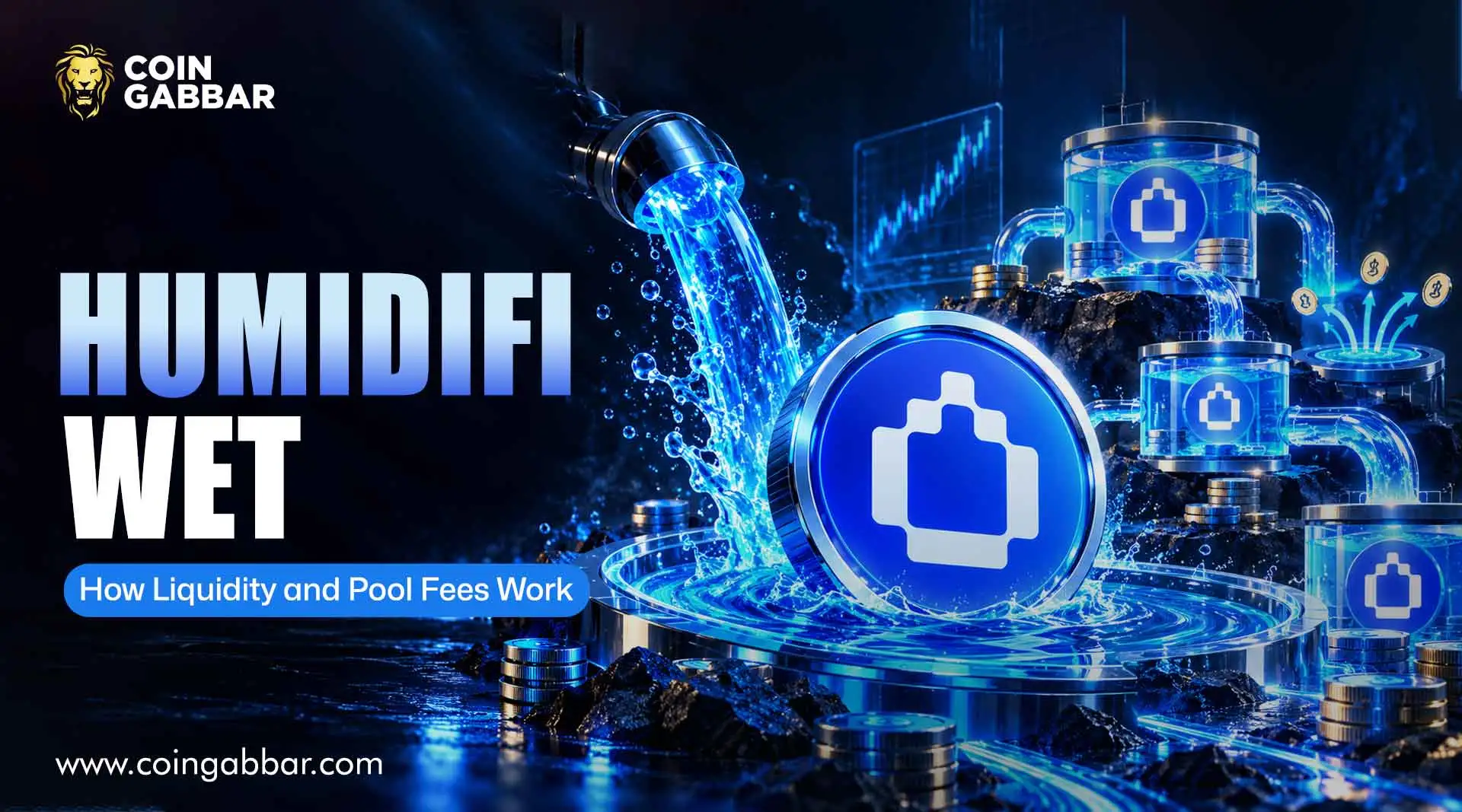
HumidiFi WET is a token of HumidiFi, a proprietary automated market maker on Solana.
Its documented use is staking for trading fee rebates. It gives no ownership of the exchange and no claim on its profits.
The main risks are scheduled unlocks, concentrated holdings, shifting liquidity, and dependence on continued adoption.
Most decentralized exchanges invite users to deposit funds into public pools and earn a share of the fees. HumidiFi works differently.
Professional market makers quote prices and manage the money in private vaults, so the usual questions about pools need new answers.
The story of HumidiFi WET is really two stories: an exchange that wins order flow with sharp pricing and a token whose value depends on far more than trading volume.
What is HumidiFi WET?
Think of HumidiFi as a trading desk that lives on the blockchain. It watches live market data, adjusts its quotes constantly, and fills orders from routing services.
It calls itself a prop AMM, short for proprietary AMM, because the pricing engine and the capital belong to professional firms, not the public.
The token sits beside that machinery as a community asset. The project's litepaper describes a goal of fast, fair, and transparent markets on Solana, and HumidiFi WET is meant to support that goal through incentives and governance.
Term | Plain meaning |
Prop AMM | A market maker that prices trades with its own engine instead of a public pool |
Aggregator | A routing service that sends each trade to the venue with the best price |
Spread | The gap between buying and selling prices, a hidden cost of every trade |
Unlock | A scheduled release of tokens that were locked after launch |
How HumidiFi Liquidity Works Without Public Pools
For those studying HumidiFi WET liquidity, the first surprise is that there is no public trading screen.
Traders usually reach the venue through routing services such as Jupiter, which compare many exchanges and send each order wherever the price looks best.
When HumidiFi offers the best quote, the trade lands there, and the person trading may never notice.
Behind the scenes, a private engine keeps refreshing prices as the wider market moves. On a fast network like Solana, that constant updating is cheap enough to work.
The upside is cleaner fills and deeper liquidity when markets turn choppy. The downside is that the pricing logic is closed, so outsiders cannot study it the way they can study an open pool.
Prop AMM vs Regular Pool: Why It Matters
Question | Regular AMM pool | Prop AMM like HumidiFi |
Who supplies liquidity? | Anyone who deposits | Professional market makers |
Can users earn pool fees? | Yes | No public pools to join |
How are prices set? | A fixed formula | A live, private quoting engine |
How open is it? | Logic is easy to inspect | Logic is closed |
Main appeal | Open access | Tight pricing and low slippage |
Other prop AMMs on Solana, such as SolFi and ZeroFi, chase the same order flow. None of these models is automatically better.
Open pools offer access and transparency, while prop AMMs offer sharper execution.
Pool Fees Explained: Where Traders Really Pay
Searches about HumidiFi WET pool fees usually assume there are pools to join and fee tiers to compare. In a prop AMM, ordinary users do not deposit funds, so there is no liquidity provider fee share to earn.
For traders, the cost shows up mostly in the quote itself. A tighter spread means a cheaper trade, and a wider spread means a pricier one.
Routing services may add their own charges, so the final cost depends on the platform used as much as on HumidiFi.
Picture a trader whose swaps normally carry a small hidden cost in the spread. If staking trims the fee part of that cost, the saving is a fraction of something already small. Frequent, large traders may notice it, while a casual holder will barely feel it.
WET Staking and Rebates: What the Token Actually Does
The official tokenomics page describes HumidiFi WET as a standard Solana token with a fixed maximum supply.
Staking it can earn rebates on trading fees, and staking tiers are recognized automatically on-chain. The same page states that the token should not be viewed as an investment.
That last point matters. Holding the token does not buy a share of the exchange, a claim on its income, or a vote today.
Governance is described as a future plan with no firm timeline in the official material. Rebate levels can change, so they should be checked directly before any decision leans on them.
Supply, Unlocks, and Holder Concentration
Supply is split between a foundation, an ecosystem fund, a lab group, and the public sale, with the foundation holding the largest share.
Most of it is released gradually under a vesting schedule, so the amount in the market keeps growing over time.
Each scheduled release of HumidiFi WET can add selling pressure, especially when demand is soft.
Different trackers have shown slightly different dates for the same upcoming unlock, so the schedule should be confirmed against the official documents and on-chain data, not taken from a single source.
Trackers also show a large share of supply sitting in a small number of wallets. That does not automatically mean a few people control it, since some of those wallets belong to exchanges, vesting contracts, or liquidity arrangements. It does mean a handful of large holders could move the market if they chose to sell.
How to Verify the Token Contract
Fake tokens and copycat links often appear around popular launches. Before buying HumidiFi WET, the address should be copied from the official site and pasted into the official Solana explorer.
The name, supply, and authority settings should match what the project publishes.
Care is needed because different listing pages sometimes display different addresses for similar assets.
If an address does not match the official source, the safe move is to stop and ask the project before trading.
Token Risk: What Can Go Wrong With HumidiFi WET
A strong exchange does not make a strong token. The first public sale showed how fragile early distribution can be, because automated buying captured much of it, and the team had to cancel and start again with extra protections. The team recovered, but the episode left a mark on trust.
Dependence on routers is a second weakness. Most trading volume reaches HumidiFi through a small group of routing services, so a change in how one of them treats the venue could quickly shrink activity.
Parts of the team have also stayed private, and the quoting engine is closed, which is why community members keep asking for audits and clearer disclosure.
Price behavior adds another layer. HumidiFi WET has traded far below its early highs, protocol income has been uneven, and a short website outage once set off a sell-off before the price recovered.
Competition from other prop AMMs and possible regulatory attention to dark-pool style trading add further uncertainty.
Quick Checklist Before You Buy
Copy the token address from the official site and verify it on the explorer.
Read the official tokenomics page so the unlock schedule is clear in advance.
Treat staking rebates as variable, not as promised income.
Size any position so that a total loss would not cause real harm.
Watch routing announcements, because changes there can shift activity fast.
Keep wallet recovery phrases offline and approve only transactions that were intended.
The Bottom Line: Great Plumbing, Risky Token
HumidiFi WET sits on top of an exchange that has shown it can win order flow through speed and tight pricing.
The token is a different matter. Its value depends on future demand, scheduled unlocks, router goodwill, and a team that has kept parts of itself private.
People researching HumidiFi WET should separate the exchange from the token. Strong trading activity says little about whether the token will hold its value, so the questions on fees, liquidity, and risk deserve checking against official documents before any money moves.
Disclaimer: This article on HumidiFi WET is for general information only and is not financial, investment, or legal advice. Crypto tokens are volatile and can lose all value. Details can change, and information differs by source. Verify everything through official channels and consult a qualified professional before making any decision.