Kazakhstan Crypto Restrictions: Coinbase, HTX, BingX Barred in AIFC

Kazakhstan crypto restrictions now cover six more trading platforms, based on a post shared by The Block on X. The report says the named exchanges cannot offer unlicensed digital asset services inside the AIFC.
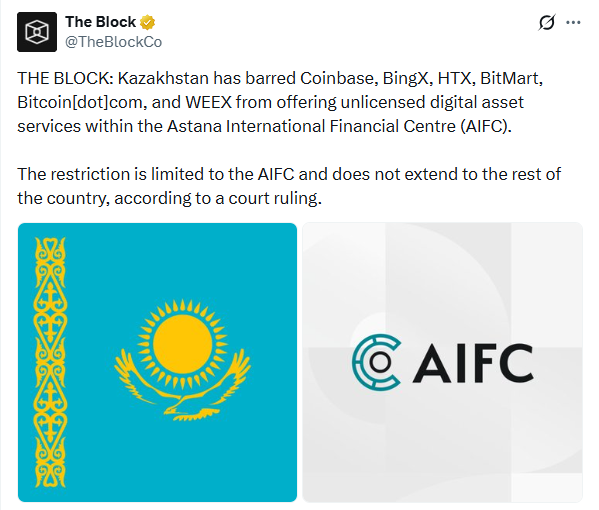
This is a special financial zone in the capital, and the report adds that the court ruling does not extend the limit to the rest of the country.
What the New Kazakhstan Crypto Restrictions Say
The post names six platforms, which are Coinbase, BingX, HTX, BitMart, Bitcoin.com, and WEEX. The wording focuses on unlicensed services, so the platforms are not shut out of every activity.
They are only barred from offering digital asset products inside the financial center without a license.
Which Crypto Exchanges Are Named in the AIFC Ruling
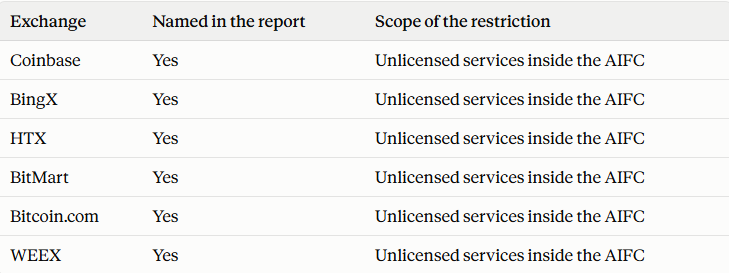
Source: The Block post on X, October 2026.
Why the AIFC Matters for Crypto Regulation in Kazakhstan
The AIFC is the legal home for licensed crypto activity in the country. The Law on Digital Assets bans the trade of unsecured digital assets and the work of crypto exchanges for them, except inside the zone.
Inside the zone, the Astana Financial Services Authority (AFSA) approves, registers, and checks financial firms and market institutions.
How These Crypto Restrictions Differ From Earlier Website Blocks
Earlier action mostly relied on blocking websites across the whole country. In 2023, the government blocked access to Coinbase and said the exchange had broken the law on digital assets.
The latest Kazakhstan crypto restrictions come from a court ruling and cover only the AIFC zone. This means they target licensing inside the financial center and not public access to a website.
Warnings aimed at HTX are not new either. AFSA named OKX, HTX, Bitget, and MEXC in an April 2026 warning about platforms that promoted services to Kazakh citizens without a license. The latest ruling adds to a pattern that crypto news readers have watched grow through 2026.
What Is Still Unclear About the Court Ruling
The report confirms the six exchanges and the limit to the AIFC, but it leaves a few key points open. The post does not say who brought the case or when the ruling was made.
It also says nothing about fines, deadlines, or steps that the named platforms must take, which makes it hard to tell how soon the Kazakhstan crypto restrictions could reach users inside the financial center.
No replies from Coinbase, BingX, HTX, BitMart, Bitcoin.com, or WEEX had been reported at the time of the post, so the views of the exchanges are still unknown.
The one point stated clearly is that the limit does not go beyond the AIFC. Any claim about timing or wider effects would be a guess until the court record, the regulator, or the exchanges share more detail.
What Crypto Users Should Check Before Using an Exchange
Users in Kazakhstan can confirm the license status of any platform before they deposit funds. AFSA advises checking the status of a firm through its official public register.
Licensed platforms work under an AIFC permit, and Binance, Upbit, and Bybit were reported to hold such permits. Anyone who holds assets on one of the six named exchanges may also want to watch for official notices about account access inside the AIFC.
Analyst View: What the Kazakhstan Crypto Restrictions Signal
The ruling shows that Kazakhstan keeps tying legal crypto activity to a license inside one zone. It also signals that global exchanges without that license face more pressure, even when their websites stay open in other parts of the country.
The narrow scope suggests that regulators keep license questions apart from national access rules. This may shape how other platforms enter the market.
Conclusion
The Kazakhstan crypto restrictions place six well-known exchanges under a licensing limit inside the AIFC, yet the post gives no ruling date, no fines, and no exchange comments.
Readers who follow crypto regulation should treat the court record and regulator statements as the next sources to check.
YMYL Disclaimer: This article is for informational purposes only and does not constitute financial, investment, or trading advice. Readers should do their own research before trading or investing in cryptocurrency.









