Keystone Data Breach Exposes Customer Shipping and Order Details

Hardware Wallet Maker Apologizes for Website Intrusion
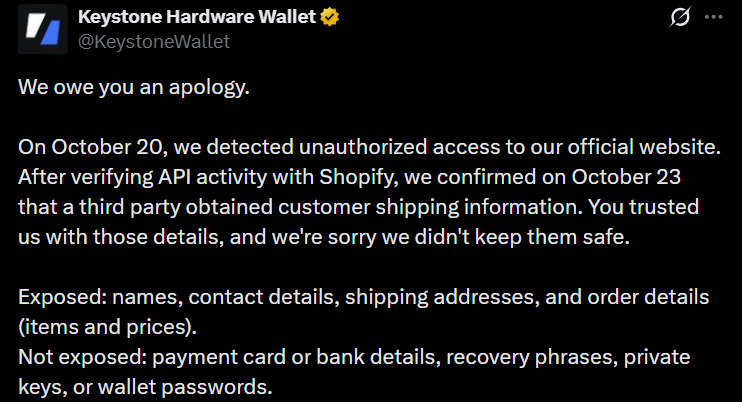
The Keystone data breach surfaced on October 24, 2026, when Keystone Hardware Wallet posted an apology on X.
The company said an unauthorized party reached customer shipping details through its website. This report covers the confirmed facts and the safety steps it advised.
Timeline From Detection to Confirmation
According to the project, it detected unauthorized access to its official website on October 20. The team then reviewed API activity with Shopify. API means Application Programming Interface, a method that lets software systems share information. Shopify is an e-commerce platform used to run online stores.
On October 23, that review confirmed a third party had obtained customer shipping information. The public apology followed on October 24, 2026. This crypto breach adds to other recent crypto security incidents, so readers should rely on dated facts.
Which Details Were Exposed and Which Were Safe
The company split the information in the Keystone data breach into two groups. The table lists each item as stated in the official post dated October 24, 2026.
Information type | Status |
Names | Exposed |
Contact details | Exposed |
Shipping addresses | Exposed |
Order details (items and prices) | Exposed |
Payment card or bank details | Not affected |
Recovery phrases | Not affected |
Private keys | Not affected |
Wallet passwords | Not affected |
Source: Official X Post
Fixes and Investigation Steps Announced
Keystone said it blocked access, fixed the vulnerability, and opened an investigation. A vulnerability is a weakness in software that attackers can use. The team is also emailing affected customers directly.
After the Keystone data breach, the project promised a detailed report soon. Until it arrives, the company asks users to trust only official channels. Customers with concerns can email support@keyst.one, and the official website is keyst.one.
The post gives no figure for the number of people involved, so the scale is unconfirmed.
Impersonation Scams Customers May Face
The company warned that scammers may pose as the brand by phone, text, email, or mail. They may offer refunds, replacement devices, or fixes for an order or address. The project says none of these offers come from it.
Safety points from the official post:
Never share a recovery phrase or private key with anyone.
Never enter a recovery phrase into a device you did not order.
Do not click links in unexpected messages.
Type keyst.one into your browser yourself.
Report anything unusual to the support email.
Expert Opinion: Why Shipping Records Still Matter
From a security view, the confirmed facts are mixed. Keys and recovery phrases were not exposed in the Keystone data breach, which limits direct risk to funds. Names, addresses, and order details can still help scammers build believable messages.
Incidents of this type can lead to phishing attempts. Readers following crypto news and hack news should treat unexpected offers with caution. A fuller picture will depend on the detailed report the company promised.
Conclusion: Key Facts and the Next Update
The Keystone data breach involved names, contact information, shipping addresses, and order records, according to the project. Payment, recovery phrase, key, and password details were not part of it.
Customers should stay alert to unexpected messages and watch the official channels for the detailed report, which the company says is coming soon.
YMYL Disclaimer: This article is for educational and informational purposes only. It does not offer financial advice, price predictions, or return guarantees. Readers should verify details through official channels.









