Keystone Wallet Breach Exposes Verification Key to Counterfeit Risks

Crypto News Today: Hardware Wallet Security Takes Center Stage
Crypto news today is about hardware wallet safety, as users ask how far they can trust the tools that guard their assets. This report explains the latest update so crypto readers know what to check and what to wait for.
Keystone Wallet Breach: What the Company Says Was Stolen
Keystone says an attacker who broke into its website also stole a key used to verify its devices. This could let fake wallets pass its check, as stated in Keystone’s official X statement. The company says recovery phrases and private keys were not hit.
The Keystone Wallet Breach was first shared as a leak of customer data. The company’s Monday update made the scope wider. Keystone says 25,964 buyer records were involved, and it now confirms that the device verification key was taken too.
Stolen Verification Key: How Hardware Wallets Could Pass Checks
A hardware wallet is a small device that keeps your crypto keys offline. The verification key works like a stamp that tells the company’s website a device is real. If an attacker holds that stamp, a fake device could be built to look real to the same online check.
Keystone describes this as a risk and not as a proven case. The company also says recovery phrases and private keys were not exposed, so the stolen key does not open a wallet by itself.
Keystone Devices and October 20: Which Wallets Are Safe?
Keystone sorts devices by the date they were delivered. It says devices delivered before October 20 are safe to use if they pass the check on the official Keystone website. Devices that arrived after that date with the old key need extra checks through customer support, even if the online check passes.
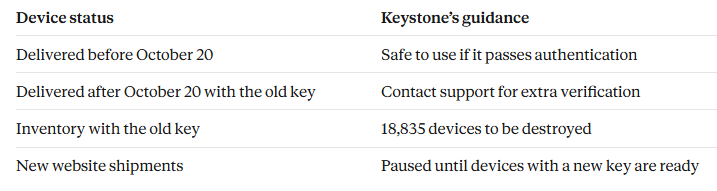
The company will also cut the time it keeps customer personal data from 180 days to 90 days. Shipments will restart once devices with a new key are being made.
What Keystone Wallet Owners Should Do After the Breach
First, check the delivery date of your device and keep the order email as proof. If it arrived after October 20, contact the team through the official Keystone support page before you add any funds or set up a wallet on it.
Never type your recovery phrase into a website. Never share it with anyone who says they are from support. Be careful with emails or messages about the incident, because buyer data was involved and scammers often copy company notices.
When you plan to buy a hardware wallet, use only the official store of the maker.
Still Unconfirmed in the Keystone Wallet Breach
Official sources reviewed have not yet shared these details:
Counterfeit devices: if any fake wallet has been made or sold
New key date: when wallets with the new key will ship
Delivered units: how many devices that arrived after October 20 used the old key
Customer notices: how affected buyers will be told directly
The Bottom Line
The Keystone Wallet Breach shows that a safety check can become a risk when the key behind it is stolen. For now, the company says recovery phrases and private keys are safe, and it has paused shipments.
Readers who follow crypto news should check their delivery date and rely on official channels for updates.
Disclaimer: This article is for educational and informational purposes only. It does not offer financial advice, price predictions, or return guarantees. Readers should verify details through official channels.









