KuCoin Convert Delisting: Five Tokens and Key Changes

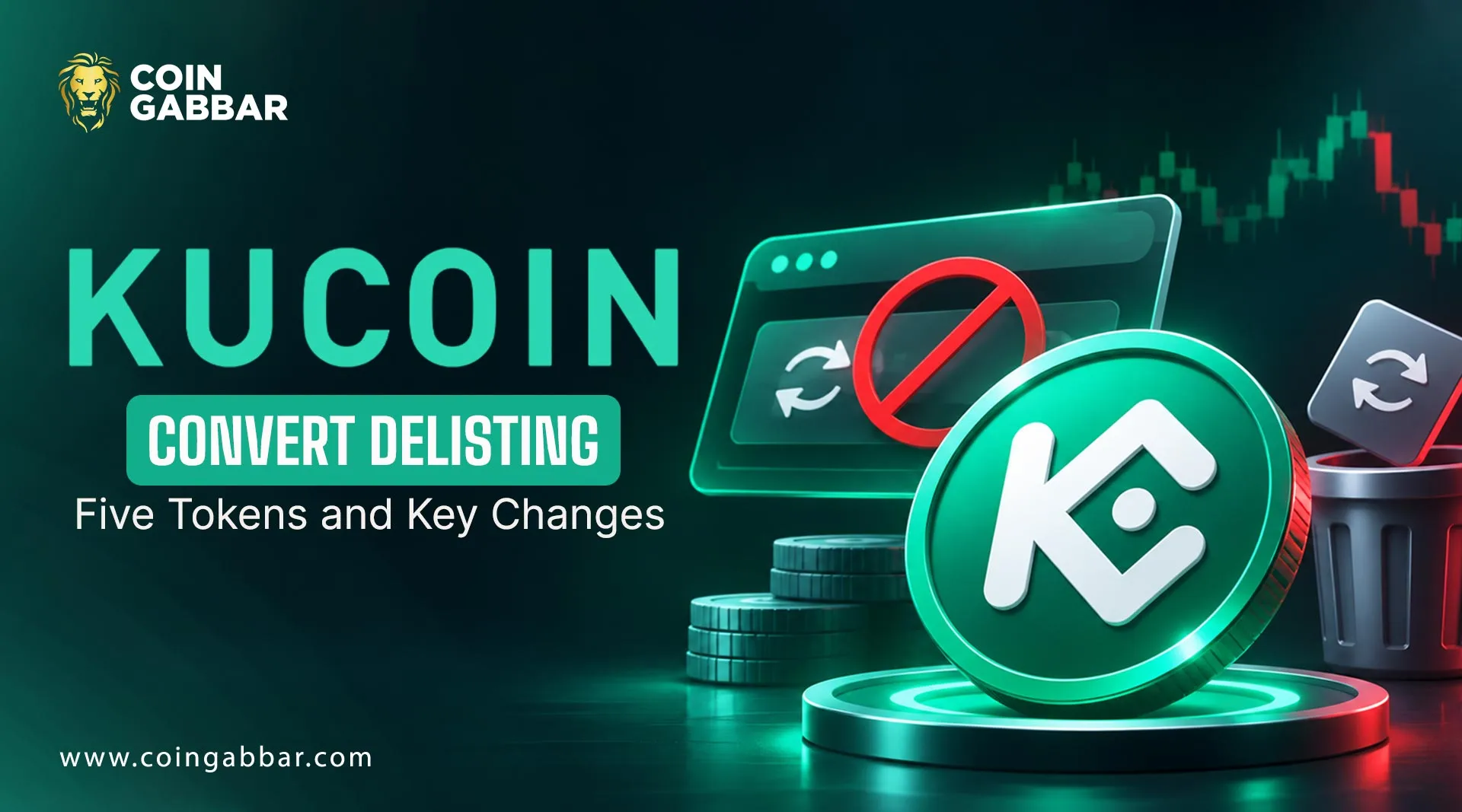
KuCoin Convert Delisting vs Spot Delisting: Five Token Guide
A KuCoin Convert delisting removes a token from KuCoin's quote-based swap tool, while a spot delisting removes the token and its trading pairs from the main order-book market and starts a deposit and withdrawal countdown.
The latest Convert notice covers five tokens: Sundog, Eclipse, Gaia, Sudeng, and Milady Meme Coin.
Exchange delisting notices look alike but mean very different things for holders. A token leaving one product is not the same as a token leaving the platform, and mixing the two up is how traders end up with stuck orders or missed withdrawal windows.
The sections below explain how a KuCoin Convert delisting works, how spot delisting differs, what the five named tokens mean for holders, and what to do before each cutoff.
For fresh additions and removals across the platform, the tracker of KuCoin Exchange Listings is a useful companion.
KuCoin Convert delisting removes a token that will no longer be available through the exchange's instant swap feature, where users exchange assets using quoted prices.
KuCoin Convert Delisting: What the Latest Notice Says
KuCoin announced that its Convert product will stop supporting five tokens. They are listed below.
Token | Symbol | Status on Convert |
Sundog | SUNDOG | Removed |
Eclipse | ES | Removed |
Gaia | GAIA | Removed |
sudeng | HIPPO | Removed |
Milady Meme Coin | LADYS | Removed |
Users are asked to cancel any convert limit orders before the cutoff. Orders left open are cancelled automatically by the system, and after the cutoff the tokens are no longer available for trading on Convert.
This KuCoin Convert delisting appears on the official announcements page, and the notice speaks only about Convert.
What KuCoin Convert Is, and Why It Differs From Spot
Convert is a live request-for-quotation tool. A user asks for a price, receives a quote, and settles quickly inside the account, without reading an order book.
The official Convert page shows how it works. Limit orders also exist on Convert, which is why the notice asks users to cancel them.
Spot trading is the order-book market, where buyers and sellers post orders against each other.
The two are separate products, so a token can stay live on one after leaving the other. A wider look at how these products fit together is in the KuCoin Exchange Review 2026.
Spot Delisting: The Bigger Event
Spot delistings follow the exchange's Special Treatment rules, which apply when a project no longer meets platform standards. The notices usually follow the same pattern.
Trading pairs close at a set time, and remaining orders are removed afterward.
Trading bots for the affected tokens shut down before that cutoff.
Deposits stay closed.
Withdrawals remain open for a limited window, then close.
Users are urged to update or cancel spot orders and withdraw holdings before the closing date.
KuCoin also warns that if withdrawals fail because of problems at the project itself, it may close withdrawals and will not cover users' losses.
A recent spot delisting notice shows the full wording. One more distinction matters: delisting a single trading pair does not always affect the token, since it may still trade through other pairs.
KuCoin Convert Delisting vs Spot Delisting: Side by Side
Question | Convert delisting | Spot delisting |
What is removed | Support in the Convert swap tool | The token and its pairs from the spot market |
Order handling | Converted limit orders are cancelled | Spot orders should be cancelled, and leftovers are removed |
Deposits | Not addressed in the notice | Usually closed |
Withdrawals | Not addressed in the notice | Open for a limited window, then closed |
Not mentioned | Shut down before the cutoff | |
Typical trigger | A product-level decision | Special treatment rules |
Main user action | Cancel limit orders | Withdraw holdings before the closing date |
In short, a KuCoin Convert delisting is a narrow product change, while a spot delisting is a platform exit with a withdrawal deadline.
The Five Tokens: What Holders Should Check
The notice names five tokens but says nothing about how any of them is performing, so holders have to check their status directly. For Sundog (SUNDOG), Eclipse (ES), Gaia (GAIA), Sudeng (HIPPO), and Milady Meme Coin (LADYS), the practical questions are the same.
Does the token still have a live spot pair?
Are deposits and withdrawals open?
Is there a separate notice on the delistings page?
Are any Convert limit orders still open?
Smaller tokens often trade thinly, so a hurried sale can cost more in slippage than expected. The answers also differ from token to token, so each one deserves its own check.
What to Do After a KuCoin Convert Delisting
A short routine keeps holders out of trouble.
Cancel any Convert limit orders for the five tokens before the cutoff.
Open each token's page and check whether spot trading is live.
Review the official delistings page for any separate notice.
If a spot delisting exists, withdraw before the closing date.
Compare liquidity before selling, because thin order books punish large orders.
Confirm every notice through the official announcements page, not through a link in a message.
Risks and Fine Print
Liquidity tends to thin before a delisting, and prices can move sharply on the news. A token removed from one venue may still trade elsewhere, but usually with different risks.
Withdrawals can fail if the project itself stops working, and notices can be updated after they are posted. A KuCoin Convert delisting can be an early warning sign, but it is not always one.
Not every product follows the same rulebook either. Newly listed tokens carry their own risks and conditions, as the explainer on the KuCoin GANG Alpha Token shows.
Delisting news also attracts scammers. Fake urgent-withdrawal pages and impersonated support accounts are common, and a real KuCoin Convert delisting never requires a password, a private key, or a recovery phrase.
The Bottom Line
A KuCoin Convert delisting is a narrow change that mostly affects open Convert orders, while a spot delisting brings deadlines for trading, deposits, and withdrawals.
The two notices can sit side by side on the same page, so reading each one carefully matters.
For holders of the five tokens in the latest notice, the safest path is simple: Cancel, convert orders, check spot status, read the official notice, and ignore anything that arrives through a message.
Treat every KuCoin Convert delisting as a prompt to check, not a reason to panic.
Disclaimer: This article on KuCoin Convert delisting is for general information only and is not financial, investment, or legal advice. Crypto assets are volatile and can lose all value. Exchange notices change, and details can differ by source. Verify everything through official channels and consult a qualified professional before making any decision.