Ledger Tampered Wallets: Seed Phrase Implants Found Across Asia

Ledger Tampered Wallets: Hardware Implants Found Across Three Regions
Ledger, the hardware wallet maker, has updated its investigation into tampering in its device supply chain.
The company says physically tampered hardware wallets have been found in Berlin, Germany, so the problem is no longer linked to a single area.
The latest news on Ledger tampered wallets matters most to anyone who bought a device through a third-party seller.
This article explains what was found, what is not affected and what Ledger asks users to do.
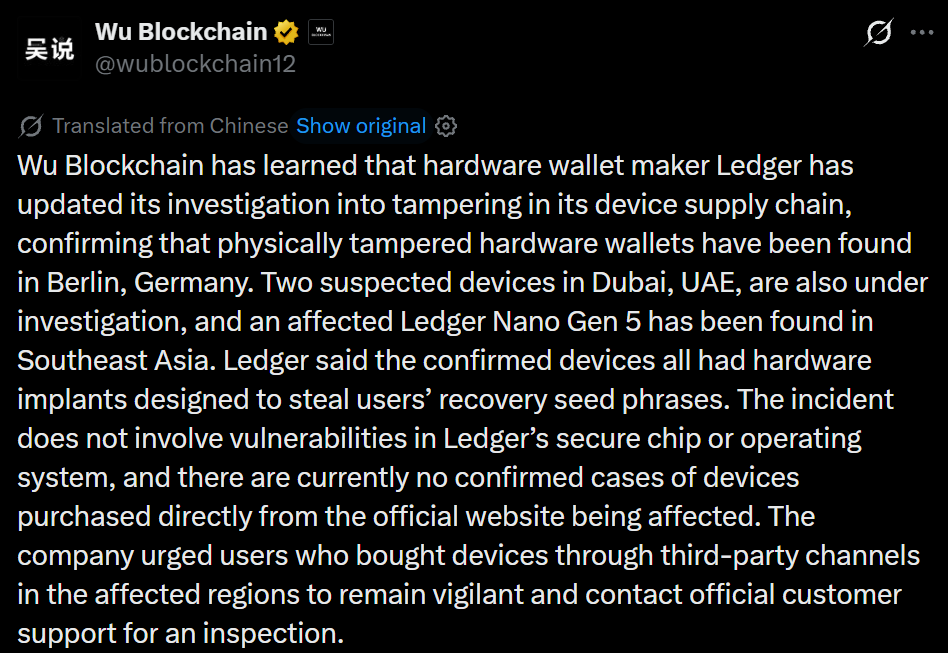
Source: Wu Blockchain Post
What Ledger Announced in Its Latest Update
According to Ledger's official update on the investigation, the company has confirmed that physically tampered hardware wallets were found in Berlin.
Two suspected devices in Dubai, United Arab Emirates, are also under investigation. An affected Ledger Nano Gen 5 has been found in Southeast Asia.
A hardware wallet is a physical device that stores the keys to a person's crypto.
The update on Ledger tampered wallets can be summed up like this:
Item | Status in the update |
Berlin, Germany | Physically tampered wallets confirmed |
Dubai, UAE | Two suspected devices under investigation |
Southeast Asia | Affected Ledger Nano Gen 5 found |
Confirmed devices | All had implants built to steal recovery seed phrases |
Secure chip and operating system | No vulnerabilities involved |
Devices bought on the official website | No confirmed cases at present |
Where Tampered Devices Have Been Found
Ledger separates confirmed cases from suspected ones:
Berlin, Germany: Tampered hardware wallets have been confirmed.
Dubai, UAE: Two suspected devices are under investigation. They are not yet confirmed as tampered.
Southeast Asia: An affected Ledger Nano Gen 5 has been found.
Ledger's earlier Post about the hardware implant attack says a highly organized criminal group carried out the attack. It also says Ledger's security lab, Ledger Donjon, took the implant apart and identified how it works.
What the Hardware Implants Do
Ledger says the confirmed devices all had hardware implants designed to steal users' recovery seed phrases.
A hardware implant is an extra component added to a device without the owner's knowledge.
A recovery seed phrase is a list of words that can restore access to a crypto wallet. Whoever has the phrase can control the funds, so a device built to capture it is a serious risk.
The update refers to tampering in the device supply chain, meaning the path a device travels from the maker to the buyer. In this case, the device were physically changed before reaching their owners.
What Is Not Affected
Ledger says the incident does not involve vulnerabilities in its secure chip or operating system. The problem is physical tampering of devices, not a flaw in the software that runs on them.
Ledger also says there are currently no confirmed cases of devices bought directly from its official website being affected.
The word "currently" matters: the investigation is still ongoing, and the company has not said it has found every affected device.
What Users Should Do Now
For anyone concerned about Ledger tampered wallets, Ledger's request is clear. Users who bought devices through third-party channels in the affected regions should remain vigilant.
They should contact Ledger's official customer support for an inspection.
Two general points apply, although they are not part of the update:
Use only official support channels, and be careful with links or messages from unknown senders.
Treat any device bought from an unofficial seller with extra care.
Conclusion
Ledger has confirmed physically tampered wallets in Berlin, is investigating two suspected devices in Dubai and has found an affected Nano Gen 5 in Southeast Asia.
The confirmed devices had implants built to steal recovery seed phrases, but Ledger says its secure chip and operating system are not at fault, and there are no confirmed cases from its official website.
The story of Ledger tampered wallets is still developing, so users should follow Ledger's official updates.
Disclaimer
This article is for educational and informational purposes only and is not financial or investment advice. Crypto assets are high risk, their prices can be very volatile, and you can lose some or all of your money. Always do your own research and consider speaking with a licensed financial advisor before making investment decisions.






