Ondo Finance Adds OUSD for Instant USDY Mint on Tempo


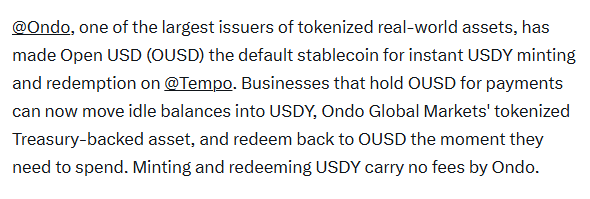
Ondo Finance has made Open USD (OUSD) the default stablecoin for instant USDY minting and redemption on Tempo, according to an official update from Ondo.
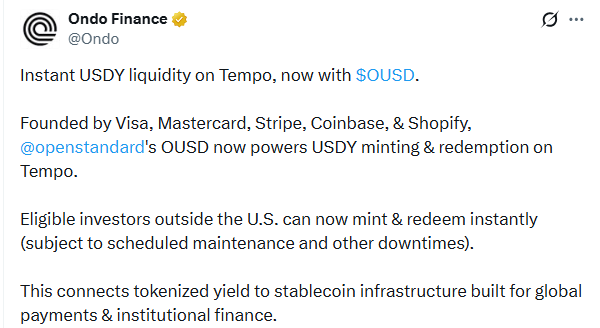
Eligible businesses can now move idle balances from open USD into USDY and back again without swapping into a different digital dollar first.
This crypto news update matters for finance teams that keep cash ready for payroll, vendors, and bills.
Key Takeaways
Open standard's USD is now the default stablecoin for instant treasury-backed token minting and redemption on Tempo.
Ondo charges no mint or burn fees, so users only pay network gas.
Treasury-backed token is open only to eligible investors outside the US.
What Is the Ondo Finance OUSD and USDY Update?
The update connects two products that already live on the same network. USDY is a tokenized asset backed by Treasuries, and Tempo has already confirmed it is live in its own announcement.
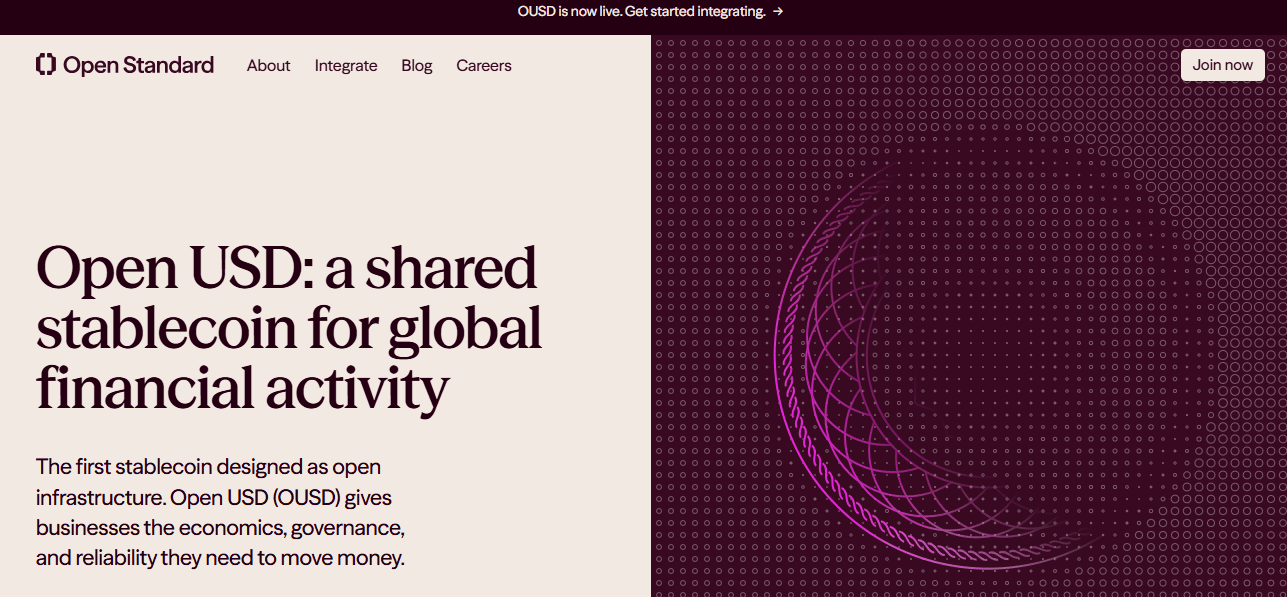
OUSD is a stablecoin from Open Standard, a group the update says was founded by Visa, Mastercard, Stripe, Coinbase, and Shopify.
A business can now pay in OUSD, park spare cash in the Treasury-backed token, and redeem it back to Open standard's USD when a bill arrives.
How Does Instant USDY Minting and Redemption Work on Tempo?
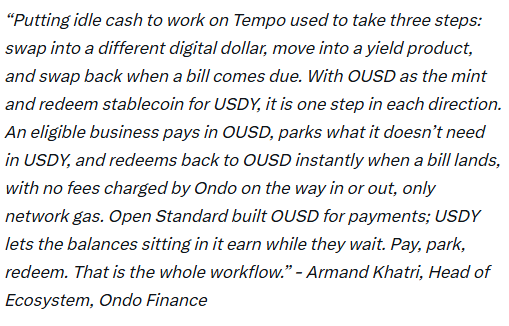
Before this change, putting idle money to work usually took three steps, which were a swap into another digital dollar, a move into a separate investment product, and a wait to get the money back.
With Open standard's USD as the mint and redeem stablecoin, each direction now takes one step. Minting means creating new tokens in exchange for a deposit, while redeeming means turning tokens back into dollars.
Mints and redemptions settle instantly on Tempo, so a business can redeem treasury-backed token for OUSD and pay a supplier as soon as an invoice comes due.
Because the same stablecoin goes in and comes out, there is nothing to reconcile across different coins, which keeps bookkeeping simple for crypto payments teams.
Are There Fees for USDY Mint and Redeem With OUSD?
Ondo Finance says minting and redeeming the token through this integration carries no mint or burn fees, and partners mint and redeem OUSD at a 1:1 rate with US dollars at no cost.
Open standard has also confirmed the news on their official X account.
Users still pay network gas, which is the small blockchain fee for processing a transaction.
The update also notes that instant minting is subject to scheduled maintenance and other downtime, so teams should not expect the service to run every minute of the day.
Who Can Use USDY and OUSD on Tempo?
USDY is available only to eligible investors outside the US, and any yield comes from USDY, not from Open standard's USD. Open standard's USD is issued by Bridge Building Inc., which the update describes as an independent, US-licensed, and registered stablecoin issuer.
More than 200 financial institutions, fintechs, and global businesses are adding Open standard's USD, which could widen the places where a redeemed balance can be spent.
Readers should check the USDY page on the Ondo website for current eligibility rules before taking any step.
What This Means for Crypto Payments and Tokenized Treasuries
The move links tokenized yield with stablecoin infrastructure built for global payments and institutional finance, a theme many in the crypto industry follow closely. Armand Khatri, Head of Ecosystem at Ondo Finance, summed up the workflow as pay, park, and redeem.
Ondo also called this integration a first step toward broader OUSD subscriptions and redemptions across its products, although no timeline was shared.
The Bottom Line
Ondo Finance has cut a three-step treasury process down to one step in each direction on Tempo, but access is limited to eligible non-US investors, and the service can pause for maintenance.
Disclaimer: This article is for information only and is not financial or investment advice. Crypto assets carry risk, including the loss of funds, so verify current details with official sources.






