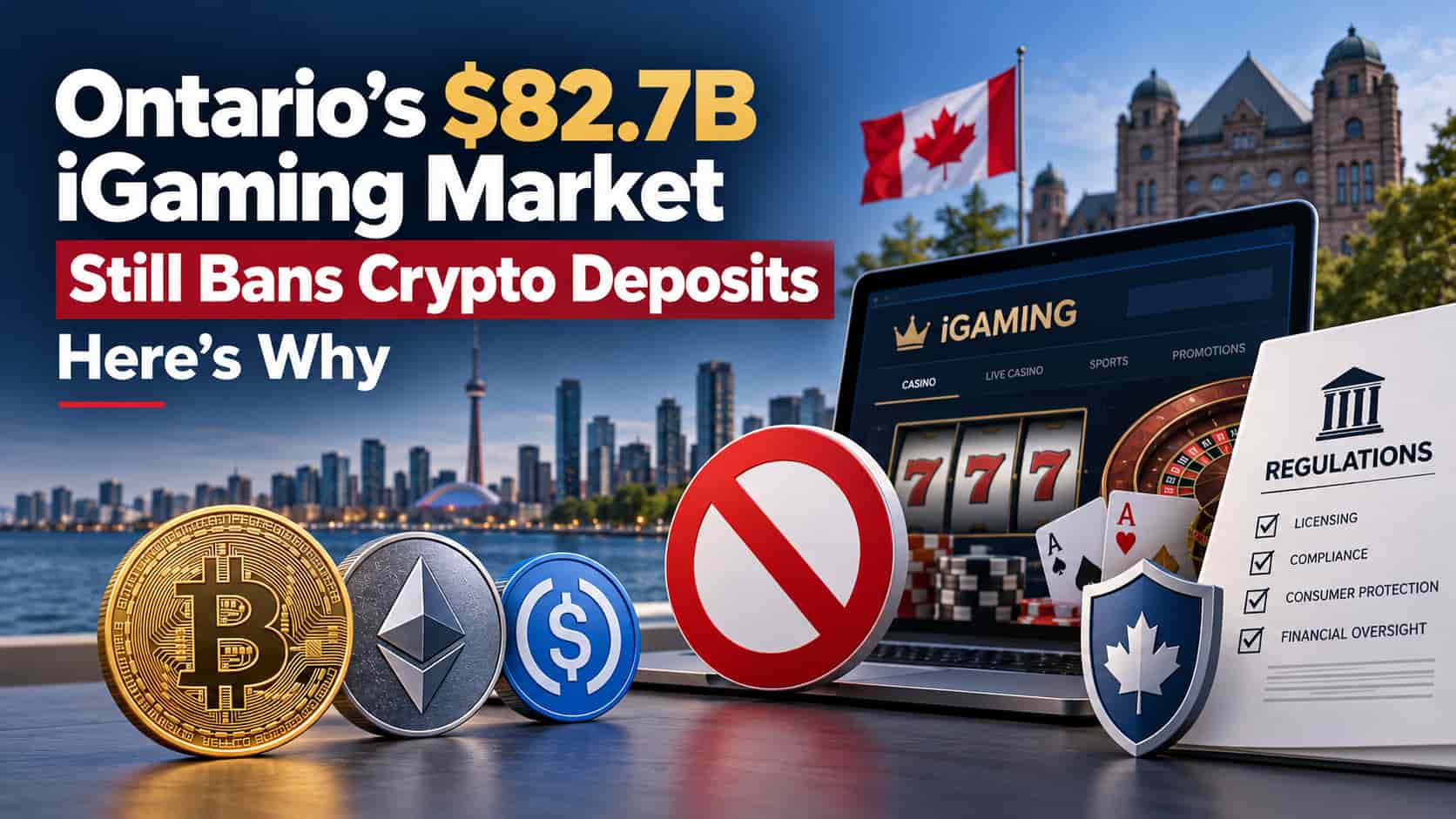
Ontario's $82.7B iGaming Market Still Bans Crypto Deposits: Here's Why

At a Glance
- Ontario's regulated online gambling market processed $82.7 billion in wagers in 2024-25, but none of it can be funded with crypto.
- The province's regulator states plainly that cryptocurrency is not legal tender and shall not be accepted by licensed operators.
- Canada's new Stablecoin Act brings issuers under Bank of Canada supervision, but it does not change Ontario's gambling rules.
Ontario runs one of the largest regulated iGaming markets in North America. According to iGaming Ontario's 2024-25 annual report, players wagered $82.7 billion and the market generated $2.9 billion in gaming revenue, both up more than 30% on the previous year. More than 80 licensed gaming sites now serve roughly 2.6 million active player accounts.
For a crypto audience, the most striking number is zero: that is how much of that activity is funded with Bitcoin, Ether or stablecoins. Inside Ontario's licensed market, crypto deposits are not an option at any operator.
What the Rule Actually Says
The ban is written into the Alcohol and Gaming Commission of Ontario's Registrar's Standards for Internet Gaming, which state that crypto currency is not legal tender and shall not be accepted. It sits next to a broader requirement that every deposit be verified and authorised through a financial services provider before it reaches a player account. Because the standards apply to every operator in the same way, no brand can choose to opt in.
Why Regulators Drew the Line
The logic is about traceability. Ontario's framework assumes that every dollar entering a gambling account passes through a regulated intermediary that has already verified who the customer is. A wallet-to-wallet crypto transfer, by design, skips that intermediary. For a regulator responsible for anti-money-laundering controls across a market moving billions of dollars a month, that gap is the whole problem.
Outside Ontario, the picture looks very different. Offshore crypto casinos, usually licensed in Curaçao, now run largely on dollar-pegged stablecoins such as USDT and USDC, which hold their value through a session in a way BTC or ETH cannot. Players who use them, however, step outside Ontario's player protections entirely, from identity checks to deposit limits to a regulator they can complain to.
Does Canada's Stablecoin Act Change Anything?
Not for gambling, at least not yet. Canada's Stablecoin Act, part of Bill C-15, received Royal Assent on March 26, 2026, and requires issuers to register with the Bank of Canada, hold 1:1 reserves and offer redemption at par, with the framework expected to take full effect in 2027. Regulated, Canadian-dollar-backed tokens are already appearing, as CoinGabbar reported when Canada's first CAD-backed stablecoin launched earlier this year.
A regulated stablecoin answers some of the regulator's concerns about reserves and redemption, but Ontario's ban is a gaming rule, not a securities rule. Changing it would take a formal amendment to the Registrar's Standards, and the AGCO has given no public signal that one is coming.
What Ontario Players Use Instead
Licensed operators rely on the same rails Canadian banking already runs on: Interac, Visa and Mastercard debit and credit, and e-wallets. Deposit limits vary by method rather than by brand, and the line-up looks much the same from one licensed site to the next because the same standards apply to all of them. Players who want to compare Ontario's licensed online casinos by payment method can check which operators support Interac, cards or specific e-wallets before signing up.
What Comes Next
The more likely bridge between crypto and Ontario's market is not direct deposits but on-ramps: converting crypto to Canadian dollars through a registered exchange, then funding an account through a regulated payment method. That keeps the regulator's verification chain intact. Whether Ontario ever revisits a fully regulated stablecoin option will depend on how the Bank of Canada framework beds in after 2027.
Online gambling in Ontario is restricted to those aged 19 and over. ConnexOntario offers free, confidential support 24/7 at 1-866-531-2600 for anyone whose gambling, crypto-funded or otherwise, has stopped feeling like entertainment.
Disclaimer: This article is for informational purposes only and does not constitute an endorsement of any online casino or gambling activity. Readers should review the applicable terms and conditions, eligibility requirements, and local laws before participating. Gambling involves financial risks and should be approached responsibly.












.webp)




