Pepeto Roadmap 2026: Development Milestones and Plans


Pepeto Roadmap 2026: Key Developments and Upcoming Milestones
Is the Pepeto exchange close to launch or still on paper? That question drives most searches for the Pepeto-Roadmap 2026 right now.
Pepeto is an Ethereum-based meme token with three planned tools: a zero-fee exchange, a cross-chain bridge, and an AI contract scanner. Its presale is still open.
This guide reads the official whitepaper phase by phase, checks it against the live site, and marks what is confirmed, claimed, or unclear.
What Is Pepeto, and What Does It Plan to Build?
Pepeto-brands itself as "the god of frogs," a meme-style rival to Pepe. Behind the theme sits a product plan on the official Pepeto website.
The project lists three tools:
PepetoSwap: a decentralized exchange where swaps carry zero trading fees, according to the project.
Cross-chain bridge: a lock-and-mint system linking Ethereum, BNB Chain, and Solana. Tokens lock on one chain, and the same amount mints on another.
AI token screening: a scanner that checks contracts for rug pull code before a trade. A rug pull happens when developers drain funds and vanish.
The $PEPETO token is meant to run across all three tools, plus staking. The site also cites an audit by SolidProof.
What Does the Pepeto Roadmap 2026 Say, Phase by Phase?
The white paper splits the Pepeto-Roadmap 2026 into four phases. It gives no dates for any of them. That detail matters, and it returns in the risk section.
Phase | Name | Stated goals |
1 | Awakening | Website, audited token contract, social channels, first listing announcement |
2 | Call to Action | Published audit, AMA sessions, second and third listing announcements, community campaigns |
3 | Evolution | Bridge and exchange test, fourth and fifth listing announcements, marketing, exchange launch |
4 | Ascent | Final AMAs, staking platform release, ongoing marketing |
Phases 1 and 2 are mostly announcements and disclosures. Phases 3 and 4 hold the product work.
Put simply, the Pepeto-Roadmap 2026 front-loads the easy items.
How Far Has the Pepeto Roadmap 2026 Progressed?
The table below compares each stated milestone with what the website and project statements show as of September 26, 2026.
Milestone | Current status | Basis |
Website and social channels | Live | Official site, X, and Telegram |
Audit and public disclosure | Reported complete | Audit report hosted on the official site |
Bridge and exchange test | Described as final testing | Project statements |
Exchange launch | Unclear | Some statements say live; others say testing. |
Staking platform | Open during presale | Website, though the whitepaper lists it in Phase 4 |
Five exchange listings | No named exchange confirmed | No confirmation found |
The presale dashboard showed $11,106,735.05 raised against an $11,446,664 target. That is roughly 97% funded, per this Pepeto presale progress breakdown.
One mismatch stands out. The whitepaper places staking in Phase 4, yet buyers can already stake during the presale. Against the Pepeto-Roadmap 2026, the order in practice differs from the order on paper.
What Do the Pepeto Tokenomics Reveal About the Plan?
The whitepaper behind the Pepeto-Roadmap 2026 sets total supply at 420 trillion tokens. Some public listings show 420.69 trillion, so readers should check the contract details themselves.
Allocation | Share | Purpose |
Presale | 30% | Public token sale |
Staking | 30% | Staking rewards |
Marketing | 20% | Influencers, campaigns, adoption |
Liquidity | 12.5% | Trading liquidity across exchanges |
Project development | 7.5% | Ongoing development |
Staking takes 30%, the same as the presale. Rewards come out of supply, so heavy payouts could add selling pressure later. Marketing gets 20%; development only 7.5%.
The whitepaper publishes no team allocation and no vesting schedule. Token vesting schedule is the term for the timetable that controls when allocated tokens unlock. Without one, nobody can judge when new supply might hit the market.
No market cap exists yet, because the token has not started trading. The presale price is not a market price.
Analyst View: Which Milestone Matters Most?
Announcements are easy to tick off. Products are not. A working PepetoSwap with public volume, a bridge that moves real assets, and a scanner that flags real scams would carry more weight than any headline.
The whitepaper plans five listings, but no named exchange has confirmed one. The latest listing update makes the same distinction between presale progress, exchange testing, and external listings.
For the Pepeto-Roadmap 2026, proof should arrive in that order: product first, listing second.
What Are the Main Risks in the Pepeto Roadmap 2026?
No dates: none of the four phases carries a deadline.
Mixed signals: the exchange is called both live and in final testing.
Unconfirmed listings: the five-exchange plan has no named confirmation.
Missing details: team allocation and vesting are not published.
Audit limits: an audit reviews contract code, not roadmap delivery.
Return claims: talk of big price multiples is unverified promotion.
Volatility: meme tokens can swing hard, and presale tokens cannot trade yet.
What Should Readers Watch Next on the Pepeto Roadmap 2026?
Five signals would move this story from claims to evidence:
A dated update to the Pepeto-Roadmap 2026
A token generation event (TGE) date, the moment tokens are first distributed
A named exchange publishing its own listing notice
PepetoSwap live with public trading data
A published vesting schedule
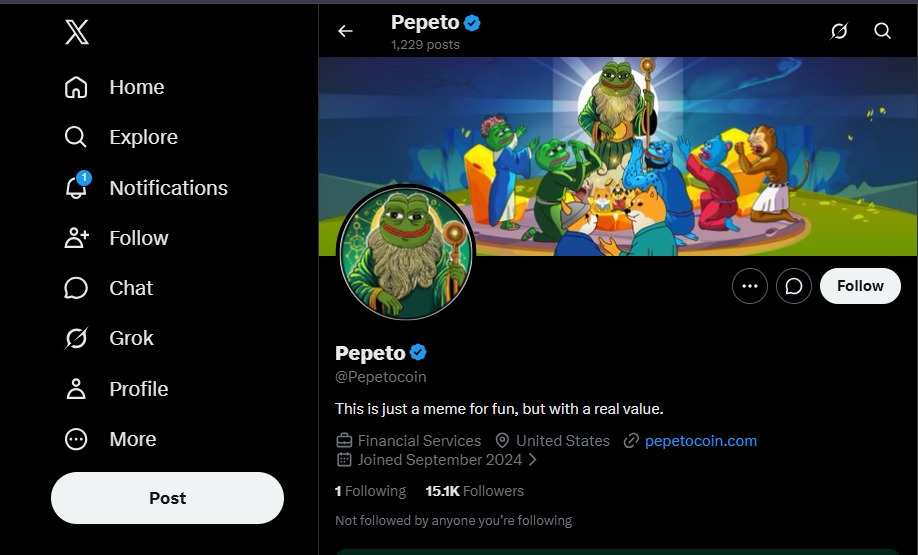
The project's posts appear first on its official X account, including its staking-reward claims. Those figures are project claims, not verified yields.
Conclusion: A Clear Plan With an Unproven Timeline
Pepeto plans an exchange, a bridge, and an AI scanner, all tied to a meme token. The Pepeto Roadmap 2026 stands out for its clear four-phase structure and a disclosed audit.
Timing, listings, and vesting remain uncertain, so the Pepeto Roadmap 2026 needs dated proof. Readers should look for dated updates, named exchange confirmations, and contract details on official channels before forming a view.
Disclaimer:
This article is for information only and is not financial advice. Crypto and presale tokens carry a high risk of loss. Always do your own research before making any decision.