Polygon POL Hard Fork: Why Are Trades Unaffected by Transfer Pauses?

Polygon POL Hard Fork and the Difference Between Trading and Transfers
Why would an exchange freeze deposits and withdrawals but leave its trading screen open? The question resurfaced when a hard fork proposal for Polygon’s POL token appeared on the Polygon governance forum on November 4, 2026.
The plan asks validators to approve a one-time network change that would recover 70.49 million POL linked to two security incidents.
Exchanges usually pause transfers around network forks. Spot trading often carries on.
What Do Polygon, POL, and the Polygon POL Hard Fork Mean?
Polygon PoS is a blockchain that seeks to complement Ethereum with lower fees and faster confirmations. POL is its native token.
According to the project’s documentation, POL is used to pay network gas fees and is staked by validators, the node operators who help secure the chain.
A hard fork is a rule change that old software cannot follow. Every node must upgrade before the switch block.
Nodes that stay on the old rules end up on a separate chain. That is why a Polygon POL Hard Fork needs coordination across validators, wallets, explorers, and exchanges.
What Does the Polygon POL Hard Fork Proposal Change?
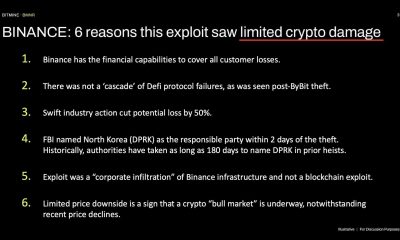
The published proposal behind the Polygon POL hard fork describes separate security incidents at Binance and Polymarket in late October.
Stolen POL landed in five attacker-controlled addresses. At the platforms' request, validator-elected block producers added those addresses to Bor's transaction blocklist.
The blocklist stops the tokens from moving. It cannot return them. The proposal argues that leaving the funds locked indefinitely does not give them back to their owners.
Affected platform | POL amount | Addresses | Share of total |
Polymarket | 23.86 million | 4 | 33.8% |
Binance | 46.63 million | 1 | 66.2% |
Total | 70.49 million | 5 | 100% |
At a fixed activation block, the Polygon POL Hard Fork would have the updated client set each attacker address balance to zero.
It would credit equal amounts to verified recovery wallets. No new POL gets minted, so the POL token supply stays unchanged. Staking and bridge contracts are not part of the change, according to the proposal's description.
What Still Needs to Happen Before Activation?
As of November 6, 2026, the Polygon POL Hard Fork remains a proposal. It was scheduled for presentation on the Polygon Protocol Governance Call on November 5 at 14:30 UTC. No approval or mainnet date had been confirmed at the time of writing.
The proposal and early coverage list several steps:
Governance approval from validators
A Bor client update was tested on the Amoy testnet, with about two weeks estimated after approval
Proof that Binance and Polymarket control their recovery wallets
Public incident reports that match on-chain records
Upgrades by validators, RPC providers, block explorers, exchanges, and node operators
The activation block, fork name, and client release are still undecided. Until then, the blocklist stays in force, and the 70.49 million POL remains frozen rather than recovered.
Why Do Exchanges Pause Transfers During a Polygon POL Hard Fork?
Deposits and withdrawals are the only exchange actions that touch the blockchain. A deposit needs the exchange's node to see a transaction and wait for confirmations.
A withdrawal needs the exchange wallet to broadcast one. Both depend on the node following the correct chain.
During a Polygon POL Hard Fork, some nodes run new rules while others lag behind. An exchange node on the wrong side could credit a deposit that never exists on the main chain.
It could also send a withdrawal onto a chain nobody follows. A pause removes that risk.
Major crypto exchanges usually reopen transfers once the upgraded network looks stable. Earlier Polygon upgrades followed this pattern, with several exchanges announcing short transfer pauses while saying trading would not be affected and no new tokens would be created.
Because no activation block exists yet, notices for this Polygon POL hard fork would only follow once a date is fixed.
How Do Order Matching and Transfers Differ in a Polygon POL Hard Fork?
How Does Internal Order Matching Work?
An exchange keeps an order book, a live list of buy and sell offers. A matching engine pairs them and updates balances inside the exchange's own database.
When two users trade POL, no blockchain transaction is created. Numbers simply change in an internal ledger.
That is why order book trading can continue while the network upgrades. Even during a Polygon POL Hard Fork, the matching engine never asks the blockchain for permission.
How Do On-Chain Transfers Work?
An on-chain transfer moves tokens from one wallet address to another. A validator has to include the transfer in a block before it counts, and the fee for that is paid in POL.
On Polygon PoS, the work is split between two layers. According to the network’s technical documentation, Bor produces the blocks, while Heimdall-v2 validates them and posts checkpoints to Ethereum.
If rules change at a fork block, every wallet and exchange node must follow the same rules.
Feature | Internal trading | On-chain transfer |
Where it runs | Exchange database | Polygon blockchain |
Needs upgraded node | No | Yes |
Tied to chain rules | No | Yes |
Typical status during a fork | Usually open | Often paused |
What Could Change for Traders During a Transfer Pause?
Analyst view: during a Polygon POL hard fork pause, trading stays open, but POL cannot move in or out. That limits arbitrage, the practice of buying on one exchange and selling on another to capture price gaps.
Prices across venues may drift apart for a while. The effect depends on volume and the length of the pause, so it is an interpretation rather than a confirmed outcome.
Pauses also tend to name a specific network. Transfers on other networks may follow different rules, and the exchange notice carries the final word.
Any Polygon price prediction around the event stays speculative, because governance outcomes and market mood can change quickly.
What Risks Does the Polygon POL Hard Fork Carry?
The proposal flags several concerns:
Wrong attribution: Moving funds on the strength of bad evidence could send them to the wrong party, and that kind of mistake would be very hard to reverse.
Chain split: Any node that skips the upgrade would stay on its own version of the chain from the activation block onward, leaving the network divided.
Precedent: Validators would be changing a balance without holding the private keys behind the affected addresses, relying only on evidence the platforms provide. That sets a new standard for what validators can be asked to do.
Conclusion: What Comes Next for POL Transfers?
The Polygon POL Hard Fork proposal seeks to move 70.49 million blocked POL to verified recovery wallets without changing supply.
Exchanges pause deposits and withdrawals in such events because those actions rely on the chain. Order matching runs on internal ledgers, so trading usually continues.
The narrow scope of the Polygon POL Hard Fork stands out. Approval, testing, the activation block, and exchange timelines remain uncertain.
The next checkpoints are the governance outcome, the Amoy test results, and exchange notices naming the affected network.
Disclaimer:
This content is for information only and is not financial, investment, or legal advice. Crypto assets are volatile, and governance proposals can change or fail. Independent research is needed before any decision.