Polygon POL Token: Why It Matters for Crypto Investors Explained

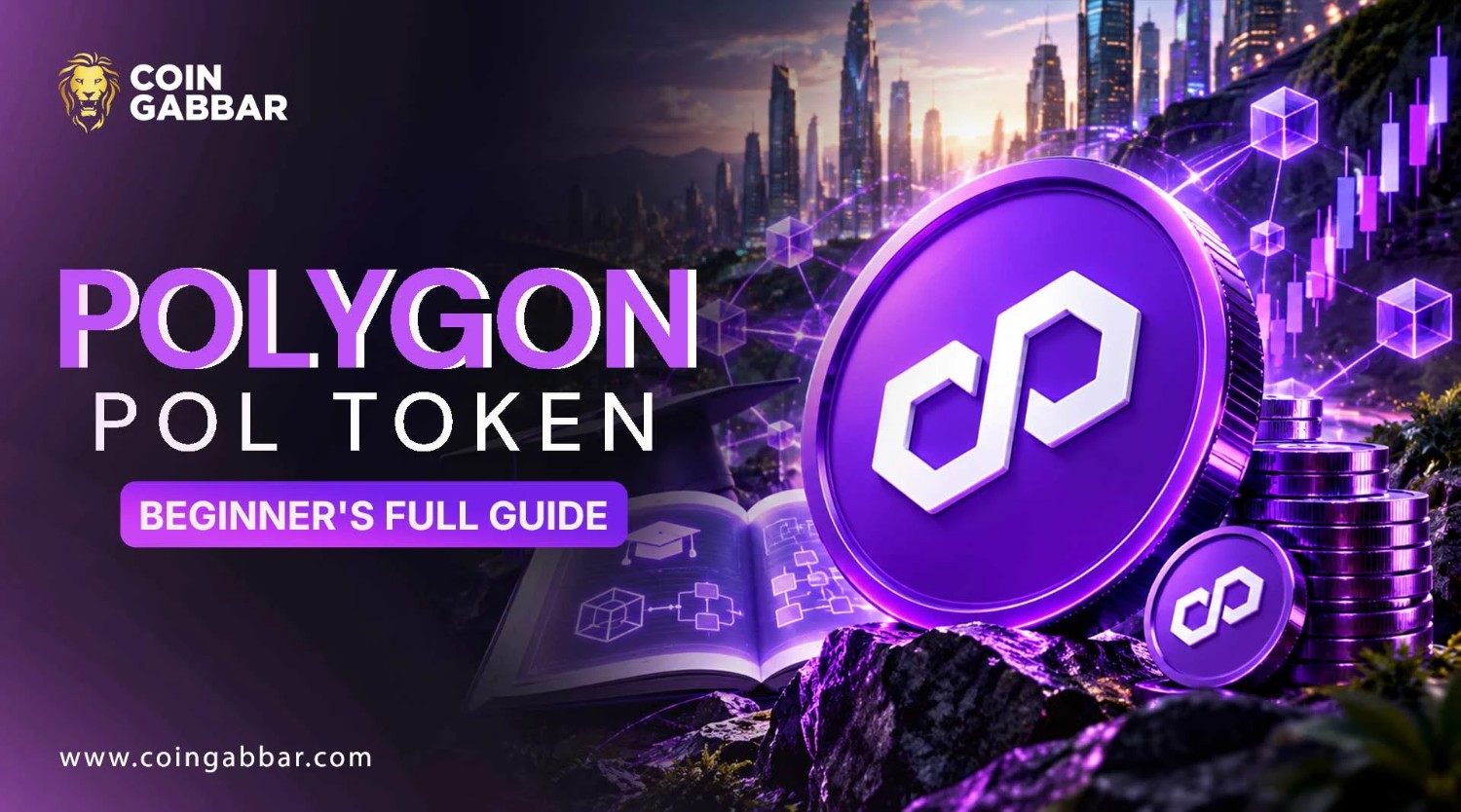
Polygon POL Token: How to Buy and Store Polygon POL Token Safely
The Polygon POL is the primary cryptocurrency in the Polygon blockchain network that is supposed to be more cost-efficient and faster compared to Ethereum.
The Polygon POL token replaced the MATIC token in 2024 following the launch of the upgraded Polygon network, called Polygon 2.0. As an example, one can say that the Polygon POL is needed for paying fees, paying node operators, and voting on governance issues.
The Polygon POL is at the heart of the emerging payment network already integrated by such well-known companies as Visa and Revolut. One should definitely learn about the Polygon POL if interested in crypto currencies.
How the Polygon POL Token Works
Picture the Polygon POL token as the fuel that keeps Polygon moving. Every time someone sends crypto, uses an app, or makes an NFT on Polygon, a small fee is paid using POL.
This works a lot like paying gas fees with ETH on Ethereum. But POL does more than pay fees. People called validators lock up their POL, which is called staking, to help check and approve transactions on the network.
In return, they earn rewards. One neat thing about Polygon is that the same staked POL can help protect more than one chain at the same time. That is why Polygon calls POL a "hyperproductive" token, since it does more than one job at once.
How to Buy and Store the Polygon POL Token Safely
Buying the Polygon POL token is easy. It is sold on most big exchanges like Binance, Coinbase, Kraken, and KuCoin.
It is quite simple: create an account, verify the identity, fund the account, and finally make the order to buy POL.
However, after purchasing the coins, the security issue of storing them becomes equally important to purchasing them. Storing a considerable amount of the
Polygon POL token on an exchange platform may not be wise, considering that the exchanges may be prone to hacking attacks. It would be better to transfer the tokens to one’s own wallet.
And hardware wallets, such as Ledger and Trezor, become the best option for this purpose.
For smaller amounts, software wallets like MetaMask or Trust Wallet also work fine, as long as the recovery phrase stays private and is never shared with anyone.
Polygon POL Token Use Cases in Real Life
The Polygon POL token is not just something people trade for profit; it actually gets used.
One big use is payments. Polygon has built partnerships that let people send stablecoins and pay for things quickly and cheaply, which is why many people see the Polygon POL token network as a step toward everyday digital payments.
It is also a big part of decentralized finance, where people stake POL, lend it out, or earn rewards through different apps on Polygon.
Since fees on Polygon are so low, gaming and NFT projects like using it too, because they often need many small transactions.
On top of that, holding the Polygon POL token gives people a voice in governance, meaning they can vote on how the network grows and changes over time.
Polygon POL Token Tokenomics Made Simple
Tokenomics just means how a token is made and shared over time. For the Polygon POL token, the starting supply was 10 billion tokens, which matched the old MATIC supply.
Unlike some coins with a fixed limit, the Polygon POL token keeps making new tokens every year. Polygon's own notes say the yearly emission rate is around 2 percent, split into two parts.
Half goes to validators as a reward for keeping the network safe, and the other half goes into a community fund that pays for new projects, developer grants, and upgrades.
This plan is set to run for about ten years before slowing down. Since new tokens keep getting added, some people in the community have suggested ideas like buybacks to help balance things out and ease long-term pressure on the Polygon POL token.
Future Roadmap and Growth Plans
Polygon has a big plan called "Gigagas," which aims to push transaction speed up to 100,000 per second.
That kind of speed would let the Polygon POL token network handle payments on a scale close to companies like Visa.
Another key part of the plan is something called AggLayer, built to link different Polygon chains together so money and users can move between them easily, almost like using one single network.
Polygon is also still working on changes to staking rules, treasury spending, and inflation, which shows the Polygon POL token system keeps growing rather than staying still.
Is the Polygon POL Token a Good Investment?
There is no simple yes or no here. However, the decision is purely a matter of one’s own research, risk-taking ability, and financial goals.
Positive points include actual partnerships and development, as well as a heavy focus on payment systems and crypto stable coins, which represent legitimate applications rather than mere publicity.
Risks associated with this asset are also quite serious and worthy of consideration. Namely, the fact that the token does not have a fixed supply ceiling and new tokens may be created, thus leading to the possibility of selling pressure.
Market data has also shown times when the price dropped while wallet activity and growth moved slower than some rival networks. Competition from other blockchains adds even more uncertainty.
Anyone thinking about the Polygon POL token should treat this as general information, not advice, and should always check the latest numbers and think carefully before putting in any money.
Conclusion
The Polygon POL token is a bold try at building real blockchain tools for payments, staking, and connecting chains together.
Its use cases, simple tokenomics, and roadmap all point toward a project aiming for long-term value instead of quick hype.
Still, like every cryptocurrency, the Polygon POL token comes with risks, so anyone interested should learn as much as possible first.
Disclaimer
This article is for information only. It is not financial advice. Crypto prices move up and down fast, and anyone thinking about buying the Polygon POL token should do their own research and talk to a financial advisor before spending any money.







.jpg)




