Ethereum Price Prediction Faces Ceiling while Pepetos Window


The ethereum price prediction just shifted after spot ETH ETFs recorded their strongest weekly inflows in ten months, pulling in $697 million as BlackRock's ETHA fund alone absorbed $64.68 million on August 18. Standard Chartered raised its year-end target to $4,000 and called the 32% August rally proof that the network's real strength is finally showing up in price. That is great news for ETH holders, but a $4,000 target from $2,506 is only a 1.6x, and 1.6x does not change anyone's life, which is why the wallets hunting truly big returns have quietly pushed $10.78 million into Pepeto, the presale from the founder who built the original Pepe, while the entry is still cheap and the anticipated Binance listing is still ahead.
Ethereum Price Prediction Climbs as Three Catalysts Stack in 48 Hours
ETH Rally at $2,506 and the Catalysts Driving It
Three forces hit Ethereum's chart in two days, and they stack. The US Treasury moved to double buybacks of longer-dated debt from $2 billion to $4 billion, which pushes yields lower and sends money hunting for risk again. The SEC moved toward a permanent framework for crypto investment contracts, which removes a cloud that has hung over the market for years. And the Ethereum Foundation switched on the [Platåberget public testnet on August 17](https://www.coindesk.com/business/2026/08/25/live-updates-bitcoin-etfs-draw-a-seventh-straight-day-of-inflows-as-the-rally-holds-above-usd80-000) as the staging ground for Glamsterdam, the upgrade built to scale the network. From our analysis, this kind of triple alignment almost never shows up at once, and that is why the money moved so fast.
Spot Ether ETFs pulled in $189 million on August 19 and $221 million on August 20, their strongest daily inflows in ten months, lifting total ETF assets to $14.3 billion. Tom Lee sees ETH above $5,000 before year end, and Citi's $2,240 target has already been passed, so the trend is not in doubt.
But even the most bullish near-term call, from $2,506 to $4,000, delivers 1.6x. Strong for a $300 billion asset. Not the kind of entry that reshapes a portfolio, and that gap is where this story turns.
ETH Recovery and the Resistance Above
Ethereum trades at [$2,506 as of August 26, up 28% in seven sessions](https://www.exchangerates.org.uk/news/46994/2026-08-24-ethereum-price-forecast-prediction-global-bank-sees-4-000-as-eth-surges-32.html), its strongest weekly run of the year, and the breakout above the 200-day EMA at $2,139 confirmed a bullish structure for the first time since February. Yet ETH still sits 50% below its August 2025 peak of $4,951, and trapped supply at every level between here and there creates selling that fresh money must absorb before price can run, which is why, from our view, this recovery is real while the big multiple lives elsewhere.
The Clarity Act vote in September and the Glamsterdam upgrade in Q4 are both real catalysts, but both are public knowledge, which means the market is already pricing them in. The ethereum price prediction from $2,506 is bounded by a $300 billion market cap that needs enormous new capital to move, so the catalysts are genuine, and they are also already priced like genuine catalysts. The bigger move belongs to whatever the market has not priced yet.
Why Pepeto Looks Like Ethereum's 2014 Presale All Over Again
There is a reason the Ethereum crowd keeps circling back to [Pepeto](https://pepetocoin.com), and it starts with ETH's own history. Ethereum's greatest trade was never on an exchange: it was the 2014 presale, when ETH sold at $0.31 to anyone willing to buy a token that was listed nowhere and doubted everywhere, and every buyer who did became the winner the market still talks about. Pepeto is at that exact stage right now, an Ethereum-based token available only through its presale, untouched by exchange pricing, with the listing still ahead, which means the biggest part of its move has not happened yet. And the builder is proven, because the same founder who drove the original Pepe to an $11 billion valuation before shipping a single product is the one engineering this launch, and this time everything is shipping.
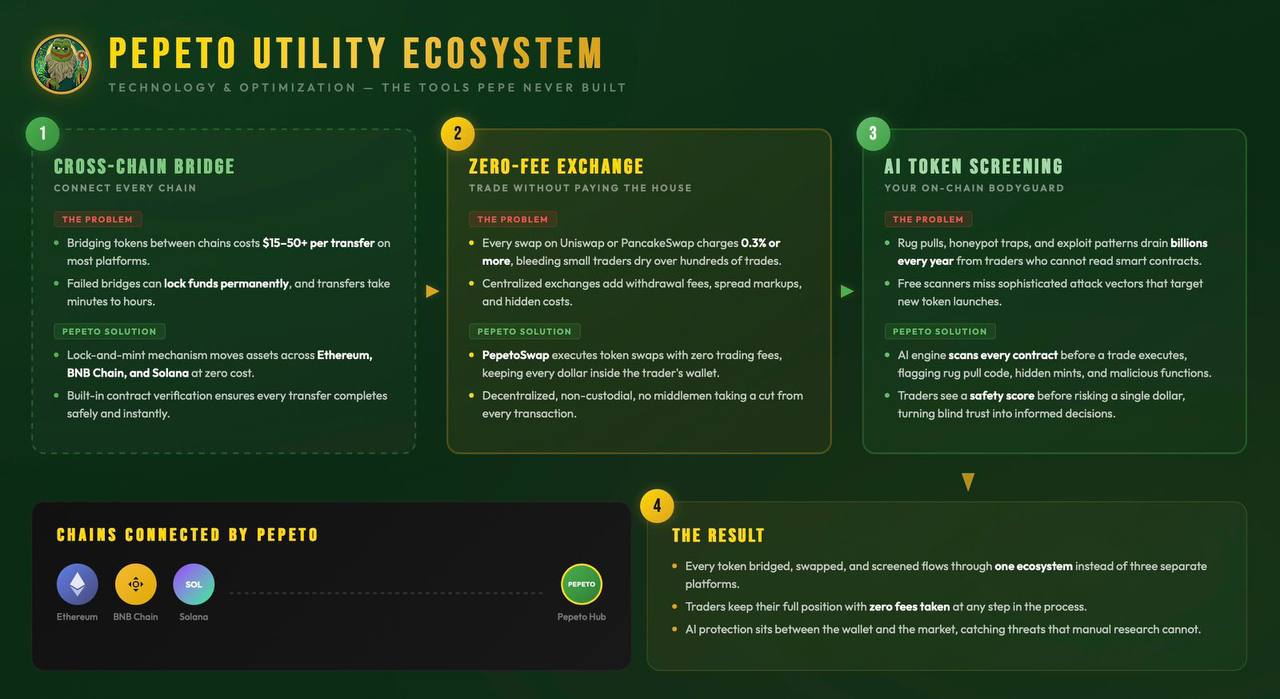
This time the presale comes with the engine already running. The PepetoAI risk scanner reads a trade's risk before any money moves, which gives traders the confidence to trade more, and every one of those trades flows through a zero-fee swap engine that turns activity into token demand instead of burning it on costs, connected to a gas-free bridge across Ethereum, BNB Chain, and Solana, all sealed by a SolidProof audit, run by a Binance-experienced lead, and stacked with 165% APY staking compounding daily for wallets locked before listing. At $0.0000001889, a position sized like a weekend's spending sits exactly where ETH's earliest believers once sat, months before the market made them rich. ETH already delivered its miracle, and this is the open seat for the next one, until the anticipated Binance listing closes boarding.
Conclusion
The ethereum price prediction debate gets decided by ETF flows and September's vote, and the wallets that positioned before those catalysts hit the headlines are the ones that banked the 32% August move without chasing a single candle, which is the lesson every cycle repeats: the money is made before the news, not after it. Early-stage projects run past large caps the moment their listing opens trading, and SHIB proved it by turning $1,000 into seven figures for wallets that entered before the name meant anything, the exact pattern warming up again. Pepeto ships more tools and touches more categories than SHIB ever attempted, so once the listing goes live and presale pricing becomes history, the biggest wins of this cycle will belong to the wallets that acted while the price was still this small.
[Click To Visit Pepeto Website To Enter The Presale](https://pepetocoin.com)
[ ](https://pepetocoin.com)
What is the ethereum price prediction for year-end 2026?
The ethereum price prediction ranges from $2,240, already passed, to $4,000 driven by ETF inflows. Standard Chartered set the $4,000 target.
Is Pepeto a stronger entry than Ethereum right now?
Yes, because ETH from $2,506 offers 1.6x while Pepeto still trades at presale pricing. Ethereum's own 2014 presale minted the fortunes this cycle still chases.
Also read: