
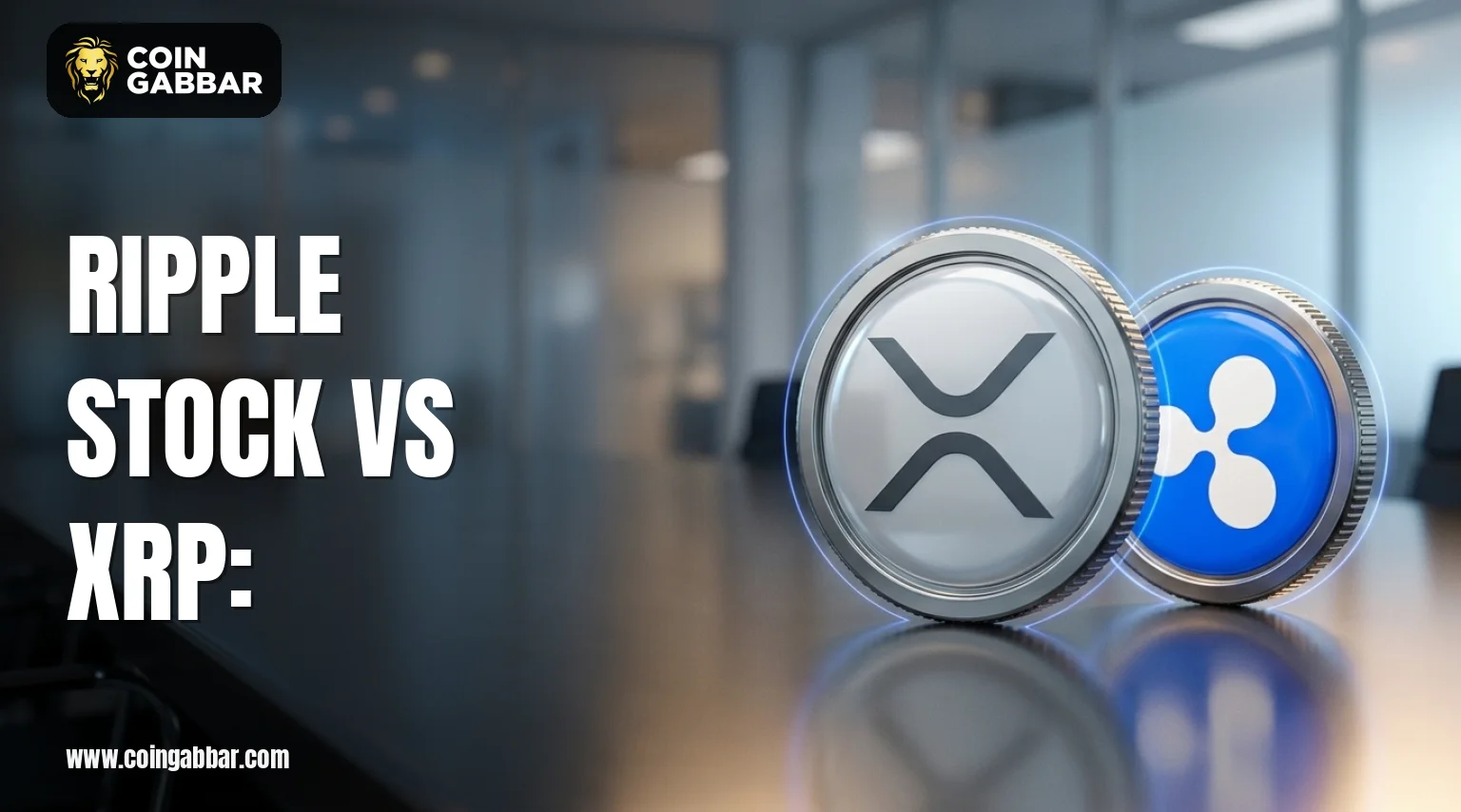
Many XRP holders think they own a small part of Ripple. They don't say the gap in Ripple stock vs XRP is easy to state. Ripple shares mean owning part of a company. XRP is a coin that lives on a public ledger.
Think of a coffee chain and the coins it uses at checkout. Holding the coins doesn't make anyone an owner of the chain. This guide covers what each asset is, who can buy it and what can go wrong.
Ripple is a tech company based in San Francisco. It sells payment, custody and stablecoin tools to banks and other firms.
Its owners are the founders, staff and outside investors. Their shares give them a claim on the company's profits and assets, plus any future sale or listing.
XRP is something else. It's the main coin of the XRP Ledger, a public blockchain.
Holders can send it, trade it or use it to move value. But it gives no vote, no dividend and no claim on Ripple's income. That's the part many holders miss.
Ripple makes the same point itself. Its short explainer on how the two differ covers the basics. It says little about how to buy either one.
The two are still connected. Ripple holds a large amount of XRP, and much of it sits in escrow. So the company wants the coin to do well.
Still, nothing links Ripple's value directly to XRP's price.
Unfamiliar terms like liquidity or tokenomics? A crypto dictionary explains them in plain words.
The table shows the main gaps at a glance.
Feature | Ripple stock | XRP |
What it is | Ownership in a private company | A coin on the XRP Ledger |
Rights | A claim on the company | No claim on the company |
Who can buy | Mostly accredited or institutional investors | Most retail investors, subject to local rules |
Where it trades | Private platforms and funds | Crypto exchanges, ETFs, wallets |
Ease of selling | Hard, with few buyers | Easy on large exchanges |
Price | Rough quotes, often behind a sign-up | Live public prices |
Main risks | Hard to sell, unclear value, no IPO promise | Price swings, rule changes, concentrated holdings |
Put simply, Ripple shares are hard to get and hard to sell. XRP is easy to get, but its price can jump around. Quotes for private shares can also differ from company buyback prices, so any number needs a double check.
Price forecasts for the coin live on a separate XRP price prediction page. Treat any forecast as a guess.
Ripple isn't listed on any stock exchange, so a normal brokerage app won't show its shares. No IPO filing has been reported, and leaders have said more than once that none is planned. The CEO has lately sounded more open to the idea.
The usual way in is the private secondary market. That's where early staff or investors sell their existing shares to approved buyers.
Platforms such as Forge, EquityZen, Hiive and Nasdaq Private Market link buyers and sellers. Shares aren't always on offer, though.
Most of these routes need accredited investor status. In many countries, that means earning or owning above an amount set by regulators. Everyday retail investors generally can't buy Ripple shares directly.
A second path is a pooled fund. Some funds and special purpose vehicles hold Ripple shares and sell stakes in the fund. Minimums can be lower, but fees, lock-up periods and eligibility checks still apply.
The altcoin news hub helps track the wider sector while the IPO question stays open.
XRP trades on most big exchanges. A buyer proves their identity, adds money and places an order. A licence in the buyer's own country matters most. Clear fees and public security practices matter too, more than a tiny fee saving.
Recent crypto exchange news can flag outages, delistings or hacks worth checking first.
Reserve reports are another useful signal. The proof of the reserve section is a good start. Even so, these reports are only one part of a safety check.
Spot XRP exchange-traded funds now trade in the United States. They track the coin's price inside a normal brokerage account, so no tokens need handling. The catch is that holders own fund shares, not XRP, and pay a yearly fee.
Money moves in and out of these funds daily. The latest XRP ETF coverage tracks those flows.
Self-custody wallets suit holders who want full control. The recovery phrase must stay offline. Lose it, and the funds are gone.
Some exchanges also ask for a destination tag on XRP deposits, so every field should be copied exactly. Offers of free or doubled tokens deserve instant suspicion.
Accredited investors who can wait years, and accept few ways out, may look at Ripple shares. The value is hard to pin down, and no IPO is promised.
Beginners and everyday retail investors will find XRP much easier to buy and sell. A regulated XRP fund works too, where one exists. Prices can still swing hard, and a small test transfer is a common first step.
Ripple stock vs XRP really comes down to eligibility, time frame and comfort with risk. Neither suits the money needed soon.
Backers of the shares point to Ripple's string of acquisitions. They also cite a private valuation in the tens of billions of dollars. A listing may follow down the road. Critics say private valuations are hard to check, and an IPO isn't confirmed.
Backers of the coin stress its job as a bridge for big cross-border payments. Critics warn that stablecoins, including Ripple's own RLUSD, could take over those flows.
One investor-focused risk breakdown also flags how concentrated ownership is. It found the top ten XRP wallets held about 41% of circulating supply at that time.
Ripple stock vs XRP is a case of two different assets with separate owners, rules and risks. One sits behind private-market gates. The other trades openly, and in some countries through regulated funds.
Watch for any formal IPO filing. A registration statement would be the first real sign that access to Ripple shares may widen.
Disclaimer:
This article is for educational and informational purposes only and doesn't constitute financial or investment advice. Crypto assets and private company shares carry a high risk of loss. Readers should do their own research or consult a licensed adviser before investing.
Frequently Asked Questions (FAQ)




Owned by:-
DCG Tech FZCO, UAE
Delivery Partner:-
Gabbar MediaTech Pvt Ltd.
Copyright © 2026 Coin Gabbar. All Rights Reserved