Risk Management Protocols for Short Term Binary Options

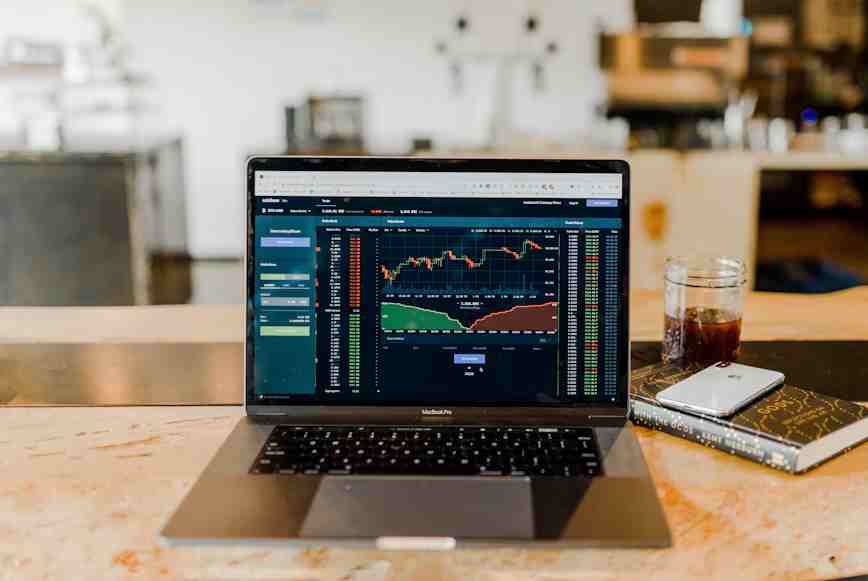
A short-term binary options trade can end within minutes, leaving little time to react to sudden market movements. This simplicity is exactly what attracts beginners and ultimately leads to their downfall. When you open any binary trading platform, everything appears straightforward: guess the direction correctly, and you get a payout; guess incorrectly, and you lose your stake.
However, a simple interface doesn't make the market any simpler. Without clear rules, even a string of successful trades can quickly leave your account empty.
Why Short Timeframes Require Caution
Over short intervals, random price fluctuations can make market movements particularly difficult to predict. A few seconds of delay, a wider spread, or a surprise headline can ruin a signal. A winning trade usually pays less than you stake, so you need to be right well over half the time just to break even. Many people forget these facts.
Trading too often is the second problem. The more you trade, the faster small losses add up. Everyone hits two or three losses in a row at some point, and your account has to survive that.
Dukascopy Bank SA, a Swiss bank regulated by FINMA, offers binary options trading on selected currency pairs. These instruments carry substantial risks, as an incorrect prediction can result in the loss of the entire amount committed to a trade. In 2018, European regulators introduced restrictions on binary options for retail clients, with many national authorities subsequently adopting permanent measures.
Rules to Protect Your Capital
Establish rules before your first trade, not after your first loss. This ensures you make decisions calmly, rather than out of a desperate urge to "win back" what you lost. Most importantly, you must determine in advance how much you are prepared to lose. Without this preparation, any strategy relies solely on luck, and luck tends to run out quickly.
Here is a basic framework for short-term trading:
-
limit the risk per trade to a maximum of two percent;
-
daily loss limit is set in advance;
-
pause is taken after three consecutive losses;
-
bet sizes do not increase following a loss;
-
trading is conducted using only a dedicated portion of capital;
-
trades are executed strictly according to a pre-established plan.
Two percent is a guideline, not a rigid rule. For a beginner, it is sensible to aim for less. What matters is that you write it down and stick to it. The daily loss limit works the same way: once you reach it, close the trading terminal, even if you think the market is about to turn in your favor.
Managing Emotions and Tracking Results
Your reaction wrecks your account more often than the market does. A loss makes you want to increase your stake. A win makes you trust your gut too much. Both cost money. Keep a trading journal. Write down the time, asset, duration, reason, and result. After a couple of weeks, you'll see when you lose most and what doesn't work. Check it every week.
Practice on a demo account too. A strategy that performs poorly in a demo environment is unlikely to become more reliable in live trading. Before each session, take a moment to run through a quick checklist:
-
have you checked the calendar for major news releases;
-
are your daily limits clearly defined;
-
are you calm and unhurried;
-
is your internet connection stable;
-
is your trading plan prepared in advance.
If even one of these points is in doubt, it is better to skip the session. The market isn't going anywhere, but a lost deposit won't return on its own.
Risk management is about limiting potential losses and maintaining a disciplined approach to trading. A lucky streak proves little, while months of steady records show how effective your approach really is. Even perfect discipline can't rule out losses, so trade only with money you can afford to lose. Start with small amounts and review your risk exposure regularly, regardless of past results.
Disclaimer:
Binary options are complex and risky financial instruments. You should make sure you understand how binary options work and consider whether you can afford the risk of losing your money.
CFDs are complex instruments and come with a high risk of losing money rapidly due to leverage:
-
75.14% of retail clients accounts lose money when trading CFDs;
-
1.01% of retail clients accounts lost all their margin at the closure of their positions;
-
0.21% of retail clients accounts had to deposit funds to offset a negative balance;
You should consider whether you understand how CFDs work and whether you can afford to take the high risk of losing your money.