Russia Allows Crypto Trading From Nov 22: What Changes for Users

Russia allows crypto trading on regulated exchanges from November 22, once each exchange gets its trading rules approved by the central bank.
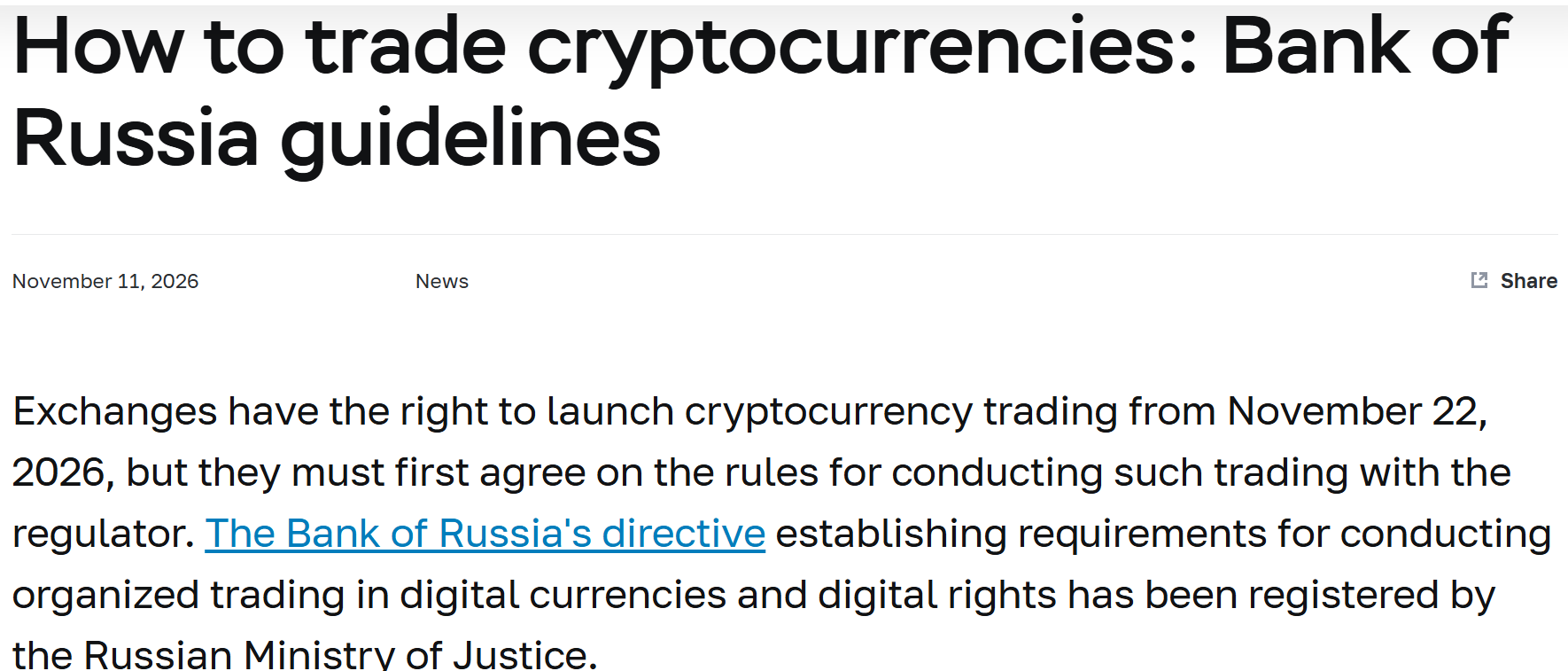
Regular investors can buy only Bitcoin, Ether, and USDT, with a yearly cap of 300,000 rubles per intermediary, based on the Bank of Russia list of eligible cryptocurrencies.
This crypto news report covers the dates, the limits, and the open questions for users.
Key Takeaways
Exchanges may start crypto trading from November 22, after the central bank approves their rules.
Bitcoin, Ether, and USDT can be listed for public trading from November 17.
Non-qualified investors can spend up to 300,000 rubles a year through each intermediary.

Every investor must pass a test on crypto risks before the first trade.
What the New Rules Mean for Russian Crypto Exchanges
The Justice Ministry registered the central bank directive on November 6, and it takes effect on November 17, which is two weeks before trading starts on the Moscow Exchange.

The Bank of Russia notice says exchanges may list the approved assets for public trading from that date. Exchanges still cannot open the market until they agree their trading rules with the regulator, so November 22 is the earliest start and not a fixed launch day.
Which Cryptocurrencies Can Russian Investors Buy?
The list is short and holds only Bitcoin, Ether, and USDT, which the regulator picked for their size, daily trading volume, and price history. Qualified investors can buy any crypto asset without a limit, while regular investors must stay inside the three-coin list, and the central bank says this choice is meant to shield them from sharp price swings.
Crypto Trading Limits for Non-Qualified Investors
Non-qualified investors can spend up to 300,000 rubles a year through each intermediary, such as a broker, an asset manager, or a crypto exchange service, and the cap counts separately for each one.
All investors must also pass a test and read the risk notice before their first transaction, whether they are qualified or not. The cap suits small portfolios better than large trades, so heavy traders will likely need qualified status.
When Russia Allows Crypto Trading: Key Dates for Exchanges
Three dates matter for users, starting with November 17 when the asset list takes effect and November 22 when exchanges may begin if the regulator has approved their rules.
The third is December 1, when the Moscow Exchange plans a gradual pilot rollout. VTB has said it expects to open retail access in November, while Sberbank is targeting December 1, so users may get access at different times on different platforms.
Crypto Risks and What Is Still Unclear
Russia allows crypto trading inside a strict frame, but legal access does not remove price risk, and Bitcoin, Ether, and USDT can all move fast in a single day.
The central bank keeps a register of approved crypto exchange firms, so users should check a platform there before they send money.
Exchanges must also report trades and results to the regulator, which gives officials a clearer view of the market than the older unlicensed exchange offices did.
YMYL Disclaimer: This article is for information only and is not financial or investment advice. Crypto is volatile and carries a risk of loss, so check official sources before you act.






