Russia Largest Stock Exchange Crypto Trading Dec 1: 22% USDT VAT?

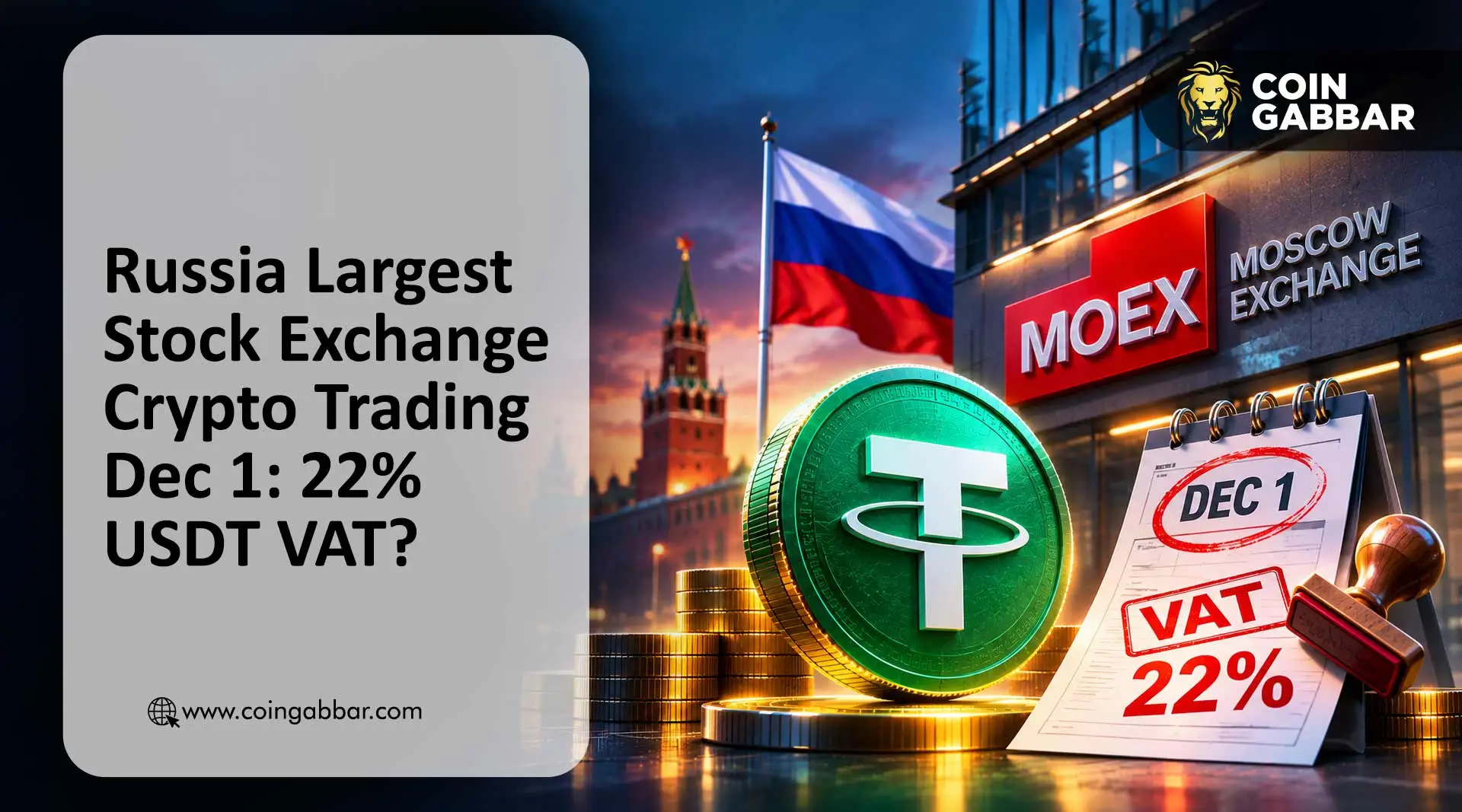
Quick answer: MOEX plans to open crypto trading on December 1, and the 22% VAT on USDT trades will be applicable according to the National Clearing Centre (NCC), owned by Moscow Exchange.
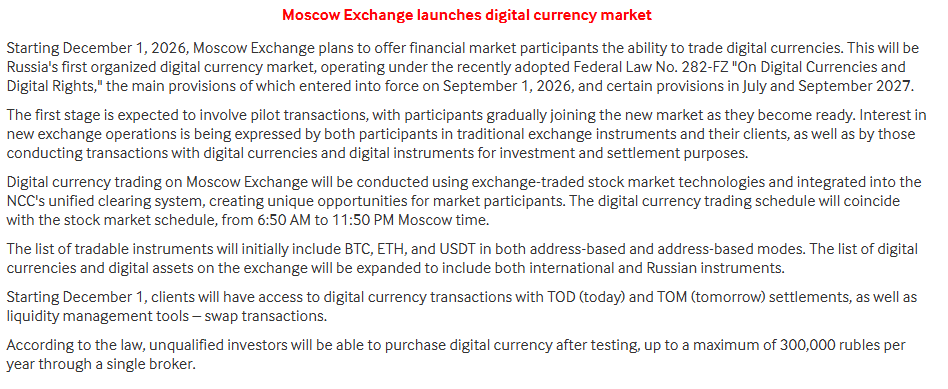
The Russia largest stock exchange crypto trading launch is set for December 1, 2026, when Moscow Exchange (MOEX) plans to open trading in BTC, ETH, and USDT, and a deleted tax notice had left traders unsure whether USDT trades will carry an extra 22% value-added tax (VAT).
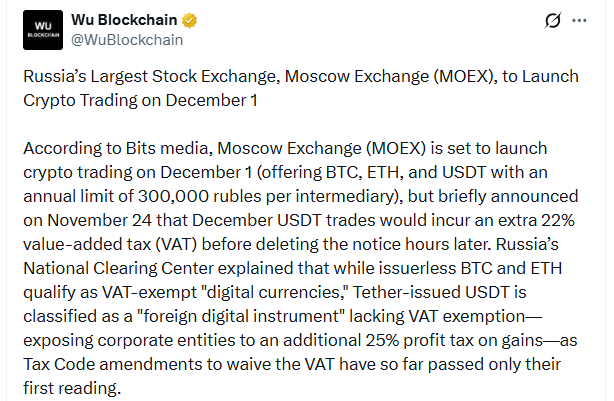
According to a WuBlockchain update on X that cites Bits Media, the exchange briefly announced the Value-Added Tax on November 24 and removed the notice a few hours later.
Russia Largest Stock Exchange Crypto Trading Starts on December 1
The report says MOEX will offer Bitcoin (BTC), Ether (ETH), and Tether's USDT, with an annual limit of 300,000 rubles per intermediary, which means a broker or similar firm that places the trade for a client.
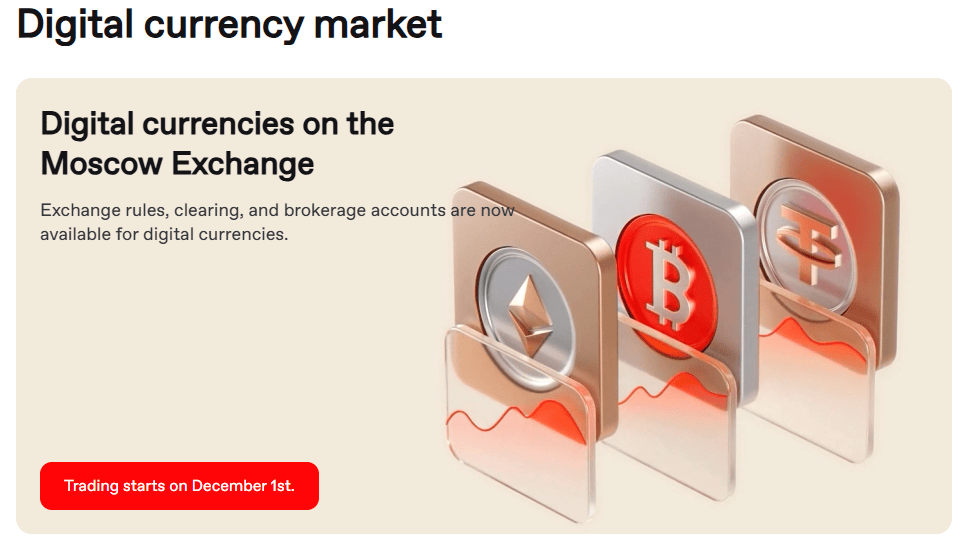
The update describes MOEX as the largest stock exchange in Russia and gives December 1 as the launch date.
22% USDT VAT on Moscow Exchange: What Happened to the Notice
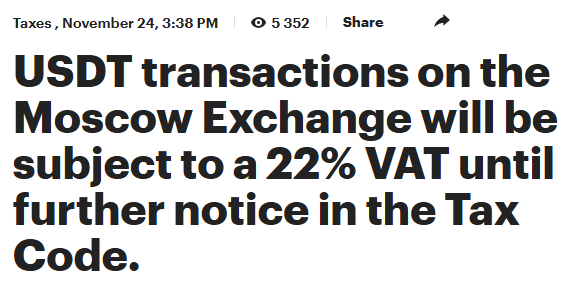
The update says that on November 24 the exchange briefly announced that December USDT trades would carry an extra 22% VAT, a tax added on top of the trade price, and then deleted the notice hours later.
The update does not explain why the notice was removed, so readers should not assume it was a mistake or a change of plan.
According to Russian media reports, 22% USDT Value-Added Tax has been confirmed by the Exchange-owned National Clearing Centre (NCC).
Why USDT Is Taxed Differently From Bitcoin and Ether
The update says Russia's National Clearing Center explained that BTC and ETH have no company behind them, so they count as VAT-exempt "digital currencies." USDT is issued by Tether, so it is classed as a "foreign digital instrument," and that class has no VAT exemption.
A stablecoin such as USDT is a token built to track the price of a currency like the US dollar, which is why traders often use it to move money between crypto trades.
Corporate Tax Risk: The Extra 25% Profit Tax on USDT Gains
The same update says the VAT gap also exposes companies to an additional 25% profit tax on gains, which matters for businesses planning to trade USDT through the exchange.
It adds that tax code amendments meant to waive the VAT have so far passed only their first reading, which is the first of several votes, so they are not yet law.
What Is Known and What Is Still Unclear
The known points, as reported, are the December 1 launch, the three assets, the 300,000 ruble limit per intermediary, the posted and deleted VAT notice, the clearing center's explanation, and the first-reading status of the amendments.
The unclear points are until when the 22% Value-Added Tax will apply, why the notice was deleted, when lawmakers will vote again, and how brokers will pass any cost on to clients.
These details come from a social media update that cites another outlet, so readers should look for a direct notice from Moscow Exchange before treating any figure as final.
What Crypto Traders Should Check Before December 1
Anyone planning to trade USDT should confirm and compare that cost with trading BTC or ETH and wait for an official notice instead of relying on screenshots.
Crypto news can change quickly around launches, and a rule that looks settled one day can be reversed the next.
Disclaimer: This article is for information only and is not financial or investment advice. Crypto assets carry risk, including the loss of funds, so verify current details with official sources.


Frequently Asked Questions (FAQ)




