Solflare Private Mode Is Live: Can Solana Balances Stay Hidden?

Solana Wallet Adds Encrypted Balances: What Went Live on Nov 16
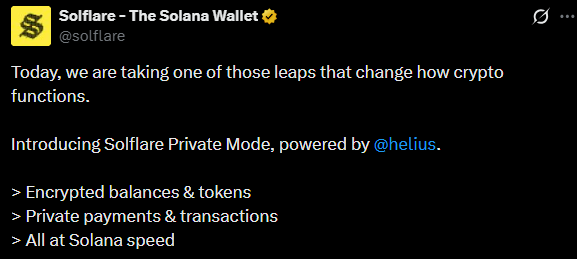
Solflare Private Mode went live on Nov 16, 2026, giving Solana account holders a way to hide how much they own.
The company announced the release in an official X thread dated Nov 16, 2026, and asked users to update to the latest app version.
Until now, anyone with a wallet address could read every holding tied to it, from a landlord to an employer or an ex-partner.
For anyone following crypto news today, this is a wallet feature built on a protocol from Helius. It adds a hidden balance next to the regular one, using the same keys.
Source: Official X Post
How Solflare Private Mode Works Inside the Same Address
Users set up the feature once from the Portfolio screen. A self-custodial private balance then appears beside the public one. Contacts can keep paying the address they already use.
Move funds in from the public balance. This step is a regular Solana transaction, so the amount stays visible.
Hold the funds there, or send them to other users who have enabled the feature.
Move funds back to the regular balance whenever needed. That exit transfer is visible too.
Payments between two enabled users finish in a single transaction. The wallet computes the hidden total on the device from encrypted records, so no plain figure sits on an explorer for anyone to look up.
Solflare Private Mode also labels each transaction in the activity list by visibility.
What Stays Hidden and What Can Still Be Seen On-Chain
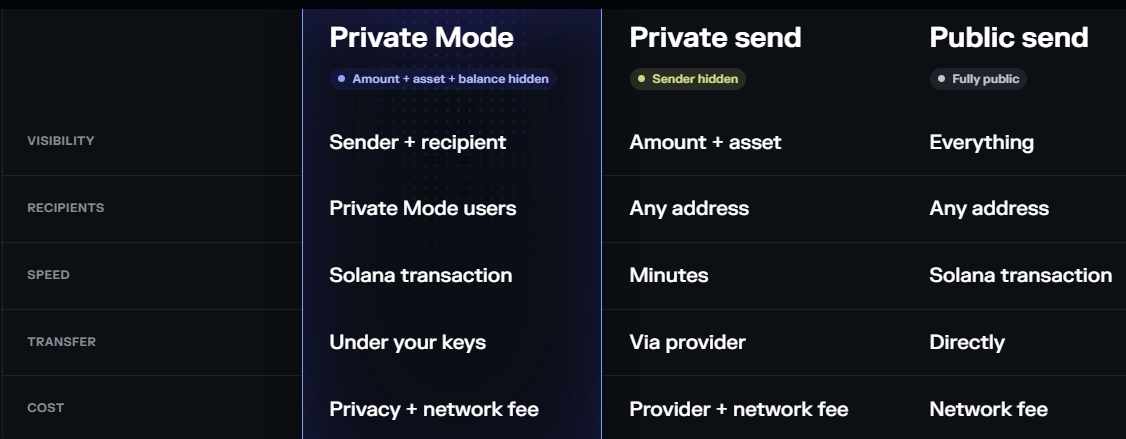
The thread is clear that this is not anonymity. Solflare Private Mode hides amounts and assets, not relationships between addresses.
Detail | Status |
Balance and token holdings | Hidden |
Payment amount and asset between enabled users | Hidden |
Sender and recipient addresses | Visible |
Transfer timing and whether a wallet uses the feature | Visible |
Amount moved in or out of the feature | Visible |
In practice, a payment between two enabled accounts shows who paid whom, but not how much or in which token. That keeps the public record intact while hiding the numbers.
Source: Official Website
Zero-Knowledge Proofs and Who Controls What
Helius supplies the protocol, the proving service and the indexer. Its zero-knowledge proofs let Solana verify each payment without publishing the amount or asset.
Role | Owner |
Protocol, proving service and indexer | Helius |
Wallet experience | Solflare |
Keys | The owner |
Neither Helius nor the app team holds funds, which stay under keys the owner controls.
Transactions are still recorded and can be verified on-chain. The thread frames the design around three priorities: self-custody, verifiability and security.
Current Limits: Swaps, Staking and dApps Stay Public
Solflare Private Mode covers holding and paying only in this release.
Action | Where it works |
Hold funds and pay enabled accounts | Hidden balance |
Swaps, staking, Earn and dApps | Public balance |
Paying someone who has not enabled the feature goes out as an ordinary public transfer. The app warns first, and the sender can cancel or continue. Using swaps or staking means moving funds out first, which exposes that transfer amount.
Why Open Transaction Histories Became a Growing Problem
Public blockchains record holdings and transfers openly by default. Once an address is linked to a name, anyone can inspect its history, which is the exposure this release targets.
The product page gives two examples. A team can pay each contributor monthly without publishing every rate, since each person sees only their own amount. A friend receiving 50 USDC sees who sent it, but not what else the sender holds.
Solflare Private Mode places that choice inside a mainstream crypto wallet, so people decide what others see without moving to a separate tool.
Audit Status and What Holders Should Watch Next
Helius’s independent security audits of the protocol are underway, with results to be published once available. Until then, the feature should be treated as new software.
Publication of the audit results
Support for swaps, staking and dApps
Wider adoption, since payments stay confidential only between enabled accounts
Solflare Private Mode hides amounts and holdings, not identities, and it stays optional. The official sources give no timeline for wider coverage, so the audit results and recipient adoption will shape how far it spreads.
YMYL Disclaimer: This article is for informational and educational purposes only and should not be taken as financial or investment advice. Crypto markets are volatile, and details such as roles, plans, or figures mentioned here can change over time. Readers should do their own research before making any decisions based on this content.






