Stablecoin Supply Shrinks $14.2B: Is a Crypto Liquidity Crunch Near?


Is Crypto Dry Powder Draining? Stablecoin Supply Falls $14.2B
Stablecoin supply has shrunk by $14.2 billion in the past 30 days, according to Glassnode data. Glassnode describes it as the largest contraction since the June 2022 bear market.
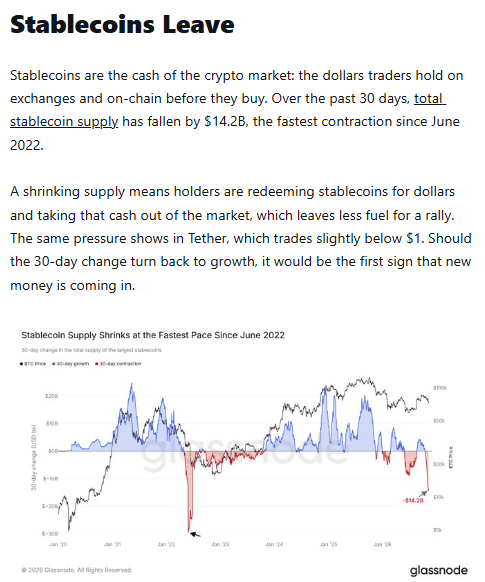
Source: Glassnode on X
The two market leaders, USDT and USDC, shed nearly $11 billion combined over the same month. That leaves less dry powder available for a crypto market rebound.
The open question is simple. Does this stablecoin supply decline point to a deeper liquidity crunch, or is it a short-term reset?
How Much Has Stablecoin Supply Fallen in 30 Days?
DefiLlama shows the total stablecoin market cap at $286.895 billion as of November 12, 2026. That figure is down 4.83% over 30 days and 1.48% over seven days.
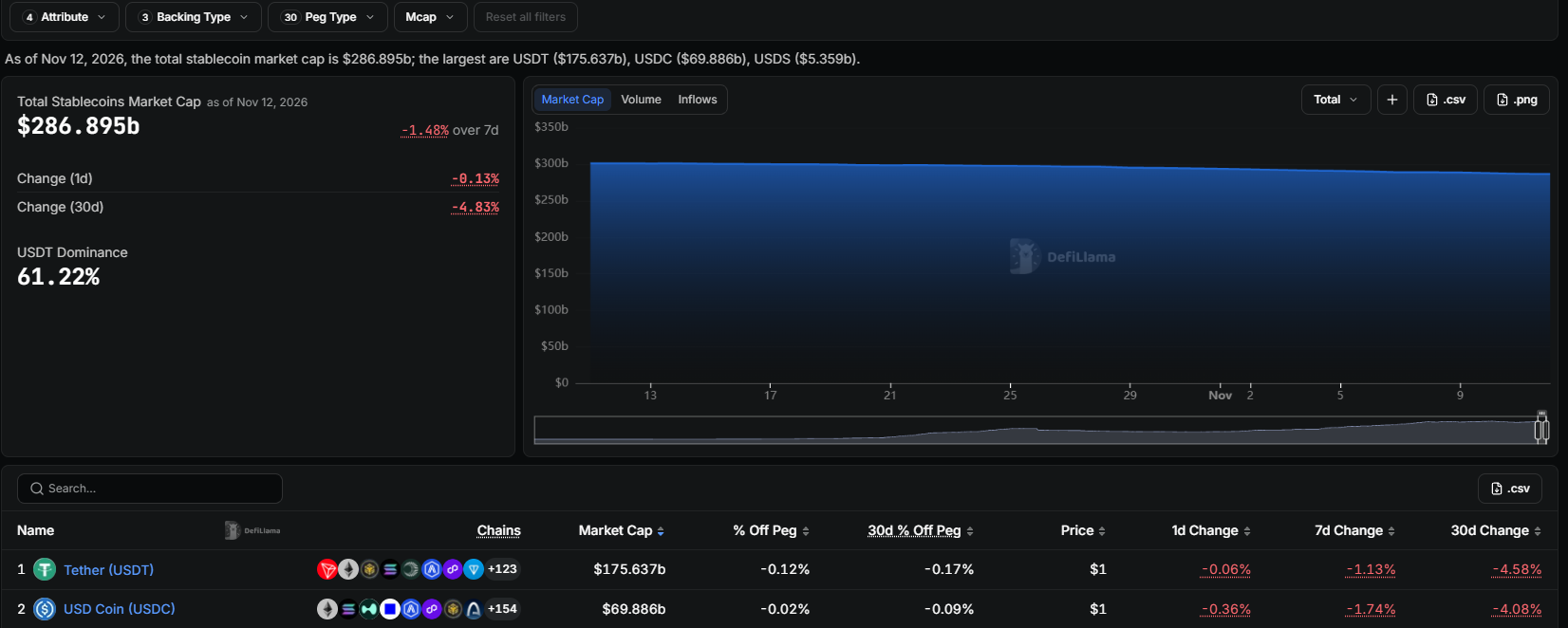
The one-day change is a 0.13% decline. The daily pace has slowed, but every longer time frame on the dashboard still points lower.
Why Is This the Biggest Stablecoin Supply Contraction Since June 2022?
The last comparable stretch came during the 2022 crypto bear market. Falling prices and weak confidence pushed many users to redeem stablecoins for cash.
Stablecoins work as the cash layer of crypto. Traders park funds in them between trades, and new buyers often enter the market through them. When supply shrinks, fewer dollars sit ready to buy.
The supply data does not explain the cause. Redemptions can mean users are leaving crypto or only moving funds elsewhere. The available data does not show where the redeemed money went.
Is USDT Shrinking Faster Than USDC?
How much has USDT supply lost?
Tether USDT remains the largest stablecoin with a market cap of $175.637 billion. DefiLlama shows it down 4.58% over 30 days and 1.13% over seven days.
USDT dominance stands at 61.22% of the total stablecoin market. That keeps overall liquidity closely tied to one issuer.
How is USDC supply holding up?
USD Coin USDC has a market cap of $69.886 billion. It is down 4.08% over 30 days, but its seven-day fall of 1.74% is steeper than USDT at 1.13%.
That points to a slightly faster recent pace of stablecoin outflows from USDC. USDS, the third-largest, holds $5.359 billion.
What Does Weak Stablecoin Supply Mean for Bitcoin and Crypto Recovery?
A crypto market recovery usually needs fresh capital, and stablecoins are a main entry route. Lower supply means thinner crypto market liquidity, which can leave price moves more sensitive to selling.
Two readings exist. The bullish view says money parked in stocks or other assets can return once conditions improve. The bearish view says buyers are leaving crypto, which would keep the digital asset market short of demand.
Expert Take: What Could Trigger a Stablecoin Liquidity Recovery?
The data suggests the contraction is steady rather than sudden. A 4.83% monthly decline is notable, yet the market still holds close to $287 billion.
Three numbers matter most: total market cap near $286.9 billion, USDT dominance at 61.22%, and the seven-day change. A flat or positive seven-day reading would show outflows easing.
The main risk is further redemptions during a crypto bear market phase. The main uncertainty remains where the money went and whether it returns. New minting by issuers would be an early sign of returning demand, and shifts in Bitcoin market trends often reflect that.
Conclusion
Stablecoin supply is falling at its fastest monthly pace since June 2022, and both USDT and USDC are part of the move. Whether it becomes a lasting liquidity crunch depends on how quickly redemptions slow.
Updates on stablecoin flows and the wider digital asset market continue in crypto news today reports, alongside other crypto latest news and cryptocurrency news.
Disclaimer: This article is for information only and is not financial advice. Crypto assets are volatile, and past data does not predict future results. Always do your own research before making any financial decision.






