What a Stellar Testnet Vote Actually Decides for Users

Stellar Testnet Vote Explained: Why Mainnet Activation Is Different
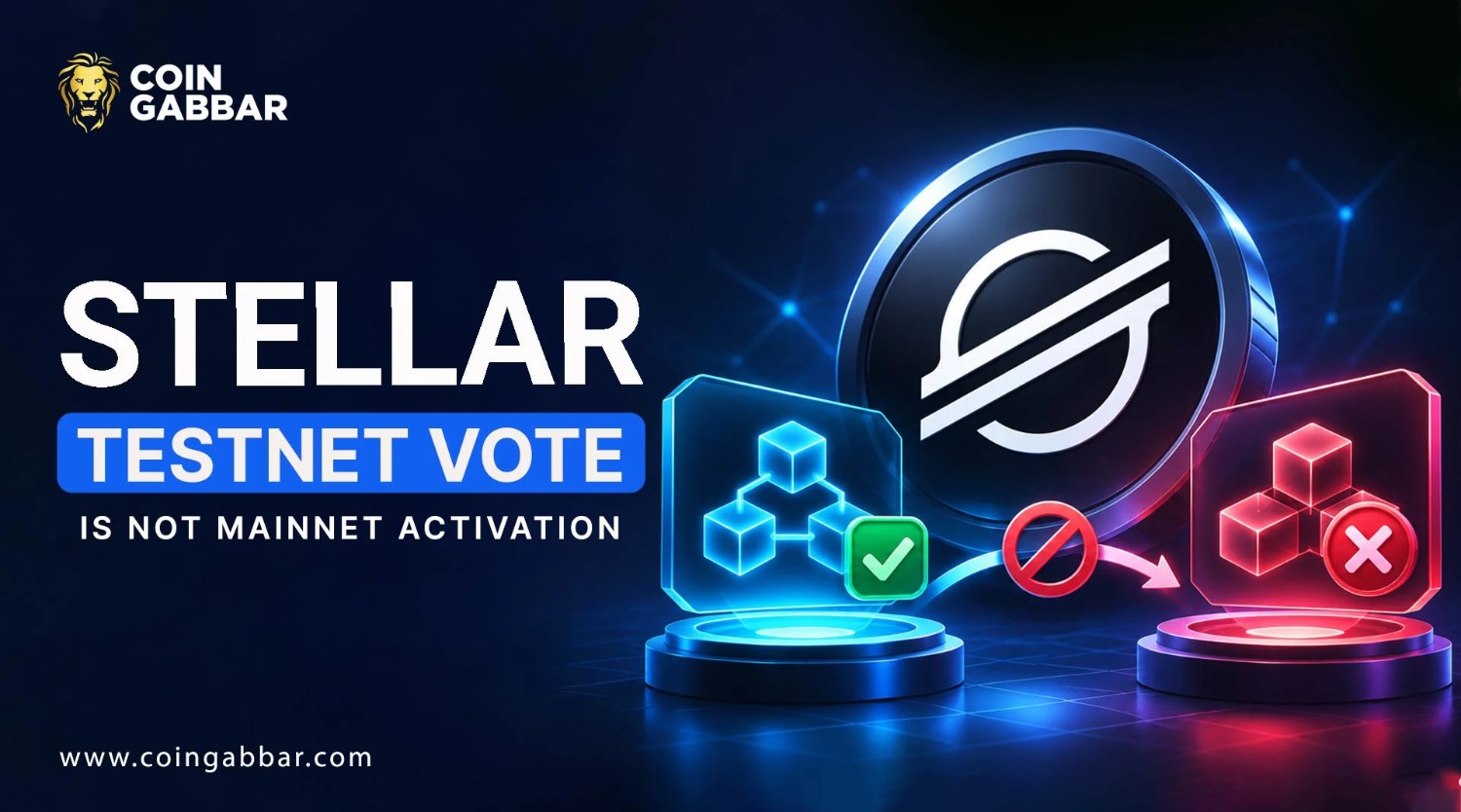
The Stellar Testnet Vote on November 3, 2026, put the Bell upgrade, also known as Protocol 30, on the practice network.
The live Stellar blockchain, where real XLM and real payments sit, stayed exactly the same. Many people following stellar network news have treated the two stages as one, and that mix-up can confuse holders, developers, and businesses.
According to the Stellar Development Foundation, the next step is a separate Stellar mainnet vote on November 23, 2026 at 17:00 UTC, and the upgrade goes live only if that vote passes. This article covers what the test vote decided, what Bell adds, and which risks remain.
What Is the Stellar Testnet Vote and What Did It Decide?
Stellar validators, the independent operators who run the nodes that confirm transactions, voted on November 3 at 17:00 UTC to adopt Protocol 30 on the test network.
The Stellar account on X then confirmed that Bell is live on testnet and reminded everyone that the mainnet vote falls on November 23. Testnet is a free practice network run by the foundation.
The official guide on testnet and mainnet says it works like the main network but has no link to real money. So a test result shows the software runs on a practice network. It does not show that the live network has accepted it.
Mainnet is where real apps run; it needs XLM to pay fees and keep minimum balances, and it never resets. A good trial lowers technical risk, but it does not commit the live chain to anything.
What Does the Bell Upgrade Change?
The foundation describes Bell as three proposed changes. CAP-84 adds muxed contract addresses. These let one smart contract serve many customers through a 64-bit ID, written in a new address format that starts with the letter W.
Exchanges, payment firms, and custodians that keep customer funds in smart accounts used to need one contract per customer, so this removes a real burden.
CAP-87 lets smart contracts check ML-DSA signatures, a post-quantum standard that the US National Institute of Standards and Technology finalized in 2024.
The foundation says Bell does not make Stellar post-quantum because normal network transaction signatures stay Ed25519 for now. CAP-88 gives the ledger a millisecond clock.
That removes a technical barrier to faster closing times, but it does not speed up blocks by itself. The earlier Stellar Protocol 28 release in September already cut typical mainnet ledger close times from about 5.7 seconds to 5 seconds.
How the Stellar Testnet Vote Fits Into the Upgrade Process
The rollout follows a set order. Stellar Core v30.0.0 arrived on October 16, and more infrastructure and SDK releases came between October 16 and 23.
The testnet vote took place on November 3, and the mainnet vote is set for November 23. Every validator needs compatible software before voting.
The Stellar Testnet Vote works like a rehearsal, where wallets, exchanges, and indexers can watch how the upgrade behaves before the real decision arrives.
Why Mainnet Activation Needs a Separate Validator Decision
The public runs mainnet validators, while the Stellar Development Foundation runs the core validator nodes on testnet. Approval on one network therefore has no automatic effect on the other.
Each network also has its own passphrase and network ID, so a transaction signed for one network is invalid on the other.
Mainnet validators weigh the same software against live conditions, real balances, and how ready wallets and crypto exchanges are. A strong test result helps that choice, but it is only evidence, not the final answer.
Securitize on Stellar and Stellar RWA Crypto: Why Interest Is Rising
The timing also lines up with growing interest in tokenization, which means turning funds, bonds, and other traditional assets into digital tokens.
On October 28, 2026, Securitize announced plans to integrate with Stellar, and its chief executive called the network the fourth-largest ecosystem for tokenized real-world assets.
That ranking is the company's own claim. Franklin Templeton already runs a tokenized money market fund on the network, and the foundation promotes its Stellar RWA crypto tools.
Muxed contract addresses could matter here, since platforms that manage many customer positions would no longer need a separate contract for each client. No source has confirmed a direct link between Bell and any Securitize product, and neither ties either announcement to the XLM price.
Causes and Risks Behind the Testnet Vote Confusion
A few things explain why a test result gets read as a launch. Headlines often squeeze a multi-step process into one phrase. Daily stellar news updates also arrive in pieces, often with price talk attached, even though no source reviewed links any XLM price move to Bell.
A vote on a practice network is a checkpoint, and a vote on the live network is the real decision.
The risks are practical. Apps that read raw ledger data without an SDK must update their XDR definitions, because Bell changes the ledger header format, and older software may fail to read new ledgers, as reports say that wallets and indexers must update before mainnet.
New W addresses also need support in wallets, explorers, and exchanges. The schedule could shift if validators or infrastructure teams are not ready.
What Should XLM Holders and Builders Watch Before November 23?
Neither vote changes how existing XLM balances are held, and normal transfers continue as before.
The foundation's guide puts the preparation work mainly on validators, wallet providers, exchanges, and infrastructure teams. Builders should confirm that SDKs are updated, that W addresses are accepted, and that validators run Stellar Core v30.0.0 before the mainnet date.
A market review of the Stellar Bell upgrade makes a similar point: governance milestones do not prove every feature is active, and value needs a separate check from the technical facts.
Stellar Testnet Vote: Realistic Expectations Before Mainnet
The Stellar Testnet Vote confirmed that Bell can run on the practice network. It does not switch anything on for the mainnet, where a separate validator vote on November 23, 2026, decides the result, and where the foundation says dates may still change.
The facts here are current as of November 4, 2026. They show three technical changes, a clear schedule, and no confirmed link to price. Readers should check updates through official channels before making decisions.
Disclaimer
This article is for informational purposes only and does not constitute financial, investment, or legal advice. Cryptocurrency prices are volatile, and upgrade dates and outcomes may change. Readers should research independently and consult a licensed adviser before making any decision.