Substrate Blockchain Development: Complete Developer Guide

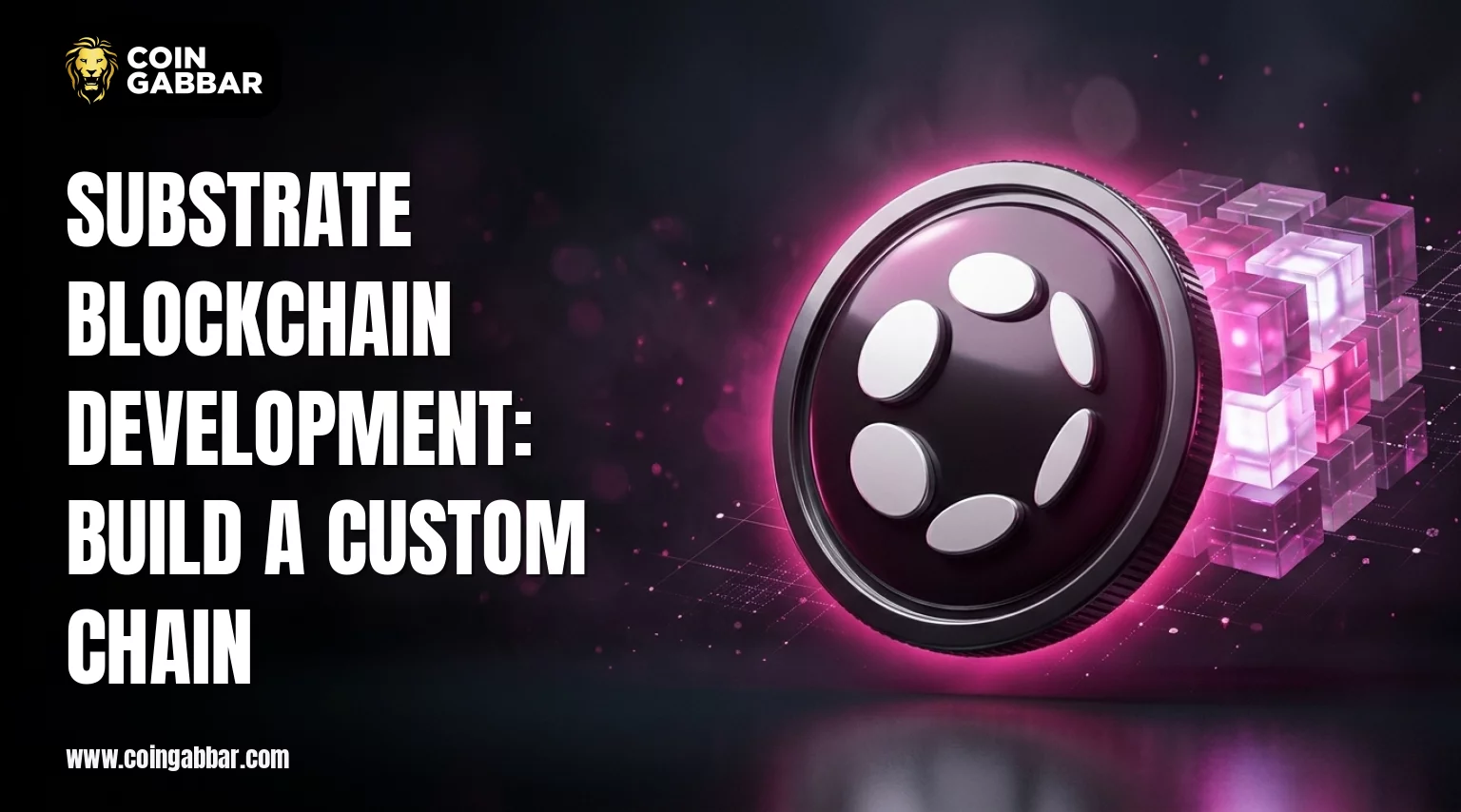
Building a Blockchain With Substrate: Developer Guide
Few teams want to write a blockchain from zero. It would take years. Substrate Blockchain Development offers a shorter route. Developers pick ready-made modules, add their own rules, and build a custom chain in Rust.
Substrate now lives inside the Polkadot SDK, which powers the wider Polkadot ecosystem. This guide follows the official docs step by step, from setup to launch.
What Is Substrate Blockchain Development, and How Does It Work?
Substrate is a Rust toolkit for building chains from modular parts. A chain has two layers. The node handles networking and storage. The runtime holds the rules for changing the chain’s state.
The runtime is compiled to WebAssembly, and its code is stored on-chain, so upgrades don’t need a hard fork. That split is the core of Substrate Blockchain Development.
Why Use Substrate to Build a Custom Blockchain Network?
Substrate Blockchain Development gives a team full control over its own rules, fees, and features. The hard parts, such as networking and storage, come ready-made, so developers spend their time on what makes the chain different.
A finished chain can also join Polkadot as a parachain by buying coretime, which is explained in Polkadot 2.0.Parachains share the security of the main Polkadot network.
That security comes from validators who put up staked DOT, and the Polkadot staking mechanism shows how those rewards work.
What Tools Are Needed for Substrate Blockchain Development?
The toolbox is short:
Rust, with the WebAssembly target added
The Polkadot SDK parachain template, a ready starter project
Chain spec builder, which creates the chain’s starting settings
Omni Node, which runs the chain locally
A code editor and a terminal
How Can Developers Set Up the Rust Development Environment?
The official install guide lists system packages first. Version matching matters next. The current template guide asks for Rust 1.88 and warns that newer compilers may not work.
Older tutorial versions asked for 1.86, so the version in the matching guide is the one to follow.
How Do the Polkadot SDK and FRAME Pallets Fit Together?
Substrate is one part of the Polkadot SDK. FRAME adds plug-in modules called pallets, and Cumulus turns a FRAME runtime into a parachain.A pallet adds one feature, such as balances or governance.
Official tutorials build a simple counter pallet with increment and decrement calls, a good first exercise. Cross-chain messaging also relies on pallets, and XCM explained for beginners shows how parachains talk to each other.
How Can Developers Configure a Custom Blockchain Runtime?
Adding a ready-made pallet takes three moves, per the official pallet guide. Add the dependency in the runtime’s Cargo file with the std feature on.
Implement the pallet’s Config trait. List the pallet in the runtime with a unique index. A clean runtime setup is the heart of Substrate blockchain development.
How Can Developers Build and Run a Local Blockchain Node?
The parachain template guide covers this stage. Clone the template and build it with cargo in release mode. The first build can take several minutes.
The chain spec builder then creates a development spec, and Omni Node starts with the dev flag.
Blocks appear at ws://localhost:9944 by default. Stopping the node wipes the test data. Nothing here touches a public network.
How Can Developers Test and Debug a Substrate Blockchain?
A mock runtime runs one pallet alone, unit tests check each call, and benchmarks measure what each call costs.
Larger checks use a forked live parachain or a local test network. A debug build gives better diagnostics than a release build.
How Can Developers Upgrade and Deploy a Custom Blockchain?
A runtime upgrade replaces the on-chain code through a special call. Developers build the new runtime, raise the spec_version number, submit the upgrade, and then check the new version.
Skipping the version bump means the chain ignores the change, as the official upgrade tutorial warns.
Who may submit it depends on the setup. Test chains often use a sudo key, while production chains route upgrades through a vote, like the Polkadot OpenGov governance system.
Launching happens in three stages. A team first runs the chain on a local node, then tries it on a public testnet, and only after that goes live as a parachain.
A parachain needs coretime to produce blocks, and the renewal terms depend on how that coretime was bought. The agile core time model explains the details.
What Challenges Should Developers Consider Before Launch?
The real work starts after launch. A chain that changes how its data is stored needs a storage migration, and the official migration guide explains how that works. Rust also takes time to learn, and a new compiler version can break a build that worked last week.
Maintenance is where the effort adds up. The modular design helps, since tested pallets carry less risk than code written from scratch. Real user demand is the bigger unknown. A chain can run perfectly and still attract nobody.
Money is another question. Teams that need funding can look at how Polkadot treasury funding works before making a plan.
Conclusion: What Are the Key Steps in Substrate Development?
Substrate Blockchain Development follows a simple order. Developers set up Rust, start from the template, add the pallets they need, test on a local node, and then upgrade and launch. The ready-made modules save the most time.
What stays uncertain is long-term upkeep and whether users will show up. Polkadot’s own design is also changing, as the JAM upgrade plans show. Checking the current versions in the official docs is the best next step.
Disclaimer: This article is for information only and is not financial or technical advice. Crypto projects carry high risk, and software can contain errors. Readers should do their own research before making any decision.