
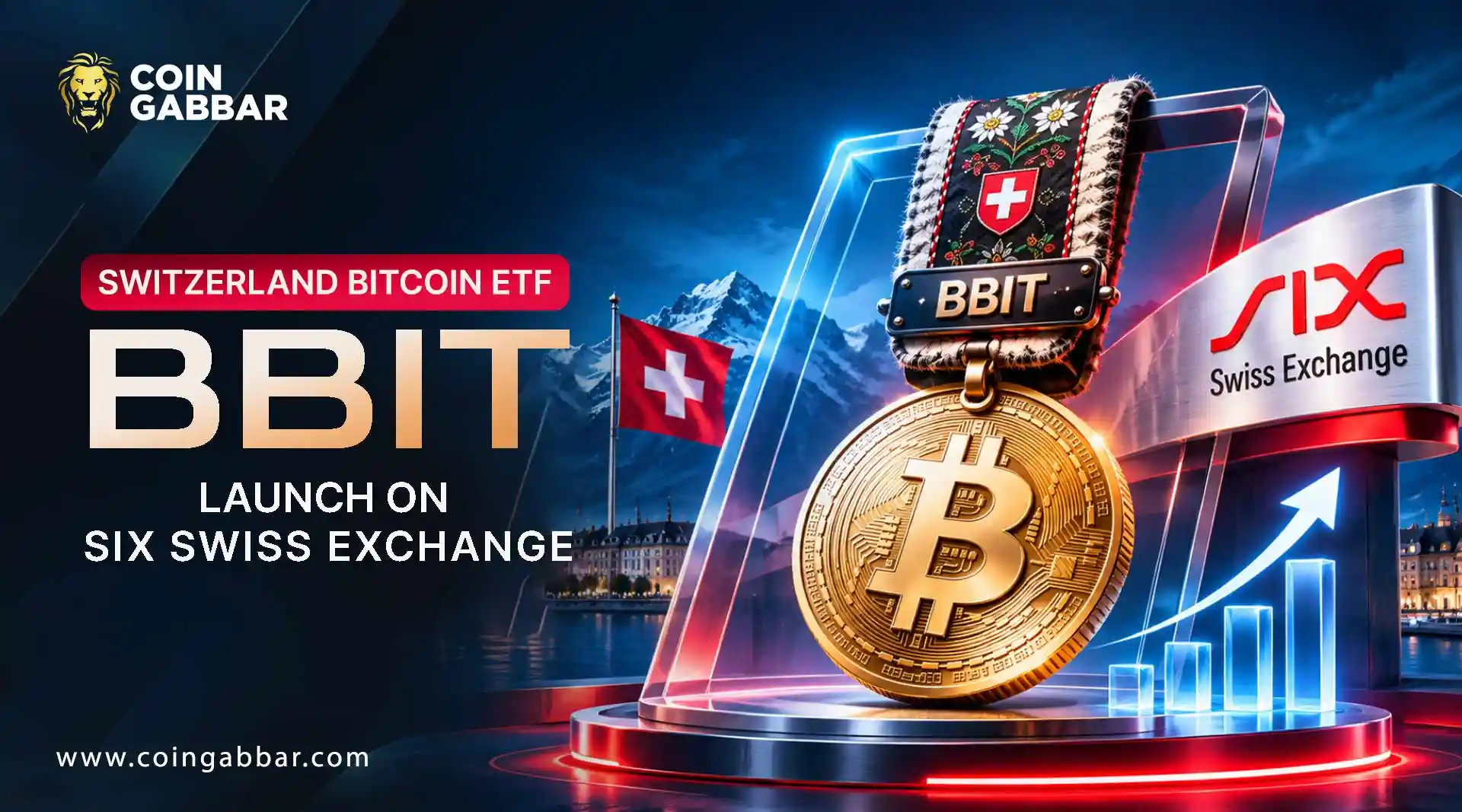
Bitcoin now has a place on the Swiss stock exchange. The Bitcoin Fund-ETF, ticker BBIT, began trading on the SIX Swiss Exchange on 26 November 2026.
Many call it the Switzerland Bitcoin ETF, as it is Switzerland's first exchange-traded retail fund-approved to invest directly in Bitcoin.
The fund is approved for public offering in Switzerland only. Investors there can buy units like shares with no wallet or private keys. A spot Bitcoin ETF of this kind tracks the price of the coin itself.
What it is: BBIT, the Switzerland Bitcoin ETF, is a Swiss that holds Bitcoin directly.
Launch: It launched on 19 November 2026 and began trading on SIX Swiss Exchange on 26 November 2026.
Availability: The public offering is approved in Switzerland only.
An ETF is a fund whose units trade on a stock exchange, like shares. A spot Bitcoin ETF owns real Bitcoin, so the unit price follows the coin's price.
Think of a locked vault. The buys Bitcoin and keeps it safe. Investors hold units, and each unit is a small share of what is in the vault. They do not hold coins or keys.
The plan is passive. BBIT does not try to beat Bitcoin. It tracks the price and values itself daily with the SIX Reference Rate Bitcoin Index (BTCRR). It holds no futures, and it does not lend its Bitcoin or use derivatives.
So the Switzerland Bitcoin ETF is price exposure through a bank or broker. That is simpler than a personal wallet, but investors give up direct control of the coins.
Three dates matter, and they are easy to mix up. FINMA approved the fund on 20 October 2026, as FINMA's announcement states.
A Bitcoin ETF approval only clears the legal path. The fund-launched on 19 November 2026, and units began trading on SIX on 26 November 2026.
BIT Asset Management said BBIT started with 350 BTC in assets, according to its launch announcement.
"First" applies to Switzerland only. BIT calls BBIT Europe's only spot Bitcoin ETF, but that is the company's own claim.
BBIT is a contractual under Swiss law, so its assets are legally separate from the firms running it.
Many European Bitcoin ETPs are debt notes or certificates. Older trust products use a different Bitcoin trust structure.
Detail | Verified information |
Fund name | Bitcoin Fund ETF |
Ticker | BBIT |
Exchange | SIX Swiss Exchange |
ISIN | CH1593447597 |
Benchmark | SIX Reference Rate Bitcoin Index (BTCRR) |
Launch date | 19 November 2026 |
First trading day | 26 November 2026 |
Fund management company | PvB Pernet von Ballmoos AG |
Asset manager | BIT Asset Management AG |
Custodian bank | AMINA Bank AG |
Target TER | 0.19% p.a. |
Trading currencies | USD and CHF |
Minimum investment | 1 unit |
These figures come from the official PvB fund page.
BIT, the parent company of BBIT's asset manager, also runs an official X account.
Pernet von Ballmoos runs the fund, BIT Asset Management manages the investments, and AMINA Bank AG holds the coins in offline Bitcoin cold storage. Investors can buy from one unit on the exchange.
The fund charges no entry or exit commission on exchange trades. Broker fees, Swiss stamp duty, and the bid-ask spread are separate costs and still apply.
A BBIT unit has two different prices. One is set by the fund, and the other is set by the market.
Point | NAV | Market price |
What it is | The value of one fund unit | The price at which a unit trades on SIX |
Who sets it | PvB, the fund management company | Buyers and sellers on the exchange |
When it updates | On each valuation day | During exchange hours |
Currency | US dollars | US dollars or Swiss francs, depending on the line |
A market maker posts buy and sell quotes during trading. This supports liquidity and can help keep the market price near NAV. However, it does not guarantee that the two prices will match.
BBIT trades on two lines, and both cover the same units. Only the quote currency is different.
Point | USD line | CHF line |
Units | Same fund units | Same fund-units |
Quote currency | US dollars | Swiss francs |
Fund valuation | US dollars | US dollars |
Currency hedging | None | None |
The fund is valued in US dollars and is not currency hedged. Buying through the CHF line lets investors trade in Swiss francs.
Public funds normally must spread money across many assets.
A Bitcoin-only fund-breaks that rule, so FINMA granted an exemption, citing Bitcoin's long trading history and high trading volume.
Conditions came with it. FINMA requires supervised institutions to follow applicable FinSA conduct rules, give clear risk warnings, and pay close attention to suitability checks where required. Fund-documents must explain the risks plainly.
A regulated fund can widen access, since banks, advisers, and private investors who avoid crypto exchanges may find a listed fund easier to hold.
Still, BBIT's public offering is Switzerland-only, so the Switzerland Bitcoin ETF cannot reach global investors directly today.
Global adoption is a potential impact, not a confirmed result. Demand and local rules will decide how far it goes.
Not through a public offering. BIT's own FAQ says the fund is approved for public offering in Switzerland only, and it is not available to US persons.
Investors abroad should check whether local rules allow the product, whether a broker offers it, and which taxes and currency costs apply.
The structure and segregated holdings reduce the issuer-credit exposure of debt-based products. Custody, operational, and market risks remain.
FINMA says Bitcoin stays highly risky even through an approved ETF, and for the Switzerland Bitcoin ETF, the main risk is still Bitcoin's price.
Price swings and capital loss: Bitcoin can rise or fall sharply in a day, and the fund-passes those moves to unit holders. The fund-holds one asset only, so nothing offsets a fall. A large loss is possible, up to a total loss.
Borrowing: The fund-says it uses no leverage, but its contract permits temporary borrowing of up to 25% to meet redemptions. BIT's notice says total exposure could then reach 125% of net asset value. The official prospectus has the exact terms. It is in German, and the German version is the binding one.
Custody and tracking: Keys could be compromised in theory, and the unit price can trade above or below NAV. Trading can be halted, and redemptions can be deferred in rare cases.
Costs: Fees, custody, and tax differ from direct buying, as this comparison of fees, custody, and tax shows.
FINMA says other providers have applied or announced plans, so more Bitcoin-funds could appear.
That is speculation. The BBIT exemption rested on Bitcoin's long history and high volume, and that does not automatically cover other cryptocurrencies.
The Switzerland Bitcoin ETF gives Swiss investors a regulated fund-route to direct Bitcoin exposure.
FINMA approved it on 20 October 2026, it launched on 19 November, and trading began on 26 November.
Demand, wider access, and price risk are still open. Investors weighing BBIT should read the prospectus first.
Disclaimer: This article is for information only and is not financial advice. Bitcoin and Bitcoin funds are highly volatile, and capital can be lost in full. Availability depends on local laws, so details should be checked with official sources before any decision.
Frequently Asked Questions (FAQ)




Owned by:-
DCG Tech FZCO, UAE
Delivery Partner:-
Gabbar MediaTech Pvt Ltd.
Copyright © 2026 Coin Gabbar. All Rights Reserved