Tokenized Real Estate: Does a Blockchain Token Mean You Own It?

What Is Tokenized Real Estate and What Does Property Token Represent?
A wallet can show a token. It cannot show a deed. That gap is the whole story of tokenized real estate. You can hold a token that tracks a building and still hold no legal claim on the building itself. So what does the token actually give you?
A token proves only that you control it. Whether it also proves you own part of a property depends on the legal structure behind it.
Often it is a claim on a company or an issuer. Check the papers before the price.
What Does Owning a Real Estate Token Actually Mean?
A token is a digital record on a blockchain that shows who controls it. Ownership of land or a building is set by law, contracts, and official registers.
Bank of Japan researchers Okuyama and Sugimura, in an October 2025 working paper, say tokenized assets rest on a structure where the record is a claim against a person, not a right over the asset itself.
The US Congressional Research Service says the ability to record real estate transactions on a ledger "does not necessarily confer legal rights." See its tokenized assets brief.
How Is a Tokenized Property Structured Behind the Scenes?
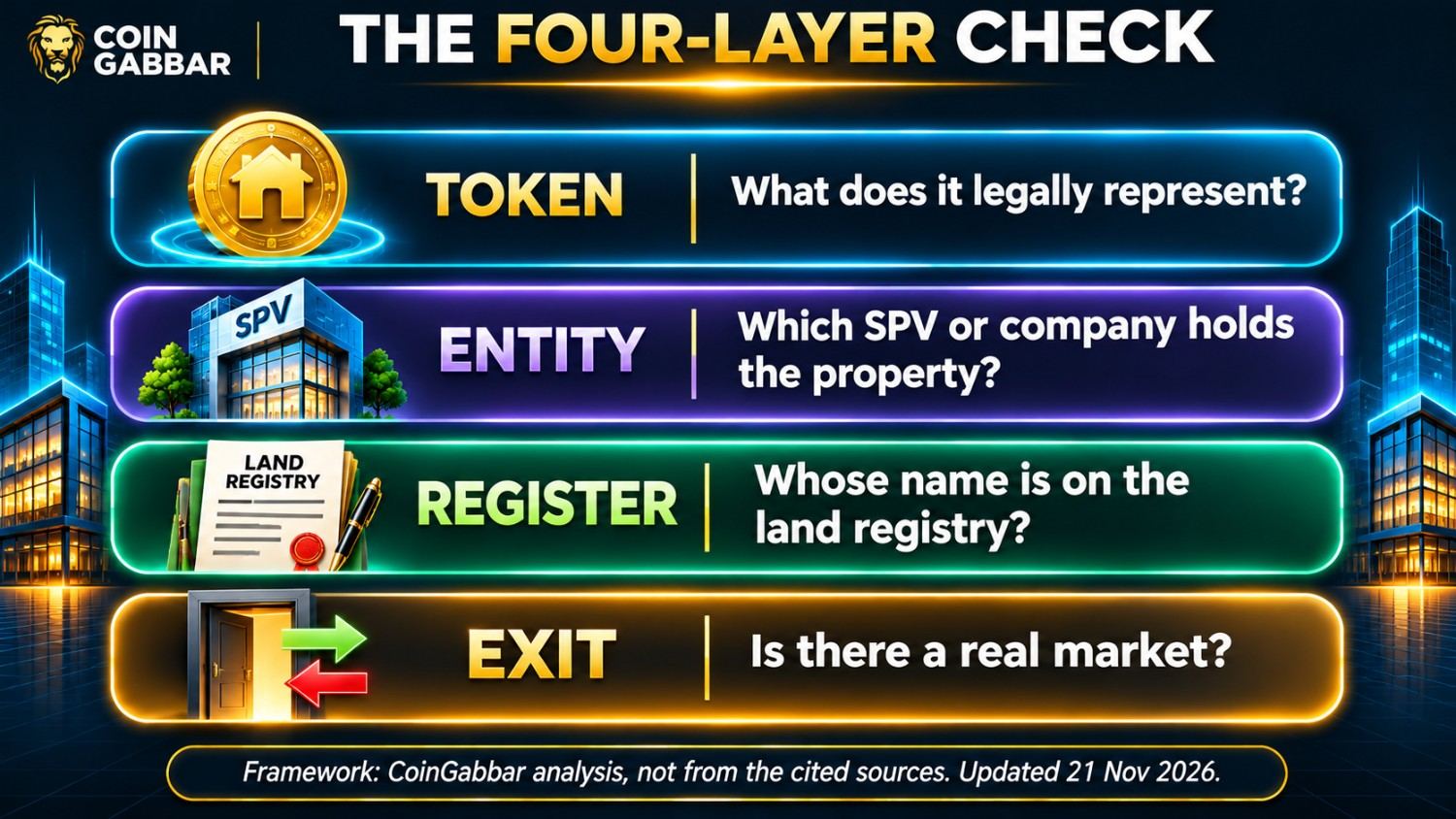
In layers. A property sits inside an owner, often a special purpose vehicle (SPV), meaning a company made to hold one asset. That owner issues shares, units, or debt. A token then records those rights, and your wallet holds it. Our RWA tokenization guide covers the basics.
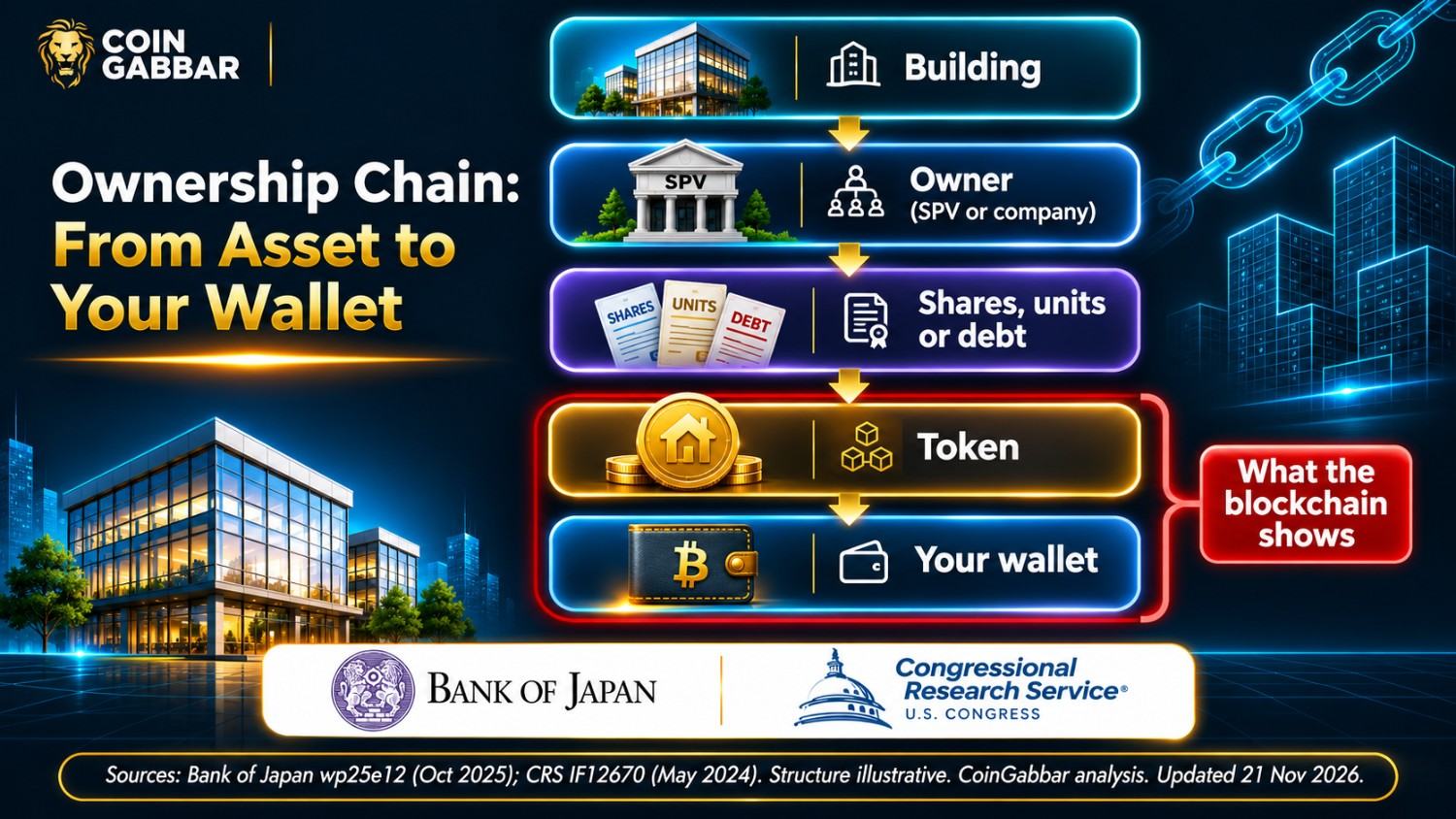
Take a hypothetical $10 million hotel. A company issues 10 million digital units, and you buy 10,000, or 0.1%. The hotel still sits inside a company with a mortgage, staff, and creditors.
So, the rights depend on what they legally are: shares, a loan claim, or something else. The blockchain does not decide that. The documents do.
Why Might the Law Not Recognize a Property Token at All?
In the United States, some scholars say it does not. Odinet and Tosato, in an October 2025 Oxford Business Law Blog post, argue that current law does not recognize real estate tokens as legally effective.
They name three barriers. Conveyances must be in writing. Property interests cannot pass by simply holding one. And land records still exist, so a seller could deed the same property to a second buyer, who may win under recording rules.
These are US-focused views. Other countries differ.
What Happens to Investors If the Issuer Fails?
It depends on the structure, not the chain. Your holding stays in your wallet. The open questions are whether you are a shareholder, a secured lender, or an unsecured creditor, and whether client assets were kept apart from the issuer's own.
The chain also cannot erase a claim against the building, such as a mortgage or a court order.
If a platform simply shuts down, you may still see your holding but lose the services around it, such as rent payouts, reports, and redemption. Value may still rely on one company.
Can Blockchain Records and Land Records Disagree?
Yes, and that is a core risk. Picture a case where the chain shows Alice with 100 units, the issuer database shows Bob, and the land registry shows a third name.
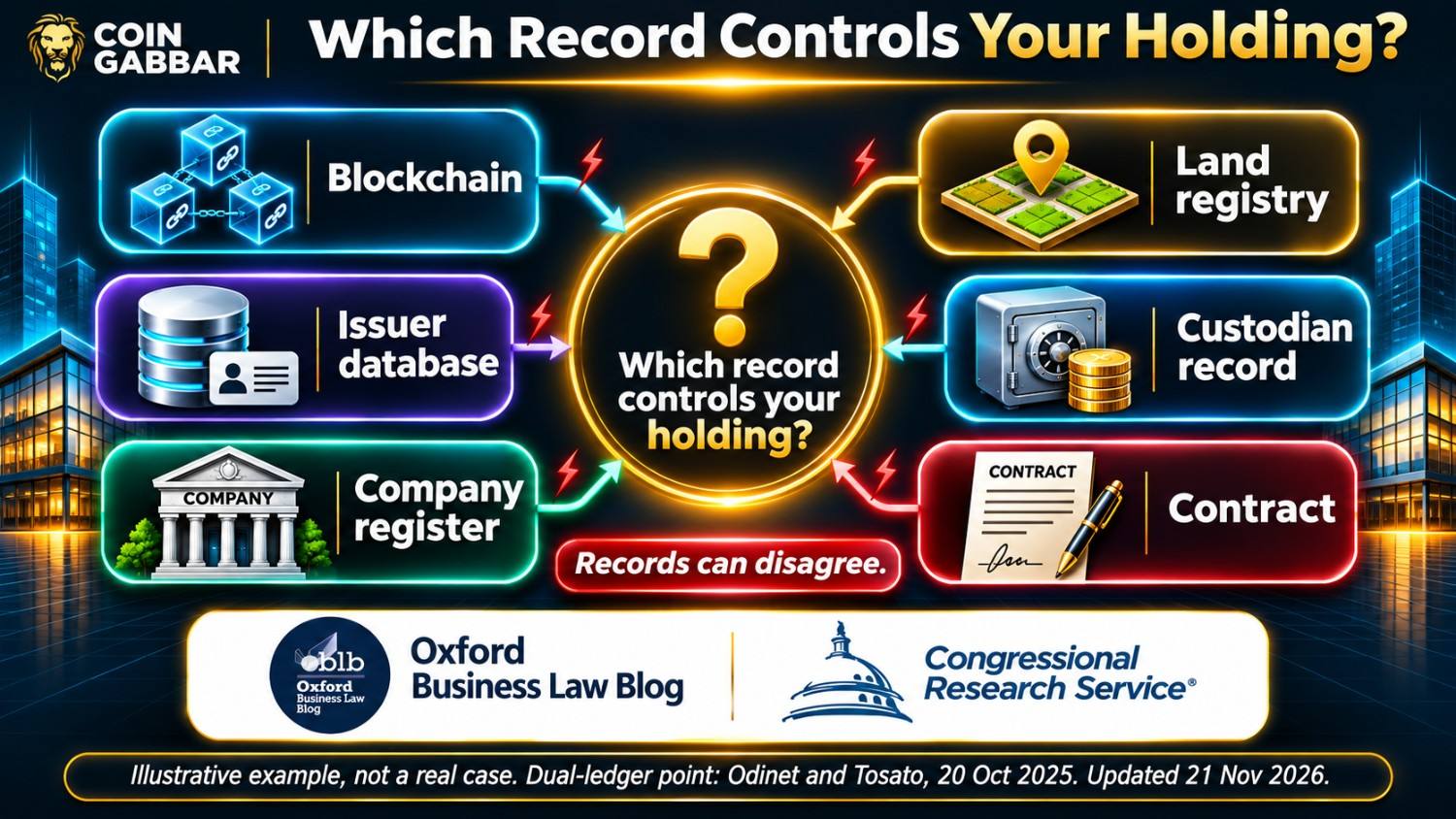
Up to six records can exist: the blockchain, the issuer database, the company register, the land registry, the custodian record, and the contract. Which one a court treats as final differs by structure and country.
The CRS brief adds that tokenized physical assets may still be traded offline, which needs a way to keep chain records and physical reality in sync.
Can You Sell or Redeem a Property Token Quickly?
Not necessarily. Tokenization makes ownership easier to divide. It does not create buyers. A holding can transfer on-chain and still have no bid behind it.
Keep three ideas apart: transfer, liquidity, and redemption. One does not imply the others. A secondary market can close, and an issuer can stop buying tokens back.
The best RWA crypto projects list is a starting point for names.
What Does the Dubai Title Deed Pilot Show So Far?
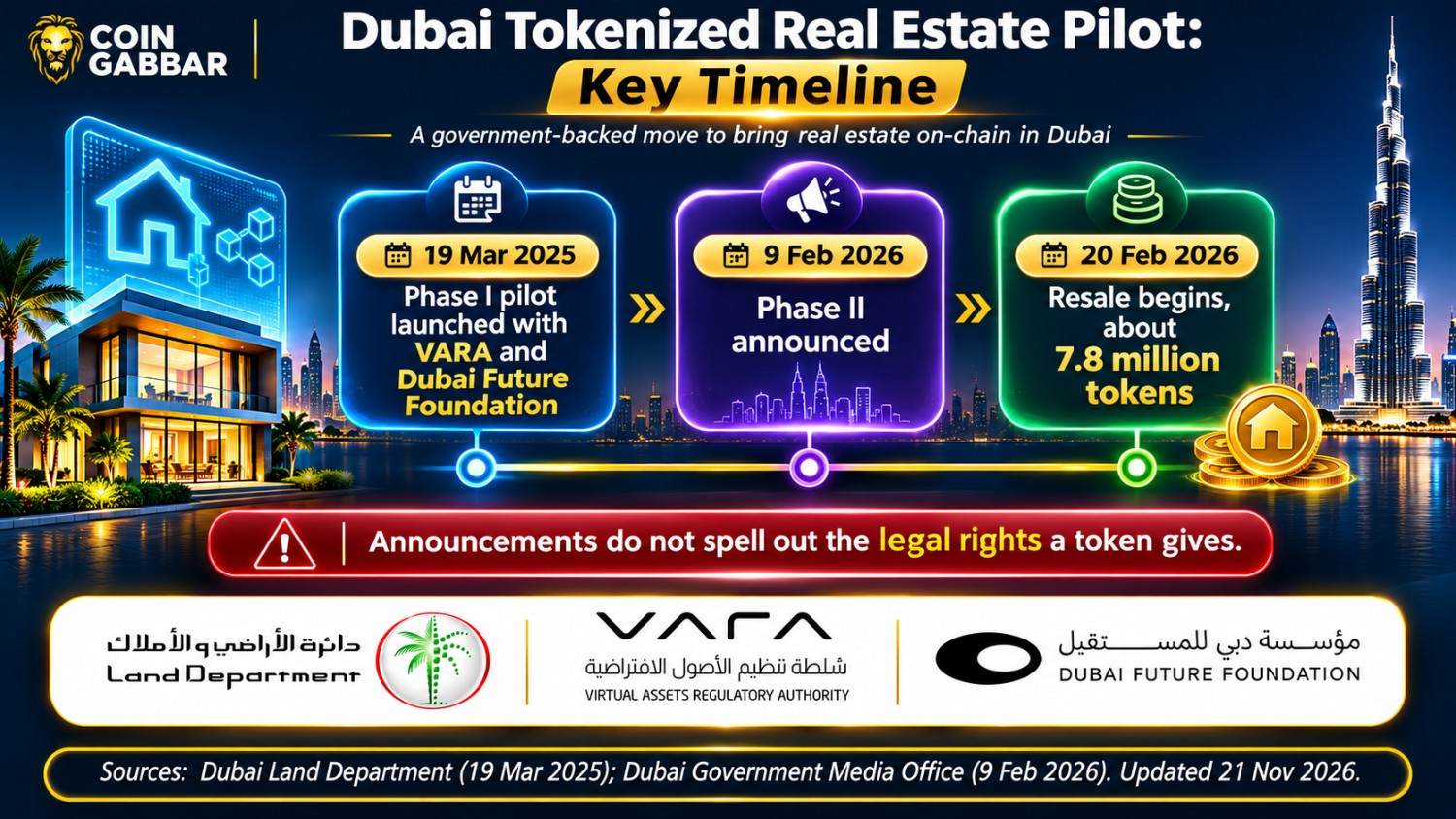
Dubai is the closest test case. The Dubai Land Department launched its pilot on 19 March 2025 with the Virtual Assets Regulatory Authority and Dubai Future Foundation, per its Phase I announcement. It calls itself the first Middle East registry to tokenize title deeds.
Phase II was announced on 9 February 2026, with resale from 20 February. About 7.8 million real estate tokens were to be made available, per the government announcement, under a controlled pilot on approved platforms.
Neither announcement nor the DLD service page spells out what legal rights holders get. So the pilot shows what tokenized real estate models linked to property titles could look like. It does not yet prove that the model works at scale.
The announcement does not spell out what legal rights holders get. So the pilot shows what title-linked models could look like. It does not prove the model works at scale. It is not from the cited sources. Secure your keys with the help of the crypto wallet guide.
Which Terms Should You Know Before Reading Offer Documents?
An SPV is a company created to hold one asset. A title deed is the legal document that evidences ownership of property. A land registry is the official record of who holds it.
Expert Opinion: Does a Token Prove You Own the Building?
CoinGabbar analysis suggests tokenization has changed how ownership is recorded and traded more than how it is created in law.
This view rests on the Bank of Japan paper, the CRS brief, the Oxford Business Law Blog argument, and the Dubai Land Department announcement.
The weak link is evidence. No source here tests a real court case on a tokenized building.