US CPI Data Ahead of Fed Meeting: Will Inflation Change December Hike?


US CPI Data Release: October Inflation Forecast and December Hike Odds
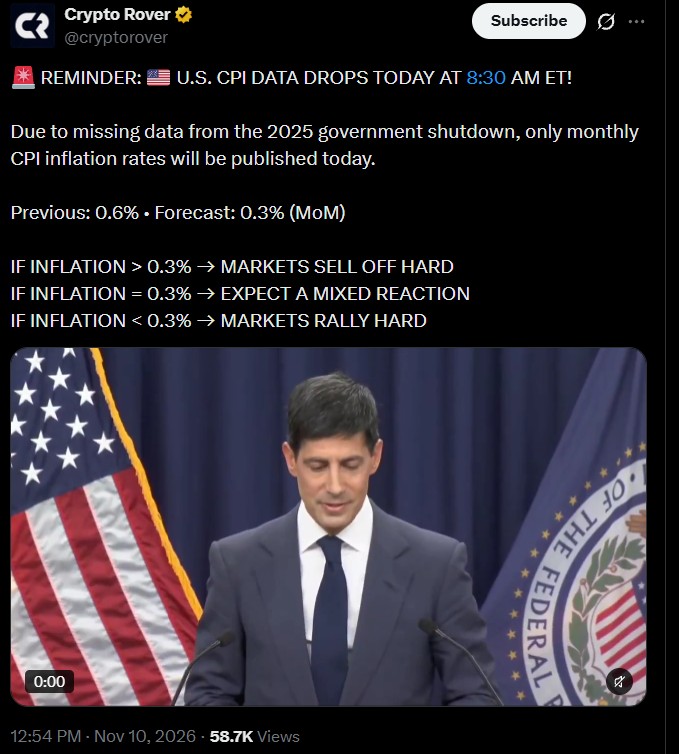
The latest US CPI data is due on November 10, 2026, at 8:30 AM ET. Investors, economists and crypto traders are all watching closely. Economists surveyed expect October consumer prices to rise 0.3% from September, a slowdown from the 0.6% jump the month before.
The report will not include a year-over-year rate because the 2025 government shutdown left a gap in the data. So can easing monthly price hikes take pressure off the Federal Reserve?
US CPI Data at a Glance: Key Numbers and Market Expectations
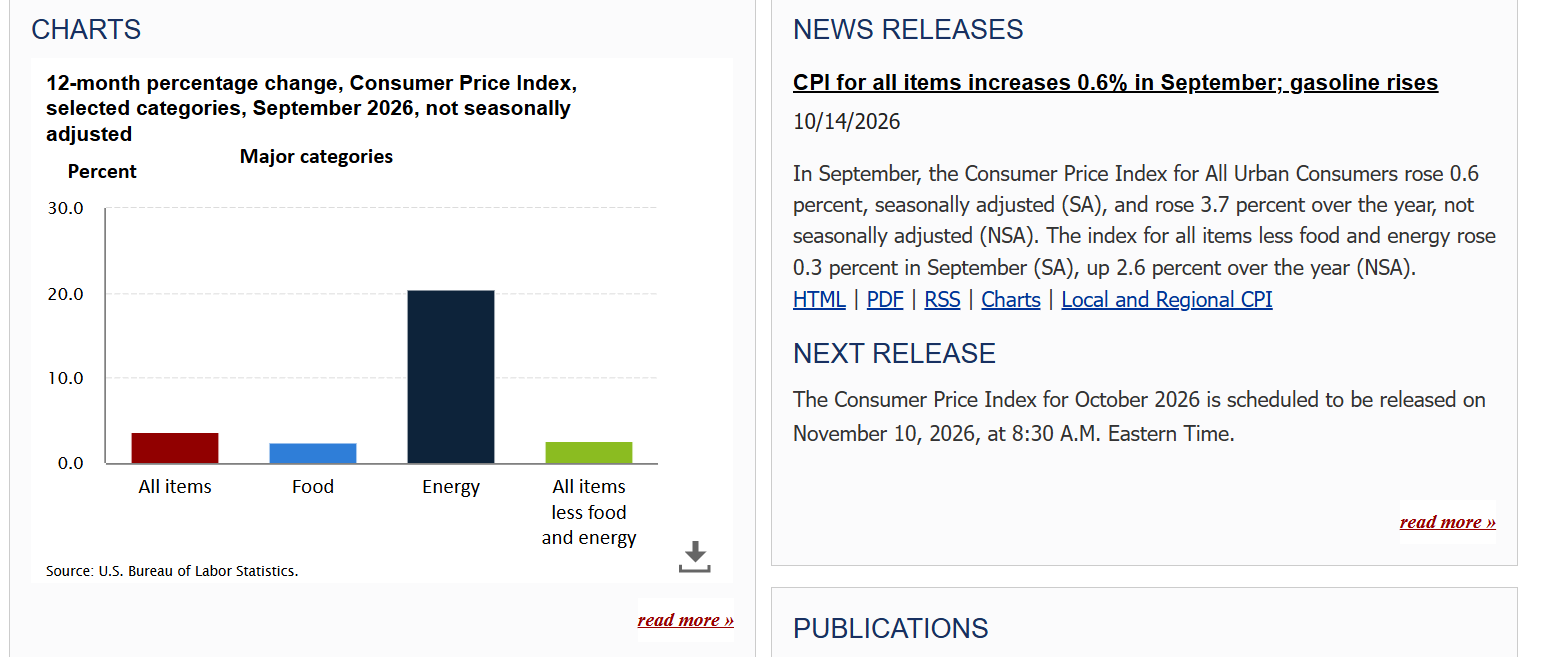
The table below compares September’s reported figures with October forecasts. The 0.3% headline and 0.2% core numbers come from the Reuters survey and the Dow Jones consensus.
They are not official results. The Bureau of Labor Statistics (BLS) will publish only monthly readings this time. A missing annual figure does not mean the rising price is zero. It simply means there is no clean base for comparison.
Source: BLS
October US CPI Data, Reported Figures and Forecasts
| Indicator | September 2026 | October 2026 Forecast |
| Headline CPI (MoM) | 0.6% | 0.3% |
| Core CPI (MoM) | 0.3% | 0.2% |
| Headline CPI (YoY) | 3.7% | Not published |
| Core CPI (YoY) | 2.6% | Not published |
| Fed inflational target | 2% | 2% |
Why October US Inflation Is Expected to Slow
Gasoline is the main reason. After a 9.1% surge in September, pump prices fell in October before seasonal adjustment, according to Energy Information Administration (EIA) data. The reports cited a 0.9% drop, while CNBC cited a decline of more than 4%. Economists still expect a small rise after seasonal adjustment. Food prices, flat in September, are also expected to rise.
Cheaper fuel helps the headline number. However, it does not mean broader pressure has gone away. Energy swings can hide what is happening in everyday services.
Core CPI in Focus: Are Service Prices Still Keeping Inflation High?
Core CPI leaves out food and energy, so policymakers use it to judge the underlying trend. Forecasts call for a 0.2% gain in October after 0.3% in September.
Airfares may have slowed or even fallen. Hotel and motel rooms, along with owners’ equivalent rent, probably stayed high. The BLS is also updating its health insurance data, which some economists think could produce softer readings. Meanwhile, the AI investment boom is expected to keep information technology prices elevated.
Chicago Fed President Austan Goolsbee said inflation is now rising in services, not just in oil and tariff-driven goods. That is why service costs could stay a concern even if headline CPI cools.
Why the BLS Will Not Publish October Year-over-Year CPI Data
The 2025 federal shutdown stopped the BLS from collecting consumer prices in October 2025. Without that index, a direct annual comparison for October 2026 is not possible, so the BLS will release monthly readings instead.
Some economists have filled the gap with their own math. The data reported that estimates built from interpolated data converged near 3.9% for headline inflation and 2.7% for core. Bank of America used a different baseline and estimated 3.8% and 2.7%.
These are independent economist calculations. They are not official BLS year-over-year readings, and readers should treat the US CPI data with that limit in mind.
Federal Reserve Rate Decision: Could Oct CPI Influence a Dec Hike?
The Fed held its benchmark rate at 3.75% to 4.00% in October. Late Monday, markets priced in roughly an 85% chance of a December hike. The data citing CME FedWatch, put the odds above 80%. Inflation remains well above the Fed’s 2% target.
Goolsbee said affordability and cost pressures dominate what he hears across his district. He did not commit to a vote on future hikes.
This is the last report before the December 8 to 9 meeting. Bank of America said only a very soft 0.1% reading would likely change the picture. A hotter print could strengthen hike bets, while a cooler one could soften them. A December hike is not confirmed.
Source: CryptoRover X Post
Timeline: Key US Inflation and Federal Reserve Events
| Date | Event | Importance |
| Sept2026 | Previous CPI report | Headline CPI rose 0.6% MoM; core CPI rose 0.3%. |
| Nov 10, 2026 | October US CPI release | Monthly headline and core readings due at 8:30 AM ET. |
| Nov 13, 2026 | US PPI and Core PPI | Upcoming wholesale inflation indicators. |
| Dec 8 to 9, 2026 | Federal Reserve meeting | Policymakers will assess growth and inflation. |
Verify the PPI and Fed meeting dates before publication.
US CPI Data and Crypto Markets: What Bitcoin Investors Should Watch
Bitcoin and other risk assets often react to shifts in interest rate expectations. Higher inflation can strengthen bets on tighter policy, which may pressure risk assets. Lower inflation can lift sentiment if traders expect easier conditions ahead.
That is why 0.3% for headline US CPI data and 0.2% for core CPI matter as benchmarks. Readings above them could hurt sentiment, while readings below them could bring relief.
Traders should also watch Friday’s PPI and Core PPI reports and comments from several Fed officials this week. Crypto reactions are never guaranteed. They depend on leverage, liquidity and wider market mood, so careful risk management matters.
Conclusion: What Comes Next for Inflation and the Fed?
The October US CPI data will show whether inflation is truly cooling or only looks calmer because of gasoline. Easing monthly prices can still sit alongside sticky service costs.
The missing annual figure also limits direct year-over-year comparisons. Next, crypto market investors will watch Friday’s PPI data and the Fed’s December 8 to 9 meeting.
YMYL Disclaimer: This article is for informational purposes only and is not financial or investment advice. Crypto assets are volatile and risky. Always do your own research and consult a licensed professional.






