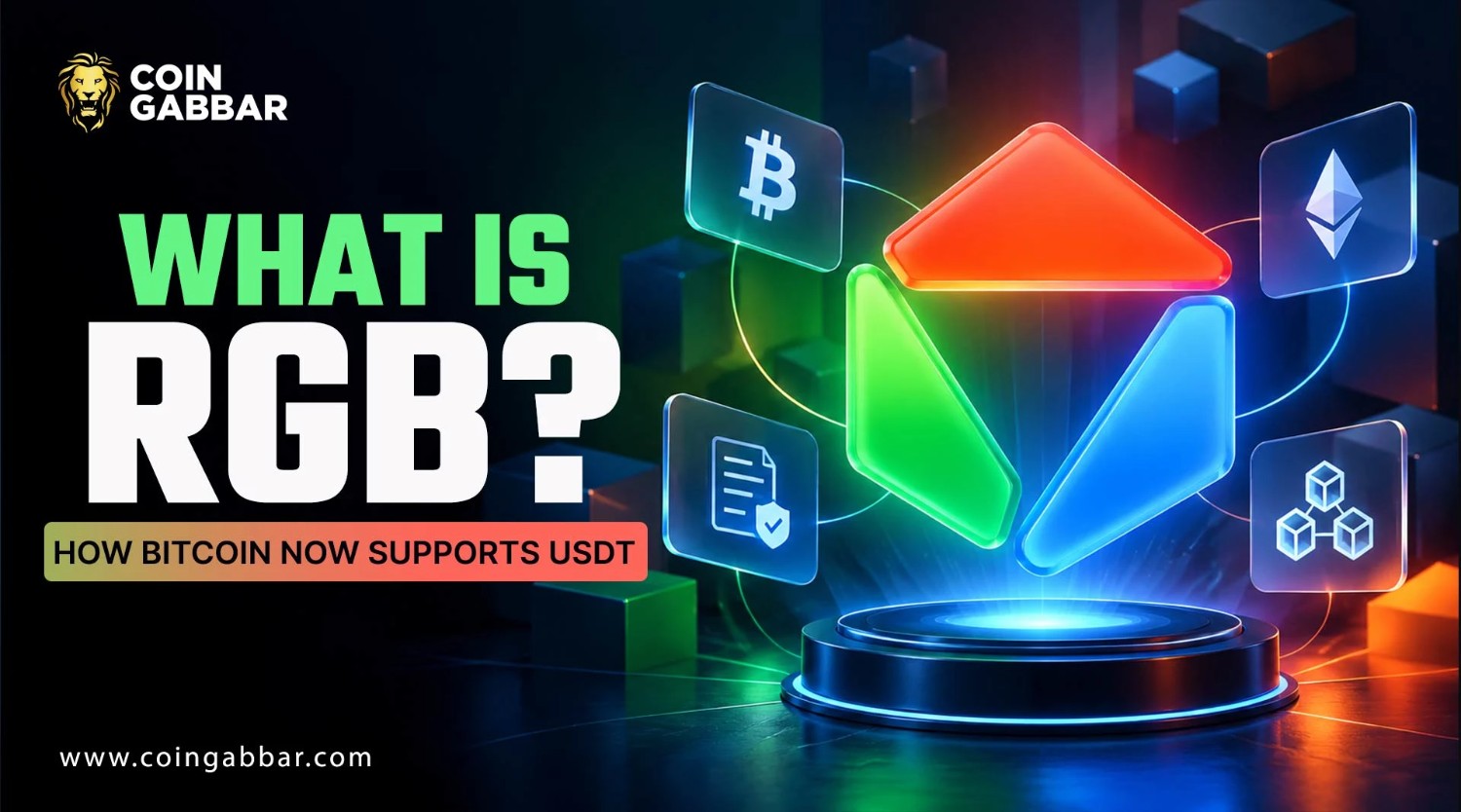
What Is RGB? How USDT Now Runs on Bitcoin Explained

Why Bitcoin’s Smart Contract Tool Is Getting So Much Attention
What is RGB, and why is a tool built for Bitcoin and the Lightning Network now being linked to Tether’s USDT? RGB is a smart contract system that lets people create and send tokens, including stablecoins, with Bitcoin as the base, while most of the contract data stays off the main chain.
This manual outlines the functionality of the tool, its possibilities, intentions regarding USDT, and necessary precautions to be informed about. The information has been sourced from authorized resources and the latest news till October 30, 2026.
What Is RGB and Why Does It Matter for Stablecoins?
RGB describes itself as a set of smart contracts for Bitcoin and the Lightning Network, and the official RGB website says it is a community project run by the LNP/BP Standards Association. The project documentation says the aim is to handle digital rights, such as contracts and assets, in a way that is private and able to grow.
The name often confuses people, because the documentation says this tool is not related to the RGB color model or to RGB++, which is a different protocol on a different network.
Stablecoins matter here because USDT already moves on many networks, and reports say Tron has more users and better support than any Bitcoin-based option.
How RGB Protocol Works: Client-Side Validation Explained
At a technical level, RGB is a smart contract system that doesn’t write every contract detail on a public blockchain. Instead, it keeps contract data and history off-chain. The chain holds only a small commitment.
The person who receives an asset checks that data on their own device. This is called client-side validation.
The project documentation describes it as a receiver-driven check. Before accepting an asset, the receiver verifies its full history. And that’s the main idea. The blockchain doesn’t carry the heavy data, so only the users involved need to store and verify it.
Ownership is tied to Bitcoin outputs through single-use seals, which are commitments that can be closed only once, so the same asset cannot be spent twice. Bitcoin stores only the commitment, which works like a sealed receipt that proves a change happened without showing the details. Reports about the launch say these commitments are tied to Bitcoin with Taproot or OP_RETURN, and many transfers can be bundled into one Bitcoin transaction.
The project says this design puts less data on the network and gives better privacy, since users pick which history to share. These are project claims, and independent test results are still hard to find.
What Is RGB Used For? Key Features Explained
The project and launch reports describe main features:
Token creation: stablecoins, company shares, NFTs, and other assets can be issued without deep coding skills.
Privacy: the project says zero-knowledge methods protect the history of assets.
Scale: the project claims it can grow in speed, data size, and network size.
Lightning support: transfers can run over Lightning channels while the asset rules stay in place.
Developer tools: simple contracts use Rust, advanced ones use AluVM, and an easier language called Contractum is planned.
How Does RGB Let USDT Run on the Bitcoin Blockchain?
What is RGB changing for Tether holders? Tether announced plans in August 2025 to bring USDT to the protocol, and reports from July 2026 said the company was getting ready to issue USDT directly on it using RGB version 0.11.1, with a launch aimed at that same month.
Those reports did not confirm a full public launch, so readers should check Tether’s official channels for the current status before assuming USDT works in a certain wallet. Bridges that move USDT over from other networks are expected to bring in early liquidity, and some tech companies are said to offer tools for wallets and exchanges.
RGB vs Other Networks: Where USDT Now Stands Today
USDT already runs on several blockchains, and reports say Tron has a bigger user base and more mature wallet and exchange support than the Bitcoin route. RGB differs in that it offers the ability to perform contract operations completely off the chain and permits Lightning payments, but it lacks the liquidity and availability of platforms that older counterparts have.
What is so special about RGB? Mainly a Bitcoin-native option, which may suit holders who prefer to stay inside the Bitcoin world. No route can be called better here, since the right pick depends on fees, supported platforms, and privacy needs.
How to Use USDT on Bitcoin Through RGB-Compatible Wallets
The RGB wallet directory is the place to check which wallets work today, and reports name Iris Wallet as an early supported option, with a Tether wallet described as coming soon. Developers can find code libraries and schemas in the RGB working group repositories.
Self-custody comes with a duty, because users must back up consignment data, which is the off-chain proof that shows who owns an asset. Losing that data may make funds hard to prove or recover.
Is RGB Safe? Benefits and Risks of USDT Running on Bitcoin
The possible benefits include less load on the Bitcoin chain, better privacy, and quick Lightning transfers, and reports say fees are often a fraction of a cent, although no independent numbers have been shared.
The main risks are practical ones. Liquidity is limited, Bitcoin wallet and exchange support is still growing, early funds depend on cross-chain bridges, and earlier development work ran into delays.
Learning the system is another hurdle, since client-side validation and consignment backups work differently from the wallets most stablecoin users know. No audit results were found in the sources reviewed, and even a clean audit would not guarantee safety. Rules for stablecoins on new networks may also differ by region, so legal questions remain open.
What Does the Data Say About RGB?
The serious signal herein is represented by the commitment from the issuer, since a well-known player in the stablecoin market made the announced plan to support it, backed by official documentation and the presence of a visible maintainer. The only concern is the adoption, as it is difficult to find credible usage statistics.
The biggest unknown is whether wallets, exchanges, and merchants will back the launch well enough to compete with networks that already hold large USDT volumes. Readers should confirm the launch status and supported wallets through official channels, using sources such as the RGB Protocol website.
Conclusion
So, what is RGB in practical terms? It is a smart contract tool tied to Bitcoin that keeps contract data off-chain and lets assets such as USDT move through client-side validation.
What stands out is the plan backed by the issuer, and what remains unclear is real adoption, liquidity, and independent security review. Readers should confirm launch details with official sources before using the technology.
Disclaimer
This article is for information only and is not financial advice. Crypto assets are volatile, and new protocols carry technical and liquidity risks, so readers should research independently and consult a licensed advisor before making any decision.