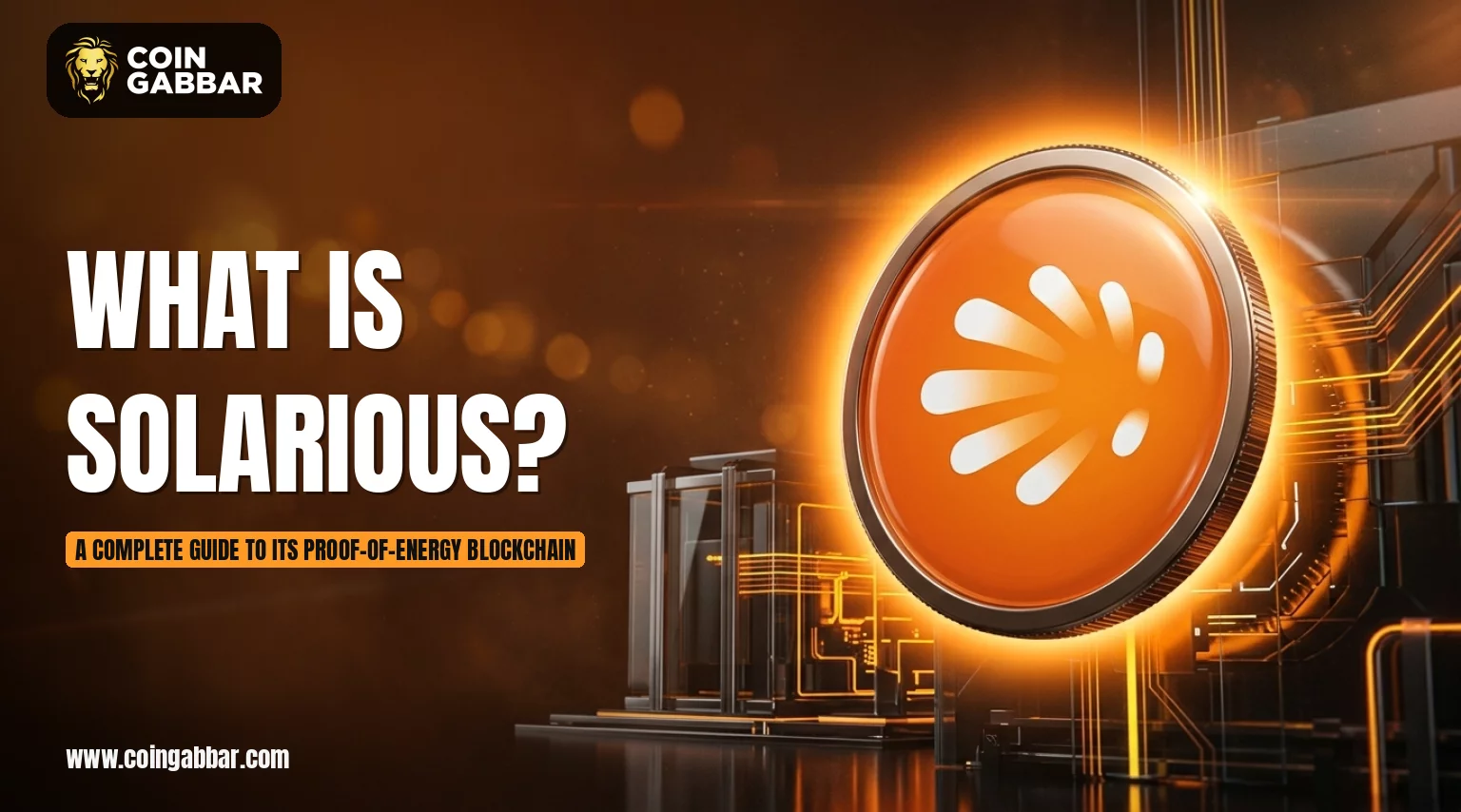
What Is Solarious? A Complete Guide to Its Proof-of-Energy Blockchain

Solarious Overview: How Does Its Proof-of-Energy Model Work?
What is Solarious, and why are crypto readers searching for it now? It is a Layer-1 blockchain that ties token rewards to measured solar electricity instead of raw computing power.
Interest is rising because a token sale is running, and the latest Solarious presale tracks its fundraising progress. This guide explains how the network works, what SOLAR does and where the open questions sit.
Facts come from the project's website, documentation and tokenomics report, checked on October 9, 2026.
What Is Solarious?
So, what is Solarious in simple terms? The project calls itself a proprietary Layer-1 built around Proof-of-Energy, a model that rewards verified renewable electricity. Its documentation says the chain runs on Cosmos infrastructure and is fully compatible with the Ethereum Virtual Machine (EVM).
That means Ethereum-style smart contracts and wallets can work on it. SOLAR is the native token. The project was previously called Simcat, and a documentation post announces the rebrand. The testnet is live, while mainnet updates are described as coming later.
What Is Proof-of-Energy and Why Does It Matter?
Proof-of-Work rewards computing power. Proof-of-Stake rewards locked capital. Proof-of-Energy rewards verified electricity. So what is Solarious really changing? It links rewards to a physical measurement, a solar panel's output, instead of hardware or deposits.
The Proof-of-Energy section of the official site describes five steps, from power generation to certificate settlement. The site argues that a kilowatt cannot be faked. That is a project claim, not a guarantee.
How Does Solarious Verify Renewable Energy?
Each device holds a private key inside its hardware, which gives it a unique identity. It measures its output and signs a report of total kWh with a timestamp. The energy generation docs explain that a relayer service then submits the report to a smart contract.
The contract checks the signature and the device registration. It rewards only the increase since the last report, and a maximum production rate caps inflated claims. According to the website, validators then check the proof before it affects network activity.
How Does the Solarious Blockchain Work?
What is Solarious doing under the hood? Its docs describe a Cosmos-based chain with EVM support, fast blocks and low fees. Energy data enters as transactions, validators process them, and smart contracts handle rewards.
From Energy Production to Verified Records
Generation and collection: a solar asset produces power and the device records voltage, current and kWh.
Submission and validation: the signed report is sent on-chain and checked.
Contract and rewards: the smart contract calculates SOLAR rewards from verified production.
What Role Do Validators Play?
Validators run nodes, produce blocks and confirm transactions. The blockchain documentation says Solarious uses a Proof-of-Stake validator model. The tokenomics report adds that validators also verify Proof-of-Energy submissions.
The available data suggests Proof-of-Energy is the verification and reward layer, while Proof-of-Stake handles block production. That is an analyst reading, not a project statement.
What Are the Key Features of Solarious?
What is Solarious offering today, and what is still planned? The documented features split like this:
Documented and on testnet: signed energy reports, a reward contract, EVM smart contracts, and full or pruned nodes.
Described on the website: wallet access, a mining pool layer and validator onboarding.
Planned: mainnet, wider producer rollout and environmental commodity settlement.
Claimed capabilities should not be read as live features. The explorer and API links on the site point to testnet.
What Is the SOLAR Token Used For?
SOLAR is the network's native token. The documentation lists transaction fees, validator incentives and protocol rewards. The tokenomics report adds governance, ecosystem incentives and producer rewards for verified solar output.
Utility describes intended roles. It does not guarantee market demand or price growth.
SOLAR Token Supply and Distribution
According to the published tokenomics report, maximum supply is fixed at 1 billion SOLAR. The website shows this split:
Category | Share |
Ecosystem | 34.0% |
Validator rewards | 25.5% |
Investors | 15.0% |
Reserves and listing | 9.0% |
Producer rewards | 8.5% |
Team and advisors | 8.0% |
Validator and producer pools are released over about 120 months. Seed and private investors face a 12-month cliff and 36 months of vesting, the schedule that controls when tokens unlock.
The report uses a $0.10 reference price. That gives a fully diluted valuation (FDV) of $100 million, which counts every token.
Estimated launch circulation is 69.02 million SOLAR, so market cap would sit near $6.9 million. A reference price is not a market price, and the 750K round and FDV estimates are covered separately.
One mismatch stands out. The report's 14 allocation lines add up to roughly 151%, while the website chart totals 100%.
Which Products Make Up the Solarious Ecosystem?
Solar Miner and Energy Verification
The Solar Miner plugs into a solar panel through a 9 to 60 volt DC input. It measures voltage, current and kWh, and signs reports with a key generated inside a secure chip. The project calls it an energy verification client, not a miner.
Validators, Nodes and Network Infrastructure
Nodes keep the chain running. The docs list a minimum of 4 CPU cores, 8 GB RAM and a 200 GB SSD. Node rewards come from an external service, and validators face slashing penalties for downtime or double-signing.
Verdex Wallet and Mining Pool
Verdex Wallet covers claims, staking and ecosystem activity. The mining pool layer manages accounts, devices and payouts.
SREC and REC Settlement
Renewable energy certificates (RECs) are credits that prove clean power was generated. The project aims to link verified production to this market. It sits in a later roadmap phase.
What Is the Solarious Roadmap and Current Status?
The website lists six phases. Here is how they separate on October 9, 2026:
Completed: an April 29 Proof-of-Energy demonstration and foundation work, as the project lists them.
Ongoing: validator onboarding, wallet and claim readiness, and testnet activity.
Planned: market infrastructure, Solar Miner rollout and certificate settlement.
The site also shows a 25% sale discount ending October 19, with 10 million SOLAR available and a 750,000 USDT maximum raise.
Sale terms are listed on the Solarious presale page. The website displays an audit badge, but the report was not reviewed here.
What Are the Potential Benefits and Risks of Solarious?
Potential Benefits
Transparent, inspectable energy production records.
Programmable rewards for renewable energy.
A possible way for smaller producers to participate.
Key Risks and Limitations
Hardware readings can be wrong or tampered with.
Token volatility and uncertain liquidity.
Validator, relayer and smart-contract bugs.
Unclear rules for energy certificates and token incentives.
Proposed features are not proof of real adoption.
As with any crypto presale, listing plans and price targets stay projections until they happen.
What Could Shape Solarious's Future Development?
Real producer adoption comes first. The site's live counters for blocks, wallets and activations were unreadable during research, so adoption cannot be checked independently.
Reliable infrastructure, a mainnet date, a full audit report and consistent tokenomics would settle most open points. Any of these would likely appear in crypto news soon after.
The idea of rewarding measured output is easier to defend than rewarding hash power. Trust in the data pipeline decides the rest.
Conclusion
What is Solarious, in one line? A solar-linked Layer-1 that wants to turn measured output into verifiable records and SOLAR rewards.
Signed device proofs and a fixed supply stand out. Mainnet timing, adoption data, audit details and consistent tokenomics remain uncertain.
Disclaimer: This article is for information only and is not financial advice. Crypto assets and presales carry high risk, including total loss of capital. Figures come from official project sources and may change.