Zcash Halving: A Complete Guide to ZEC Rewards and Scarcity

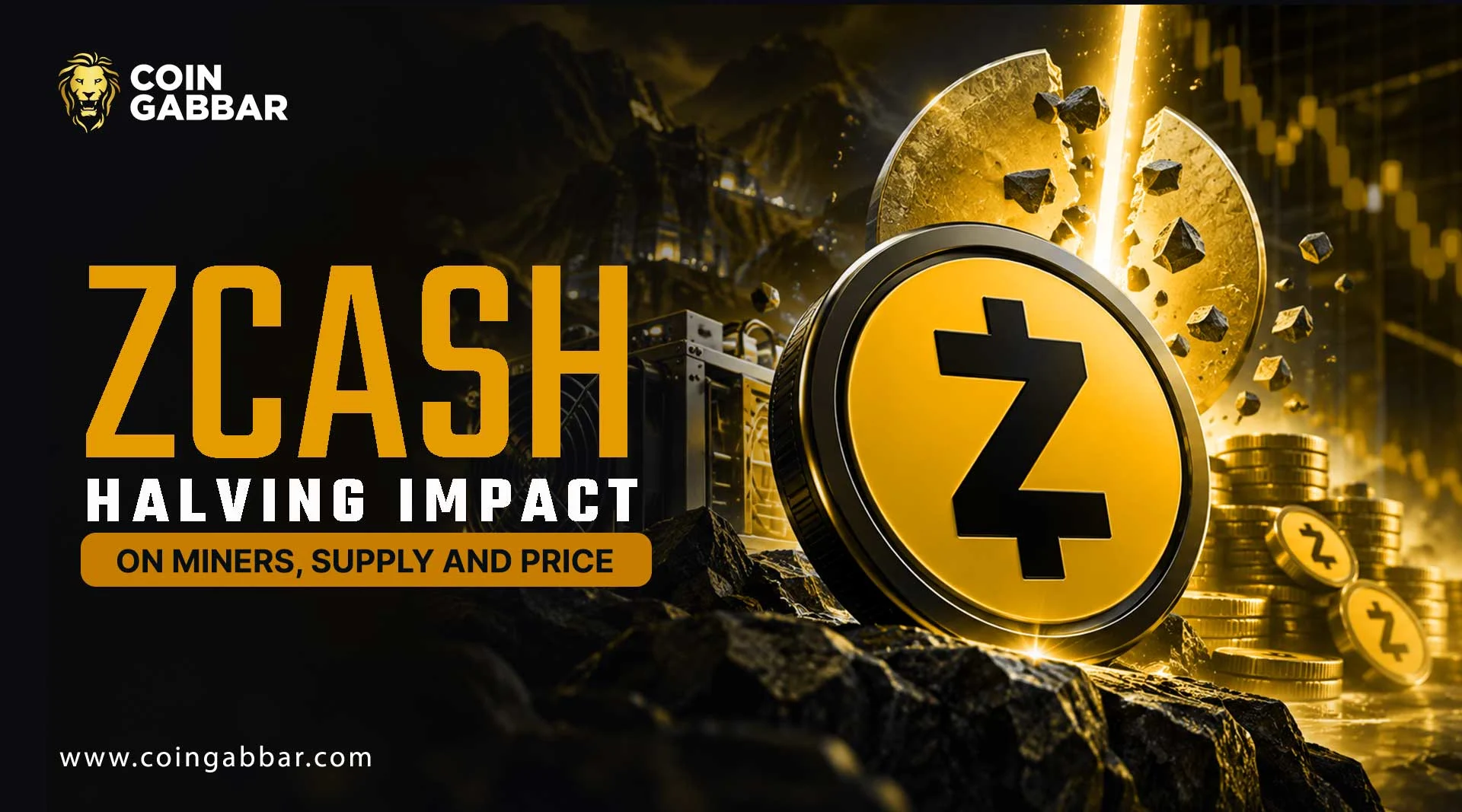
What Is the Zcash Halving and How Does It Work for ZEC Holders
Fewer new coins every four years. That's the whole idea behind the Zcash halving.
Two halvings are done, and the third is expected in late 2028.
Zcash is a privacy coin that launched on October 28, 2016. This guide checks every number against published data on October 7, 2026, and explains what the cuts mean for holders, miners and the wider market.
What Is the Zcash Halving and How Does It Work for ZEC Holders?
A halving cuts the reward that miners get for each new block by 50%. The rule is written into the Zcash blockchain, so nobody has to vote on it.
Basically, holders keep every coin they own. Only the new coins shrink.
Think of it as a pay cut for miners that gets planned years ahead.
How the Zcash Halving Reduces ZEC Block Rewards Over Time
Zcash starts counting from block height, which is just the number of blocks mined so far. When the chain hits a set number, the reward drops.
One cycle now lasts 1,680,000 blocks. Each block takes about 75 seconds, so a cycle runs close to four years.
The reward today is 1.5625 per block. That works out to roughly 1,800 new ZEC a day, based on a simple calculation. After the next halving, the same math gives about 900 a day.
And a Zcash wallet needs no action for a halving alone. Network upgrades are a different story.
Zcash Halving History: Key Events and Reward Changes Explained
Block 1,046,400. November 18, 2020. The first halving cut the reward from 6.25 to 3.125 ZEC.
Block 2,726,400. November 23, 2024. The second one took it to 1.5625 ZEC.
Stage | Date | Block height | Reward per block |
Launch | Oct 28, 2016 | 0 | 12.5 ZEC |
Blossom upgrade | Dec 11, 2019 | 653,600 | 6.25 ZEC |
First halving | Nov 18, 2020 | 1,046,400 | 3.125 ZEC |
Second halving | Nov 23, 2024 | 2,726,400 | 1.5625 ZEC |
Third halving | Late 2028 (expected) | Not confirmed | 0.78125 ZEC |
Blossom did not cut the schedule short. It made blocks twice as fast and halved the reward per block to match.
Turns out, each halving landed beside an upgrade. Zcash news from those days covered Canopy and NU6 as much as the cut itself.
Why the 21 Million ZEC Supply Cap Makes the Halving Important
Only 21 million $ZEC will ever exist. About 16.7 million had been mined by mid-2026.
Each cut slows the climb toward that number. New coin creation never stops suddenly, it just keeps shrinking.
Funding feels it too. The Zcash ecosystem gets 8% of each block reward for community grants and 12% for a fund that coin holders control.
Zcash Halving Impact on Miners and Network Security Costs
Zcash mining uses computing power to solve puzzles, with an algorithm called Equihash. Miners keep 80% of each block reward, plus fees.
Every cut halves that income in ZEC. Miners then need a higher price or cheaper power to break even, since electricity and machines cost the same as before.
Less income can mean fewer machines on the network. But price decides how it plays out.
One stated plan could change the picture. Developers describe a Crosslink path that adds staking, so miners and stakers would share new coins.
Can the Zcash Halving Influence the Long-Term ZEC Price?
Lower supply sounds like a clear price driver. Then again, buyers still have to show up. Only two halvings have happened, which is too few to prove any pattern.
ZEC moved from about $20 in early 2024 to above $850 by August 2026.
That jump came long after the 2024 cut. Reported drivers were an SEC case closure, an ETF filing and rising private-transaction demand.
Here's the thing: demand is the stronger signal. Zcash price action has followed it more than the calendar.
So what happens if demand cools before 2028?
Zcash Halving vs Bitcoin Halving: Key Differences Explained
Both coins stop at 21 million. Both halve rewards about every four years. Bitcoin has seen four halvings, so its record is longer.
Bitcoin halves every 210,000 blocks of ten minutes. Zcash uses 1,680,000 blocks of 75 seconds.
Starting rewards differ too. Bitcoin began at 50 BTC, while Zcash began at 12.5 $ZEC.
Faster blocks were a Zcash scaling choice made in Blossom, and the halving gap grew to keep the same four-year rhythm.
What Investors Should Watch Around the Zcash Halving Event
Anyone reading Zcash news today can track a few simple things instead of headlines:
Block height, and how close the late 2028 date gets
Miner income and network mining power
How much ZEC sits in private pools
Upgrade and funding proposals
None of these is a buy or sell signal. They only show whether the supply story is holding up.
Zcash Halving and Shielded Transactions: Does Privacy Demand Change?
Shielded means a transfer hides the sender, receiver and amount. The halving doesn't change that.
Demand moves on its own. About 5.15 million $ZEC, near 31% of supply, sat in shielded pools by August 2026.
But shielding is optional. One holder pulled over 200,000 ZEC out in January 2026.
Risks and Opportunities Around the Zcash Halving Cycle
Opportunity: slower coin creation, strong private-transfer use and institutional interest could support demand.
Risk: price may ignore supply cuts, miners could leave, and the Crosslink plan could slip.
Regulators may also watch large shielded balances.
Timing is another unknown. The late 2028 date depends on how fast blocks arrive, so it could shift by days or weeks.
What Should Readers Take Away?
Rewards fall on a fixed schedule. Two cuts are done, and one more is due in late 2028.
Private-transfer demand and miner health seem to be the two numbers worth following. Supply rules are clear. Price effects aren't, so block heights and miner data deserve a personal check.
Disclaimer
This article is for information only and isn't financial advice. Crypto is volatile, and readers should research independently before making any decision.








.webp)




