Anatoly Yakovenko and Solana's Creation Story Explained

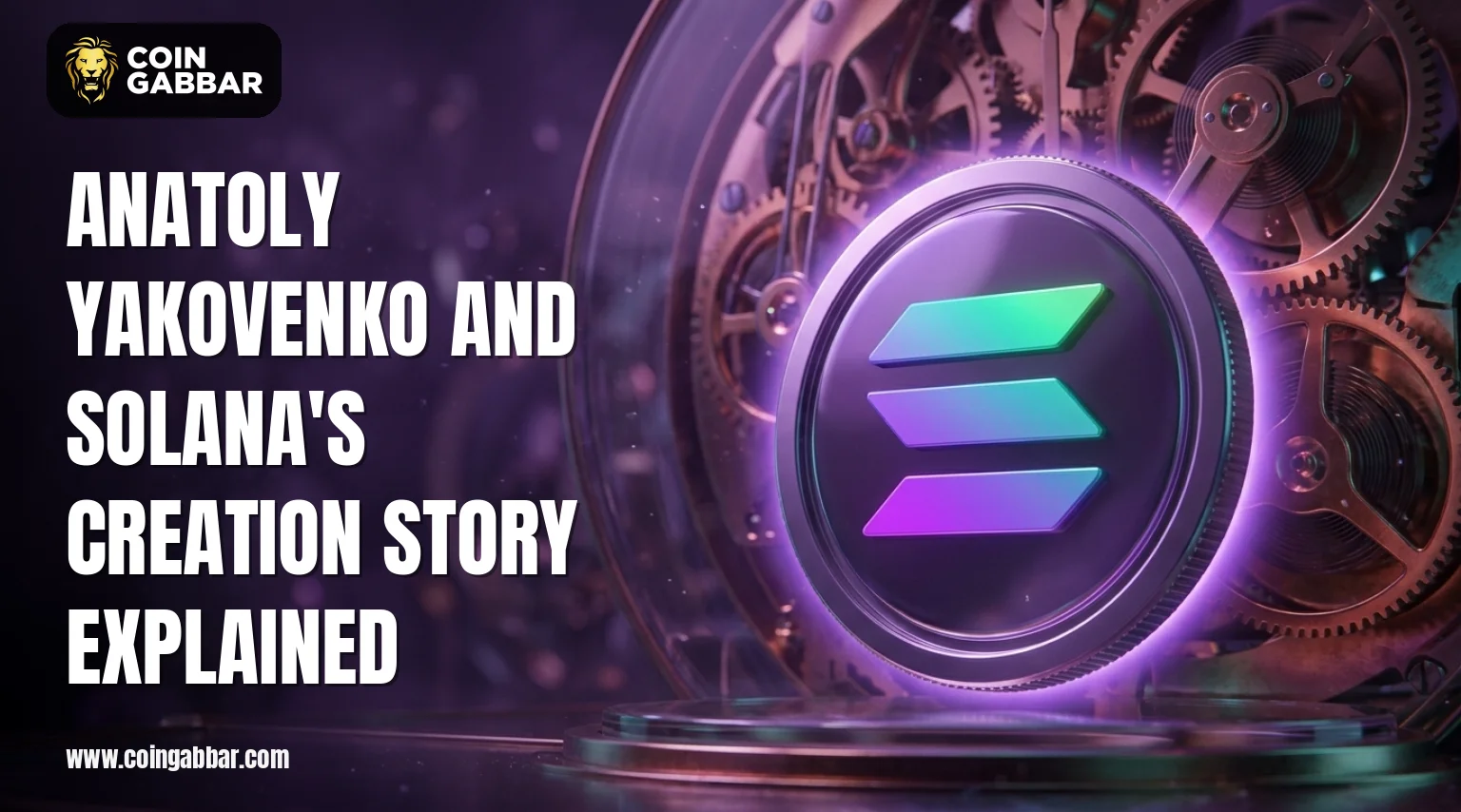
Who Is Anatoly Yakovenko, and What Did He Build at Solana-Labs?
Anatoly Yakovenko is the engineer who came up with Proof of History, the timing method at the center of-Solana.
He’s one of its co-founders, and his whitepaper came out in November 2017. Before that, he spent about 13 years at Qualcomm, worked on distributed systems at Mesosphere in 2016, and joined Dropbox in 2017.
Raj Gokal, Greg Fitzgerald, and Stephen Akridge helped turn the paper into software. Mainnet Beta went live on 16 March 2020. Many retellings credit one founder, but the record shows a small team.
What Is Solana, and Why Did Its Team Want a Faster Blockchain?
Solana is a layer-1 blockchain , meaning a main network with its own coin, its own rules, and its own computers that keep the record. Wallets, games, and trading apps run right on top of it.
The team aimed for high speed and very low fees, and SOL is the native token. A side-by-side look at the biggest smart contract networks sits in this Solana vs Ethereum breakdown.
What Timing Problem Led to the Idea Behind Solana-in Late 2017?
Crypto grew fast in 2017, and networks got crowded. Anatoly Yakovenko zeroed in on a timing problem.
Validators, the computers that check transactions, have to agree on the order of events. Passing messages back and forth to settle it eats up time.
Yakovenko’s answer was to write the passing of time into the chain itself, as a sequence that anyone can verify. The project’s origin story places the idea in October 2017. By November, the Solana whitepaper was out.
What Is Proof of History and Why Does Solana-Still Use It Today?
Proof of History tracks time with SHA-256 hashing, a chain of one-way scrambles where each step feeds the next. Because every step depends on the one before it, anyone can check the order of events later. SOL laid out the basic idea in an early Proof of History article in April 2018.
It doesn’t take the place of consensus. Solana runs it alongside Proof of Stake and Tower BFT, a consensus design that makes use of the time record.
Who Helped Yakovenko Turn the Idea Into Software That Works?
Yakovenko didn’t build the network alone. The origin story names an early group of co-founders, and these roles are supported:
| Person | Supported contribution |
| Anatoly Yakovenko | Original concept and 2017 whitepaper |
| Raj Gokal | Joined in December 2017, later Solana-Labs COO |
| Greg Fitzgerald | Moved the code to Rust, released an early prototype in February 2018 |
| Stephen Akridge | Suggested GPUs for signature checks to raise throughput |
The company began as Loom and became in March 2018. The name comes from Solana-Beach near San Diego, where three of them used to surf.
How Did Solana-Move From a Whitepaper to Its First Test Networks?
In spring 2018, the first backers joined a seed sale, including Ramtin Naimi, Chris McCann, and Edith Yeung. Test networks followed. Solana’s 2019 retrospective lists a 100-node testnet in January and a 200-node one in April.
In June, Solana-announced Tour de SOL, an incentivized testnet where validators tested performance, hunted for weaknesses, and earned tokens.
In September, a 25-node testnet reached 125,223 transactions per second. That’s a test result, not everyday live speed. A dry run with ten outside validators came in December.
When Did the Solana-Mainnet Beta Go Live, and What Did the Beta Mean?
Solana’s May 2020 update says Mainnet Beta launched on 16 March 2020. The “beta” label meant the live network was still being built.
Features kept arriving, and inflation was switched on in stages, with pico-inflation activated in December 2020.
What Does the Solana Foundation Do, and How Did It Get Started?
Solana-Labs built the early software. On 8 April 2020, it moved the protocol’s intellectual property and 167 million SOL to the SOL Foundation.
The formation announcement came on 7 June and lists grants, research, and education among the Foundation’s aims.
Solana-is an open-source network run by validators, so the transfer didn’t make the Foundation its controller.
How Does SOL Work for Fees and Staking on the Solana-Network?
SOL pays transaction fees and supports staking. Holders can delegate SOL to a validator through a stake account, and the validator takes part in consensus.
Delegators may receive staking rewards, subject to Solana’s activation and withdrawal rules. This explainer on how Solana staking works covers the benefits and risks. Delegating doesn’t send the coins away. The step-by-step version sits in the Solana delegation guide.
Anyone planning to hold SOL also needs a wallet and an exchange account, which this guide on how to buy SOL walks through.
How Did the Solana-Network Grow After Mainnet Beta Through 2020?
Late 2020 brought momentum. Solana’s year in review reports over 100 projects on Mainnet Beta and over 350 validators.
The first hackathon attracted over 1,000 registrations and received more than 60 project submissions. A Solana ecosystem map shows how far that early base has spread into DeFi, NFTs, and gaming.
What Does the Record Say About Yakovenko and the Early Team?
The record credits Yakovenko with the original idea and the whitepaper. Fitzgerald and Akridge appear as builders, and Gokal as the operator. The stronger signal is Yakovenko’s system's background.
Early development wasn’t smooth. According to the origin story, backers pulled out when the market fell in late 2017, and rival chains had more hype and funding. Tour de SOL pushed the network to its limits on purpose, in public.
The main concern is source balance. Most dated claims here come from Solana’s own pages, which give the project’s version of events. The biggest unknown is how credit should be split among early contributors.
Conclusion: What Anatoly Yakovenko Added to the Solana-Story
Anatoly Yakovenko started the story with a 2017 white paper and proof of history. A small team built it, and Mainnet Beta arrived on 16 March 2020. Solana’s history is clear on dates but thinner on credit. A good next step is reading the whitepaper and the Foundation announcement directly.
Disclaimer: This piece is only meant to inform. It isn’t financial advice. Crypto prices swing hard, and losing money is a real possibility. Before putting funds into Solana-or any other coin, it makes sense to do some digging first and cross-check the official pages.