Best Crypto Payment Gateways: 7 Options for 2027

Some of the best crypto payment gateways for 2027 include BitPay, Finassets, Confirmo, Triple-A, BVNK, BTCPay Server, and CoinPayments. These providers support different business requirements, including cryptocurrency checkout, stablecoin settlement, high-volume processing, cross-border payments, and embedded payment infrastructure.
Choosing a crypto payment gateway requires more than comparing supported cryptocurrencies. Businesses must evaluate transaction fees, blockchain networks, settlement currencies, payout capabilities, security controls, regulatory requirements, and integration methods.
For example, a European merchant may prioritize regulated stablecoin processing and fiat settlement. An iGaming operator handling frequent USDT transactions may focus on processing costs, automated payouts, and network fees. A Bitcoin-focused business may prefer self-hosted infrastructure rather than a managed payment processor.
This guide compares 7 cryptocurrency payment providers, identifies their primary capabilities, and explains which solutions fit different payment operations.
What Are the Best Crypto Payment Gateways for 2027?
The best crypto payment gateway depends on your business model, payment volume, preferred digital assets, and settlement requirements. The following comparison identifies 7 providers and their main applications.
| Crypto payment gateway | Best suited for | Primary capability |
| Confirmo | European businesses | EU regulated crypto payments and payouts |
| Triple-A | International merchants | Crypto acceptance with local-currency settlement |
| High-volume crypto businesses | USDT processing, low fees, and mass payouts | |
| BitPay | E-commerce and retail | Online checkout and point-of-sale payments |
| BVNK | Stablecoin payment operations | Stablecoin and fiat payment infrastructure |
| BTCPay Server | Bitcoin-focused businesses | Open-source, self-hosted payment processing |
| CoinPayments | Online merchants | Simple cryptocurrency payment acceptance |
These providers do not offer identical services. Some specialize in merchant checkout, while others provide financial infrastructure for moving funds between wallets, stablecoins, and traditional currencies.
The following sections explain each provider's capabilities, operational advantages, and ideal business applications.
1. Confirmo — Best for Regulated Crypto Payments in Europe
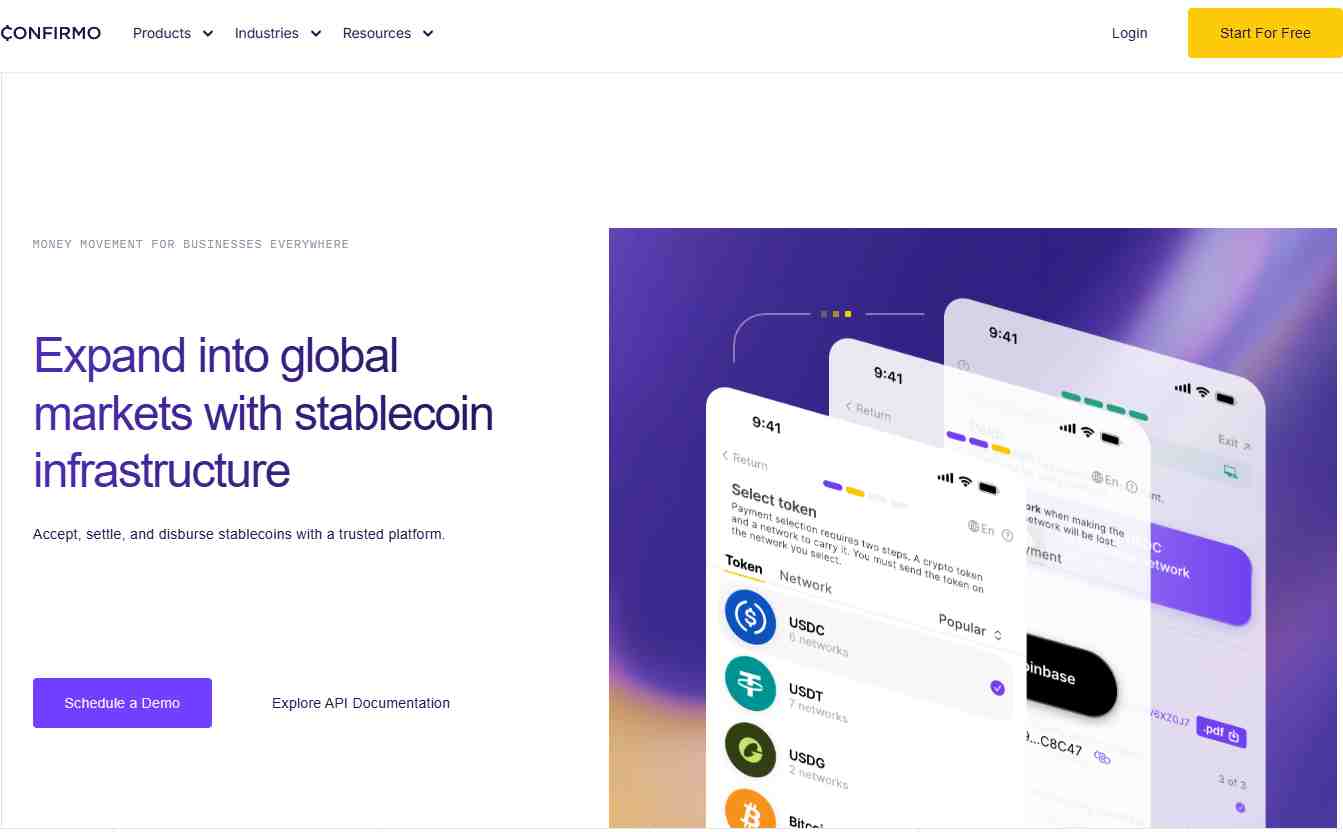
Confirmo is a cryptocurrency payment platform that helps businesses accept digital assets, process stablecoin transactions, convert currencies, and distribute payments. Its European regulatory structure makes it particularly relevant to businesses operating in the European Union.
Founded in the Czech Republic in 2014, Confirmo has developed payment infrastructure for merchants and companies with recurring cryptocurrency transaction requirements.
Confirmo Limited, its Irish entity, is described in the supplied information as holding authorization from the Central Bank of Ireland under the Markets in Crypto-Assets Regulation (MiCA) and as a payment institution.
What payment features does Confirmo offer?
Confirmo combines incoming cryptocurrency payments with business settlement and payout capabilities.
Its services include cryptocurrency checkout, payment invoices, stablecoin settlement, automated currency conversion, and mass payouts. Businesses can use these tools to collect customer payments and manage outgoing transactions through the same provider.
The platform supports payments across major blockchain networks and serves sectors such as e-commerce, forex, proprietary trading, and payroll.
Why is Confirmo relevant to EU businesses?
Confirmo's regulatory positioning addresses the compliance requirements associated with cryptocurrency payment services in Europe.
MiCA establishes a European regulatory framework for specified crypto-asset activities. Businesses should still verify the legal entity, authorized services, geographic scope, and applicable onboarding requirements before selecting a provider.
Which businesses should choose Confirmo?
Confirmo is worth evaluating if you operate in the EU and need stablecoin payment acceptance, automated settlement, and business payouts.
Its combination of merchant payment tools and European regulatory authorization distinguishes it from providers focused primarily on unregulated self-hosted infrastructure.
2. Triple-A — Best for International Crypto Payments With Fiat Settlement
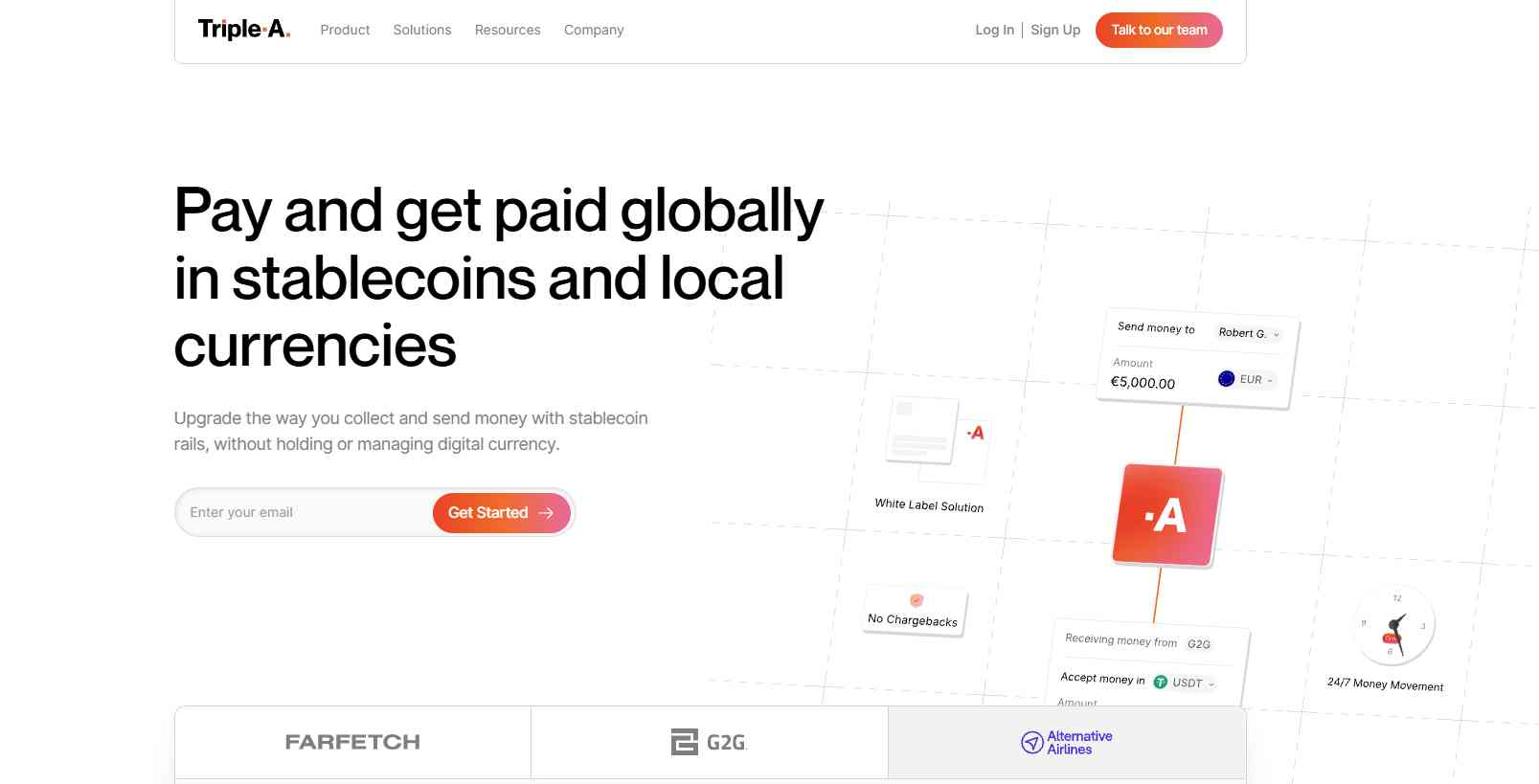
Triple-A enables companies to accept cryptocurrency payments while receiving settlement in supported traditional currencies. This model helps merchants offer digital asset payments without necessarily maintaining cryptocurrency balances.
The provider serves international businesses that require cryptocurrency acceptance, invoicing, payouts, and payment integration tools.
How does Triple-A handle cryptocurrency payments?
Triple-A connects customer cryptocurrency payments with merchant settlement workflows.
A customer can pay using a supported digital asset, while the business can receive funds in an available local currency, depending on its agreement and location.
Triple-A provides payment links, invoices, crypto checkout, payout services, remittance capabilities, APIs, and e-commerce integrations.
What regulatory coverage does Triple-A provide?
Triple-A operates through regulated entities in multiple jurisdictions. In Europe, its French subsidiary, PAYTOP SAS, holds a payment institution licence and authorization as a crypto-asset service provider under MiCA. Triple-A also maintains regulatory registrations and licences in other markets. Businesses should verify the provider's regulatory status, available services, and geographic eligibility before onboarding.
Who benefits most from Triple-A?
Triple-A is suitable for international merchants that want to accept cryptocurrency without managing every aspect of digital asset custody, conversion, and settlement internally.
It is particularly relevant when customers prefer cryptocurrency but the merchant operates primarily in fiat currencies.
3. Finassets — Best for High-Volume USDT and Cryptocurrency Processing
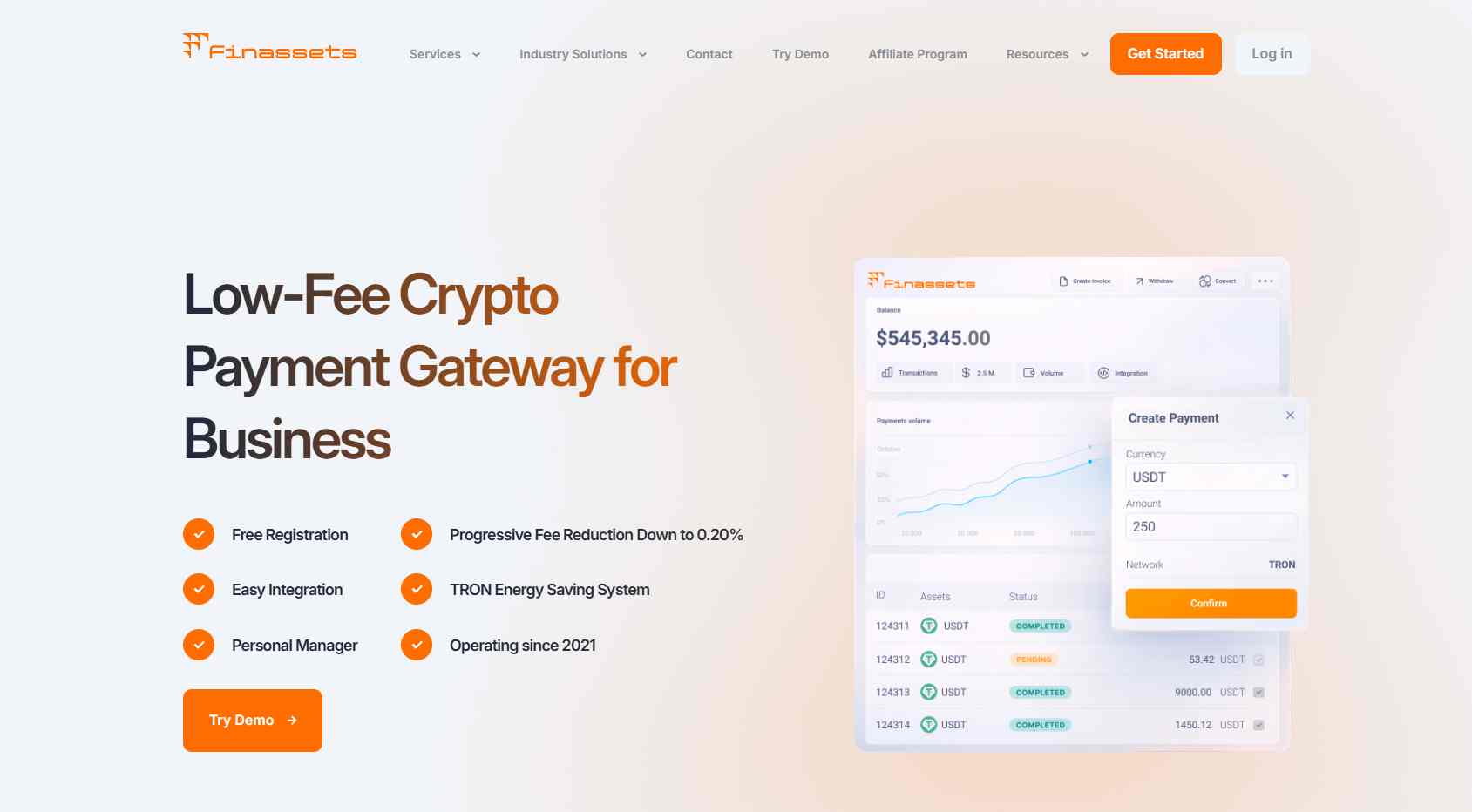
Finassets provides B2B cryptocurrency payment infrastructure for companies processing frequent digital asset transactions. Its main capabilities include crypto payment acceptance, currency conversion, payment monitoring, mass payouts, and USDT transaction cost optimization.
The Panama-registered platform has operated since 2021 and targets sectors such as iGaming, forex, e-commerce, affiliate marketing, Web3, and digital services.
Which cryptocurrencies and payment methods does Finassets support?
Finassets supports more than 70 cryptocurrencies and stablecoins across multiple blockchain networks, according to the supplied provider information.
Its payment tools include crypto checkout, payment links, payment buttons, invoices, API integrations, business-to-business cryptocurrency exchange, and automated crypto-to-stablecoin conversion.
Businesses can monitor transaction statuses, fees, and payment activity through a merchant dashboard.
How much does Finassets charge for crypto payments?
Finassets advertises processing fees starting at 0.40%, with rates decreasing to 0.20% for qualifying higher monthly transaction volumes.
| Fee component | Reported pricing or capability |
| Starting processing fee | 0.40% |
| Volume-based processing fee | As low as 0.20% |
| USDT TRC20 network optimization system | Potential network fee reduction of 50% |
| Additional charges | Depend on applicable service terms |
These figures represent the supplied pricing claims rather than independently verified quotations. Actual processing costs may include blockchain network charges, currency conversion, or withdrawal fees.
How does Finassets’ TRON Energy optimization system affect USDT payments?
USDT transactions on the TRON network consume blockchain resources, including Energy. Finassets describes an optimization mechanism designed to reduce the network costs associated with USDT TRC20 transfers.
The provider reports that its mechanism can reduce applicable network fees up to 50%. Actual savings depend on transaction conditions and the provider's implementation.
This feature can matter to businesses that process frequent USDT transfers because network costs accumulate across repeated transactions.
Who should consider Finassets?
Finassets is relevant to businesses with substantial transaction volume, especially those handling USDT TRC20 payments.
Companies operating affiliate networks, iGaming platforms, or cross-border digital services may find its payout infrastructure and volume-based pricing worth evaluating, subject to onboarding and jurisdictional restrictions.
4. BitPay — Best for Online Stores and Physical Retail Payments
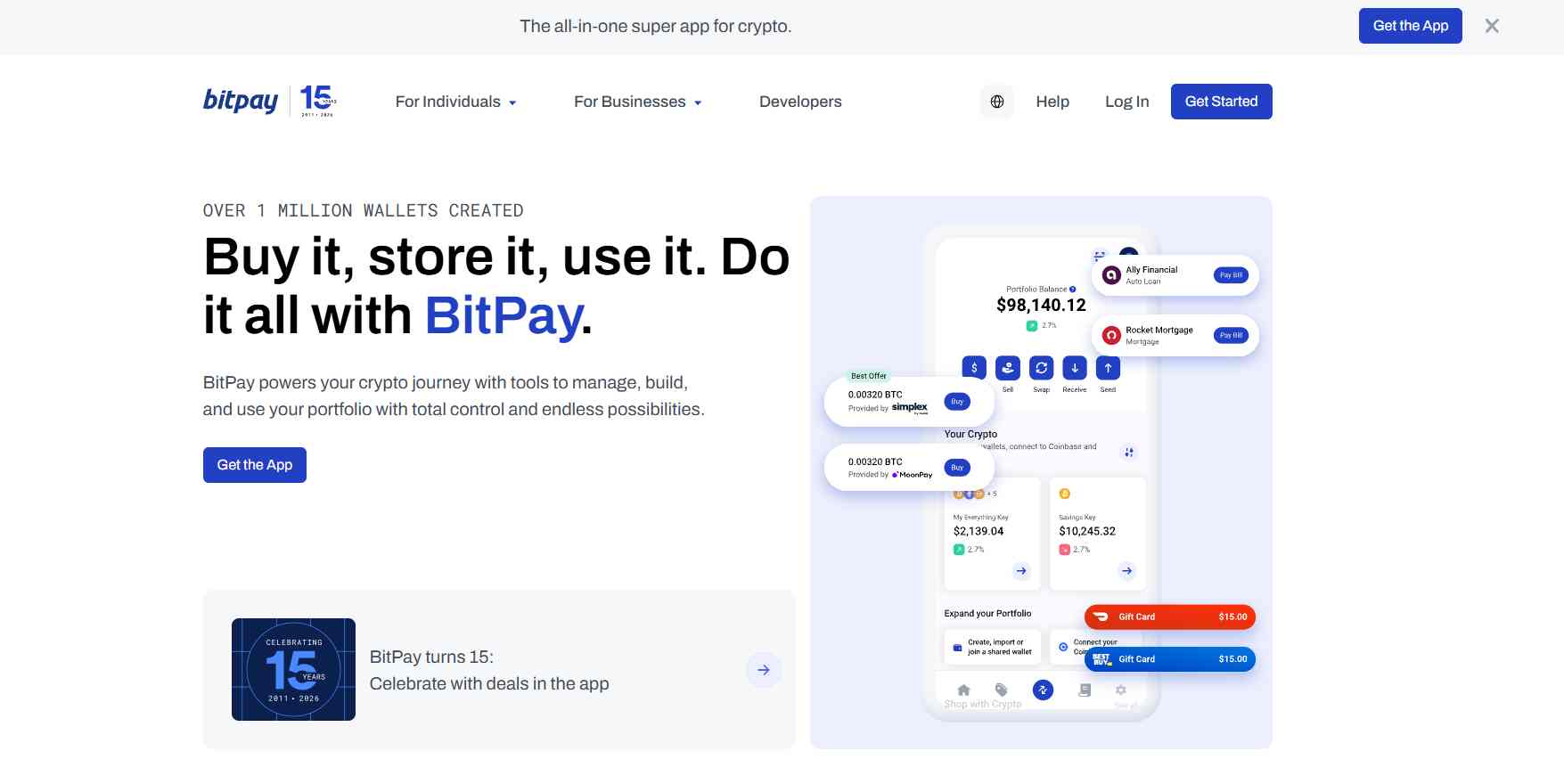
BitPay is a cryptocurrency payment processor that enables merchants to accept digital assets through online checkout and supported in-person payment workflows.
Unlike infrastructure providers that primarily target developers or financial platforms, BitPay offers payment functionality for consumer-facing businesses.
How can merchants accept payments through BitPay?
Merchants can use BitPay to process supported cryptocurrencies, including Bitcoin, Ethereum, and stablecoins.
Its payment capabilities include online checkout, invoicing, payment links, cryptocurrency payouts, settlement options, and point-of-sale functionality.
These tools support businesses that sell products or services through websites, retail locations, or both.
What distinguishes BitPay from other crypto gateways?
BitPay combines digital asset acceptance with merchant-facing tools for online and in-person transactions.
A retailer that operates an e-commerce website and a physical shop can evaluate BitPay for cryptocurrency payment acceptance across both sales channels.
Which businesses should use BitPay?
BitPay is suitable for retailers, online stores, and consumer-facing merchants that need cryptocurrency checkout and point-of-sale functionality.
Businesses should confirm supported assets, settlement availability, and integration compatibility before implementation.
5. BVNK — Best for Stablecoin and Fiat Payment Infrastructure
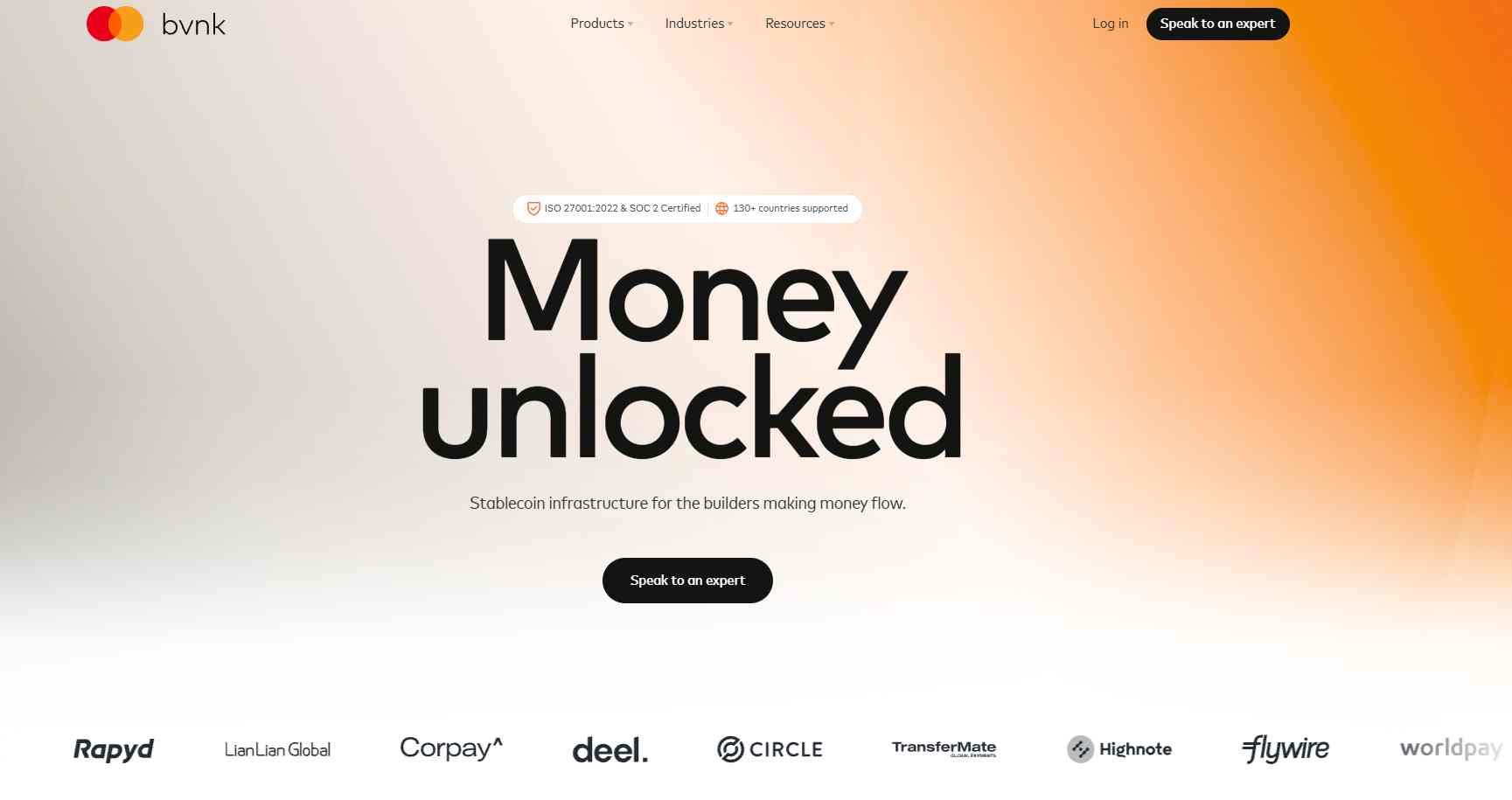
BVNK provides infrastructure that connects stablecoin transactions with traditional currency payment operations. Its services support businesses managing international transfers, digital asset balances, settlement, and payouts.
BVNK provides infrastructure that connects stablecoin transactions with traditional currency payment operations. Its services support businesses managing international transfers, digital asset balances, settlement, and payouts. BVNK has been part of Mastercard since August 2026, when Mastercard completed an acquisition valued at up to $1.8 billion. In October 2026, the two companies launched Global Money Platform, which combines fiat and stablecoin services through a single API.
What services does BVNK provide?
BVNK supports stablecoin wallets, payments, payouts, currency conversion, and API-based payment connectivity.
Its infrastructure also includes managed and self-managed implementation options, allowing businesses to select different operational models.
These capabilities address financial workflows beyond customer cryptocurrency checkout.
How does BVNK connect stablecoins with fiat payments?
BVNK provides payment infrastructure designed to facilitate movement and conversion between supported stablecoins and traditional currencies.
Businesses can evaluate these capabilities for treasury operations, international supplier payments, settlement, and cross-border transfers.
The available routes, currencies, and payment methods depend on service eligibility and jurisdiction.
Who should evaluate BVNK?
BVNK is relevant to fintech businesses, international payment companies, and organizations that manage stablecoin and fiat payment flows.
It is more appropriate for complex payment operations than for merchants whose only requirement is a basic cryptocurrency payment button.
6. BTCPay Server — Best for Self-Hosted Bitcoin Payments
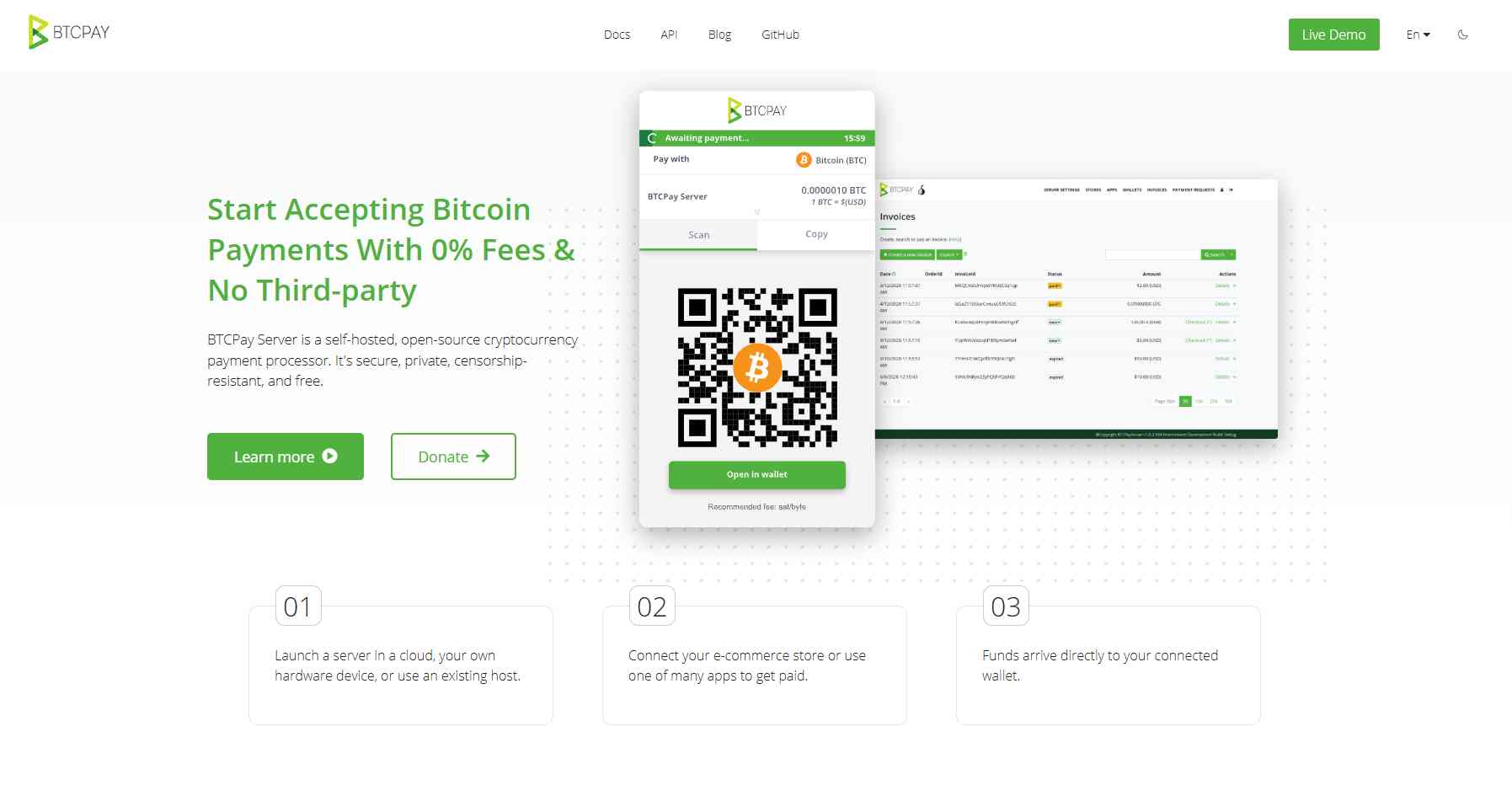
BTCPay Server is open-source Bitcoin payment software that allows merchants to operate their own payment infrastructure.
Unlike managed cryptocurrency gateways, BTCPay Server enables businesses to host and maintain their payment processing environment directly.
How does BTCPay Server process payments?
BTCPay Server provides self-hosted payment infrastructure for Bitcoin transactions and supports the Lightning Network.
A merchant deploys the software and manages the relevant technical environment instead of relying entirely on a conventional third-party payment processor.
This model provides direct control over payment configuration and infrastructure.
Is BTCPay Server free to use?
BTCPay Server is open-source software. However, operating a self-hosted payment system can involve hosting, infrastructure, maintenance, and blockchain transaction costs.
Businesses should distinguish software licensing costs from the total operational cost of running a payment system.
What are the advantages and limitations of self-hosting?
Self-hosting can reduce dependence on external payment processors and provide greater control over Bitcoin payment infrastructure.
However, businesses assume responsibility for deployment, system maintenance, security configuration, and operational reliability.
Who should use BTCPay Server?
BTCPay Server is suitable for Bitcoin-focused merchants, developers, and technically capable businesses that prioritize infrastructure control.
It is less appropriate for organizations that require fully managed cryptocurrency processing without internal technical resources.
7. CoinPayments — Best for Merchant Cryptocurrency Acceptance

CoinPayments provides cryptocurrency payment infrastructure for businesses that want to accept digital assets through their commercial platforms.
Its merchant-oriented approach helps online businesses add cryptocurrency payment functionality without developing an independent blockchain processing system.
What payment capabilities does CoinPayments offer?
CoinPayments focuses on cryptocurrency payment acceptance for merchants.
Businesses can evaluate its infrastructure when they need to integrate digital asset payments into online stores, digital services, or other commercial applications.
Specific supported currencies, integrations, and settlement options should be confirmed against current provider documentation.
What distinguishes CoinPayments?
CoinPayments emphasizes merchant cryptocurrency processing rather than providing a broad embedded financial infrastructure platform.
This makes it relevant to businesses primarily interested in adding cryptocurrency as a payment option.
Who should use CoinPayments?
CoinPayments is suitable for e-commerce companies, online service providers, and digital merchants evaluating cryptocurrency payment acceptance.
Businesses should compare integration requirements, transaction costs, and supported assets before selecting the service.
What Should You Check Before Choosing a Crypto Payment Gateway?
A crypto payment gateway should support your actual transaction requirements, operational capacity, and legal obligations.
Evaluate the following criteria before integrating a provider.
1. Confirm cryptocurrency and network support. Check whether the gateway supports the exact assets and blockchain networks your customers use, including relevant stablecoin networks.
2. Compare total transaction costs. Evaluate processing rates, network charges, conversion spreads, withdrawal fees, and payout expenses rather than relying on a single advertised percentage.
3. Identify settlement requirements. Determine whether your business needs cryptocurrency, stablecoins, traditional currencies, or automated conversion between them.
4. Assess payment integrations. Check whether the provider offers compatible APIs, e-commerce plugins, payment links, checkout tools, or SDKs.
5. Review payout capabilities. Businesses paying affiliates, suppliers, contractors, or customers should verify supported payout currencies, networks, and automation features.
6. Examine security controls. Evaluate authentication, wallet architecture, account permissions, transaction monitoring, and incident-management processes.
7. Verify regulatory eligibility. Confirm the provider's legal entity, relevant authorizations, KYC/AML requirements, and availability in your operating jurisdictions.
8. Test operational scalability. Assess whether the infrastructure can handle your expected transaction volume, API requirements, settlement frequency, and reporting needs.
The right gateway should fit the complete payment lifecycle, including acceptance, verification, conversion, settlement, and outgoing transfers.
How Should You Select a Crypto Payment Gateway for 2027?
Select a crypto payment gateway based on your payment volume, customer assets, operating jurisdictions, technical resources, and settlement needs.
Confirmo and Triple-A are relevant to businesses prioritizing European regulatory coverage or international fiat settlement. Finassets is suitable for regular USDT TRC20 operations, while BitPay and CoinPayments focus on merchant acceptance. BVNK supports a broad stablecoin infrastructure, and BTCPay Server provides self-hosted Bitcoin payment processing.
Before signing an agreement, request current pricing, verify supported networks, review regulatory status, and test the payment integration. These checks help determine whether a provider can support your business as transaction requirements change.
Disclaimer: This article provides general information and does not constitute financial, legal, regulatory, or tax advice. Payment services, fees, authorizations, supported currencies, and availability may change. Confirm current details directly with the relevant provider.