Best x402 Tokens: Projects to Watch and Compare in 2026


Best x402 Tokens: Ecosystem Projects to Watch in 2026
X402 is a payment protocol, not a cryptocurrency, and it has no official native token. That single fact reshapes any search for the best x402 tokens. Projects around the protocol may issue tokens, but those tokens are not required to make an x402 payment.
This guide ranks nothing. It sorts six x402 ecosystem projects by what they build, what evidence supports their claims, and how their tokens relate to the product.
Readers asking about the Best x402 Tokens will find the right framing here, along with dated sources and verification steps.
According to project documentation, Pieverse (PIEVERSE), PayAI (PAYAI), Quack AI (Q), and OpenServ (SERV) issue their own tokens, while Thirdweb and Crossmint offer infrastructure with no token covered here.
Payments settle in USDC or other supported assets through compatible facilitators. The Best x402 Tokens, if the phrase is used at all, are project tokens with separate utility and risk.
How Do x402 Payments Work, and Which Tokens Fit?
x402 revives the HTTP 402 "Payment Required" status code. A client requests a resource, the server replies with payment instructions, the client signs a payment and retries, and a facilitator verifies and settles it. According to developer documentation, the facilitator does not hold funds.
Token support follows technical standards:
EIP-3009: lets a token holder authorize a transfer by signature, which USDC supports.
Permit 2: per protocol developer documentation, it extends EVM payments to any ERC-20 token.
SPL and Token-2022: the token standards accepted on Solana.
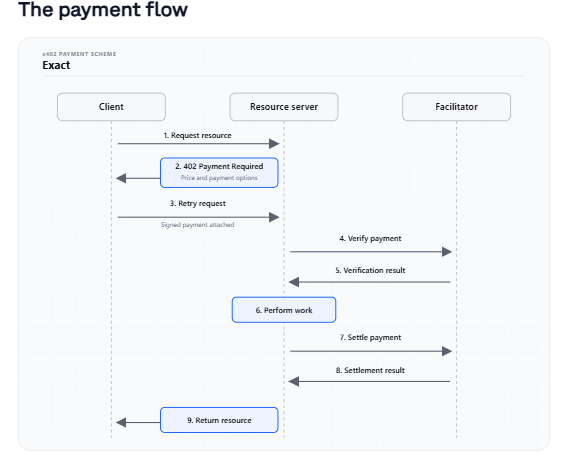
The network and token support guide adds that facilitators support networks, not specific tokens. Protocol support also differs from production support: a network can appear in the standard before any facilitator settles on it.
How Were These Projects Selected?
Five tests guided inclusion: a live product, a direct x402 relationship, a token that exists, public documentation, and measurable usage. Selection ignored market value, so the best x402 tokens here are not ranked by price.
One limit stands out. No project met the last test fully, because dated, project-level settlement data was not found in the sources reviewed.
Protocol-wide counts reported by explainers run into the hundreds of millions of transactions since May 2025, but those figures measure calls, not value, and are not split by project. Figures should never be invented.
The Six x402 Projects
Four projects carry tokens, so the Best x402 Tokens question applies to them. The Linux Foundation announced the operational launch of the x402 Foundation in July 2026 with 40 members at that time.
Pieverse (PIEVERSE)
Pieverse extends x402 to BNB Chain through x402b, which uses pieUSD, a wrapped USDT, for gasless payments and receipts. The Pieverse whitepaper, issued in November 2025, states:
Supply and standards: 1,000,000,000 tokens, as BEP-20 on BNB Chain and ERC-20 on Ethereum.
Allocation: investors 15%, community growth 27.6%, foundation reserve 10%, ecosystem and marketing 27.4%, and team and advisors 20%.
Utilities: governance, staking, fee discounts, and access.
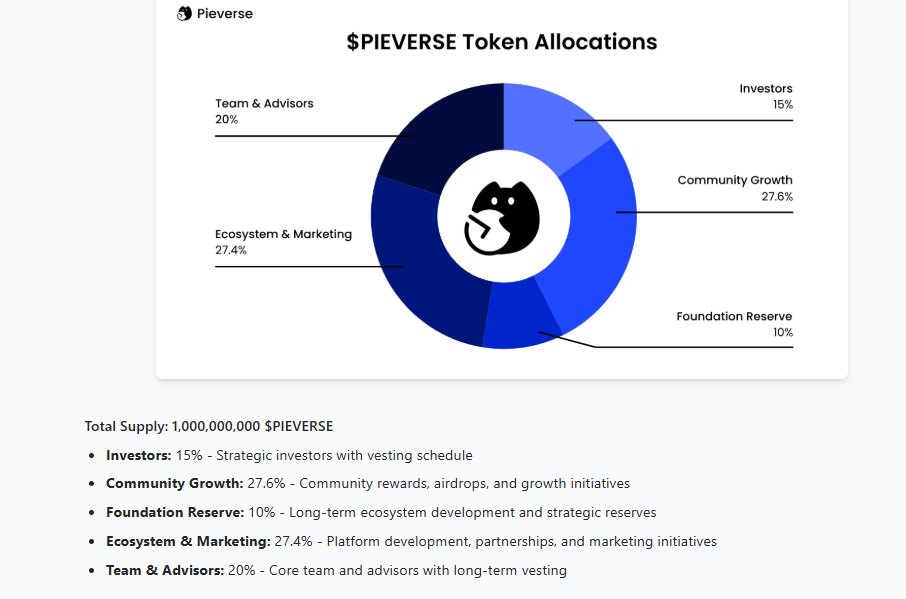
A BNB Chain ecosystem overview from July 2026 describes Pieverse gasless payments tied to agent identity. The whitepaper refers to audits by security firms, but no public audit report was located. A whitepaper supports project claims, not adoption or security.
PayAI Network (PAYAI)
PayAI runs a production facilitator with verified, settled, and supported network endpoints for Solana, Base, Polygon, Avalanche, Arbitrum, Sei, X Layer, and SKALE.
According to published project data, PAYAI is a Solana token with a stated fixed supply of one billion. X402 payments settle in USDC, so PAYAI is not the payment currency. Verify circulating supply independently. See the official PayAI site.
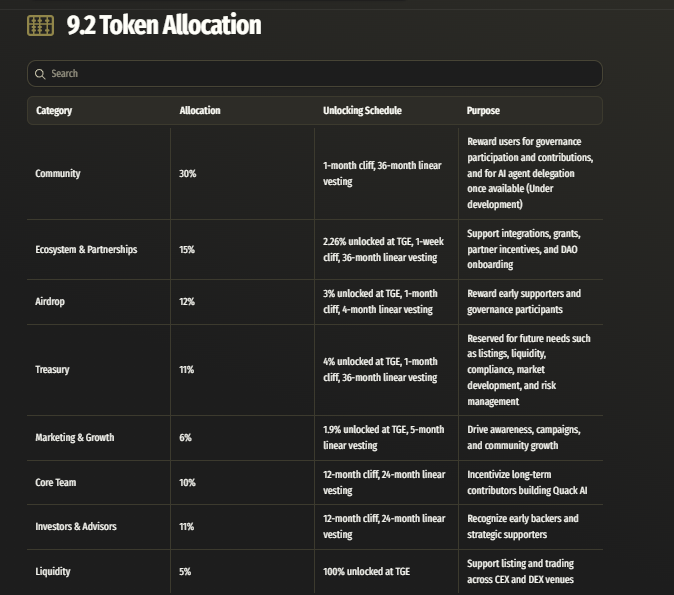
Quack AI (Q)
Quack AI builds Q402, a gasless sign-to-pay protocol. Its documentation describes EIP-7702 and EIP-712 signatures that work with ERC-20 tokens without ERC-3009 upgrades. The Q token exists on BNB Chain and Ethereum.
OpenServ (SERV)
OpenServ offers agent-building tools. It's a public developer client document for x402 payments for agents placed behind a paywall. The documentation reviewed does not make SERV a required payment asset. See the official OpenServ site.
Thirdweb and Crossmint
Thirdweb provides x402 facilitator tools, including a Solana facilitator. Crossmint offers non-custodial agent wallets that pay x402 endpoints in stablecoins, with permissions the owner can revoke, as its x402 guide explains.
Neither has a token covered here, so neither belongs among the best x402 tokens, though both show where adoption may come from.
Project | Category | x402 relationship | Token dependency |
Pieverse | Payment extension | x402b | Separate ecosystem token |
PayAI | Facilitator | Direct facilitator | Separate ecosystem token |
Quack AI | Payment execution | Related protocol | Separate ecosystem token |
OpenServ | Agent platform | Developer integration | Not established as required |
thirdweb | Developer tools | Facilitator tooling | No token covered |
Crossmint | Wallet infrastructure | Payment integration | No token covered |
x402 vs Q402: What Is the Difference?
X402 is an open standard. Q402 is Quack AI's own protocol, built on EIP-7702 delegation and EIP-712 signatures. Quack AI's earlier x402 BNB launch from October 2025 was its first BNB Chain deployment of that design.
The relationship needs care. One documentation page calls Q402 an implementation of x402, while another lists interoperability with the x402 ecosystem as a roadmap item.
How Do x402 Facilitators Compare?
The table compares facilitators from documentation reviewed in November 2026, which matters when weighing the Best x402 tokens against plain infrastructure.
Facilitator | Reported networks | Status | Own token |
Protocol contributor's hosted service | Base, Solana | Production: API key required | None |
PayAI | Eight networks listed above | Production | PAYAI, separate |
thirdweb | Multi-chain EVM, Solana | Production | None covered |
Stablecoin issuer's hosted service | USDC on Arc, Base, and Polygon PoS | Production, API key | None |
Reference testnet service | Testnets only | Testing | None |
The comparison shows a pattern: the largest facilitators operate without tokens, so token ownership is not a condition for using x402.
Which Blockchains Support x402 Payments?
Documentation lists EVM networks, Solana, Aptos, Stellar, Hedera, and Sui at the protocol level. Production coverage is narrower, with Base and Solana the most common mainnet examples.
PayAI, Pieverse, and Quack AI add BNB Chain and several other EVM networks. Anyone comparing the Best x402 Tokens should check each facilitator's live supported-network endpoint, because lists change.
How Can x402 Activity Be Verified on-Chain?
Each number should carry a source, date, network, and measurement period:
Confirm the product is live in official documentation.
Check settlements through a facilitator's public endpoint or a block explorer.
Separate transaction counts from dollar volume, since micropayments inflate counts.
Verify token contracts through official project pages only.
Record the date checked, because supply and liquidity change daily.
What Risks Should Readers Weigh?
As of November 2026, several risks stand out:
Unlocks: vesting schedules exist, and one third-party page reported unlocks around November 2026.
Thin liquidity: One data page reported small decentralized-exchange liquidity for PIEVERSE as of August 2026.
Audit evidence: a missing public report does not prove that no audit exists, so verify directly.
Unproven demand: a live product does not guarantee token demand.
Label confusion: an x402 category tag does not prove a token is used in settlement.
Fake tokens: copycats may claim to be the x402 coin.
Terms are defined in the crypto dictionary. Risk checks matter most for the Best x402 tokens, because small tokens can reverse quickly.
A related guide to AI crypto coins shows how narratives can outrun usage, and the latest crypto news tracks updates.
Conclusion
X402 is a payment standard; stablecoins settle most payments, and project tokens carry separate utility and risk. The Best x402 Tokens are best read as four token-bearing projects, with thirdweb and Crossmint as tokenless infrastructure.
The long-term test is recurring paid API requests, real agent-to-agent commerce, and measurable settlement. Until dated project-level data exists, the best x402 tokens remain research candidates, not recommendations.
Disclaimer: This article is for informational purposes only and is not financial advice. AI payment tokens can be highly volatile, and a working product does not guarantee token demand or future returns. Readers should verify details through official sources and do their own research before taking any action.












Frequently Asked Questions (FAQ)




