Binance Hack Forfeiture: DOJ Targets USDC, Will Funds Come Back?


fBinance Hack Forfeiture: DOJ Targets USDC, Will BNB Price React?
As of November 24, 2026, crypto news today centers on a federal court filing.
Per the Justice Department press release, the DOJ filed a civil claim on November 23 to forfeit over $1.1 billion in USDC tied to the October theft. 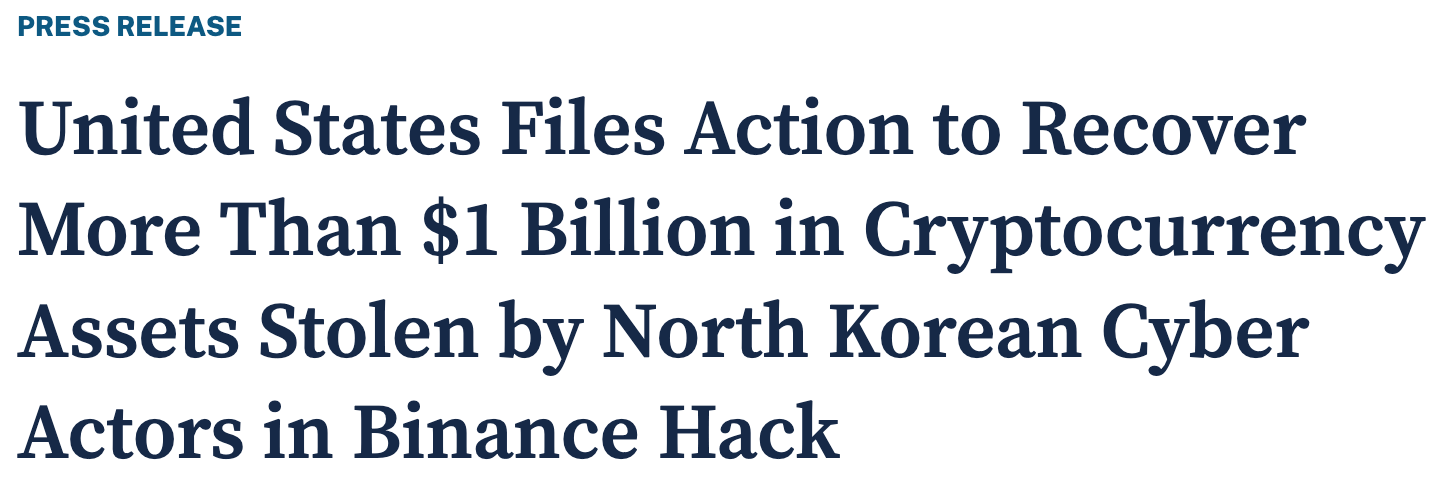
This Binance hack forfeiture action asks a court to permanently take the frozen tokens.
Wu Blockchain also covered this news in its tweet on X, citing Bloomberg's report on the Washington filing.
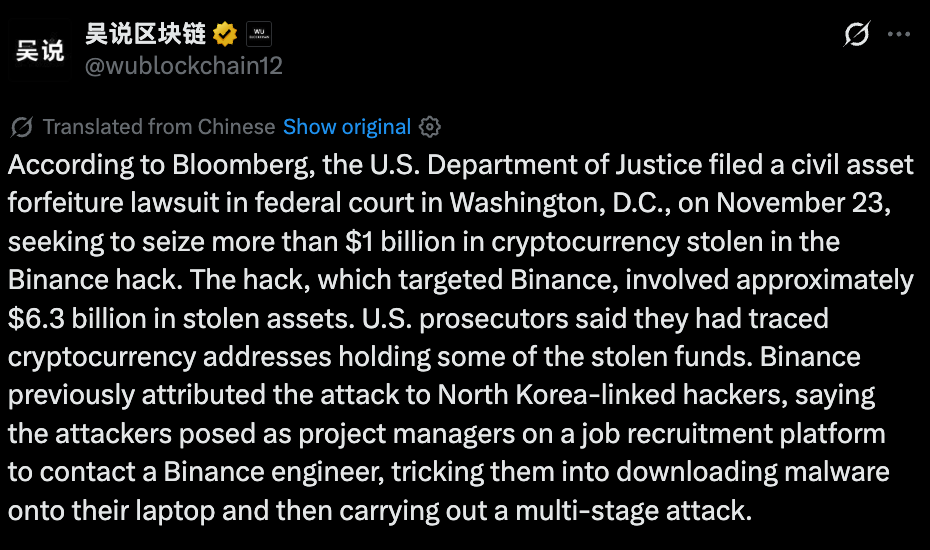
Source: WuBlockchain Official X post
What Did the DOJ File Over the Binance Hack USDC?
The DOJ Binance forfeiture claim targets USDC, a stablecoin issued by Circle Internet Financial.
The department calls it proceeds and laundered funds from the theft, filed in the U.S. District Court in Washington.
Item | Detail |
Filing date | November 23, 2026 |
Target | Over $1.1 billion in USDC |
Total stolen | Over $6 billion, per the DOJ |
Frozen, seized or returned | Over $2.9 billion, per the DOJ |
The Binance hack $1.1 billion claim is only a slice of the loss. The Binance hack 36 addresses named in the complaint span 18 blockchains, according to the filing.
How Does Forfeiture in Rem Work Here?
The case is a forfeiture in rem, a civil action against the assets rather than a criminal charge against a person.
The DOJ civil forfeiture Binance complaint therefore asks the court to rule on the tokens themselves. This Binance hack forfeiture case needs a final order before ownership changes.
Issuers can block stablecoins, which Bitcoin and Ether do not allow. That Circle freeze USDC capability explains why the tokens already sat under a restraining order, per the DOJ.
Per the complaint, Circle agreed to issue replacement USDC to the U.S. after a forfeiture order, which could let the seize USDC without chasing wallets on every chain.
Who Was Behind the Attack, and How Did It Happen?
The North Korea Binance hack attribution comes from the FBI, which calls the actors TraderTraitor, per the DOJ statement of November 12.
According to the exchange's own incident report, the attack was a multi-stage campaign:
An engineer was approached through a job-hunting platform in September.
He downloaded a coding assignment containing malicious code.
Attackers reached wallet signing systems on October 29.
The exchange puts the impact at about $6.34 billion and says 98% was replenished by October 31 from its own reserves.
This Binance hack update leaves a gap, since Binance stolen funds recovery remains partial: the $2.9 billion frozen, seized or returned covers under half of the loss.
BNB Price Today: What Do CoinGecko Figures Show?
CoinGecko's BNB data lists these levels before the filing:
Date (2026) | BNB price |
November 9 | $690.56 |
November 20 | $539.63 |
November 21 | $548.39 |
BNB fell about 22% between November 9 and November 20. Those readings predate the Binance hack forfeiture filing, so they cannot show a reaction to it.
For BNB price today, check the live CoinGecko page. No official source ties any price move to the case.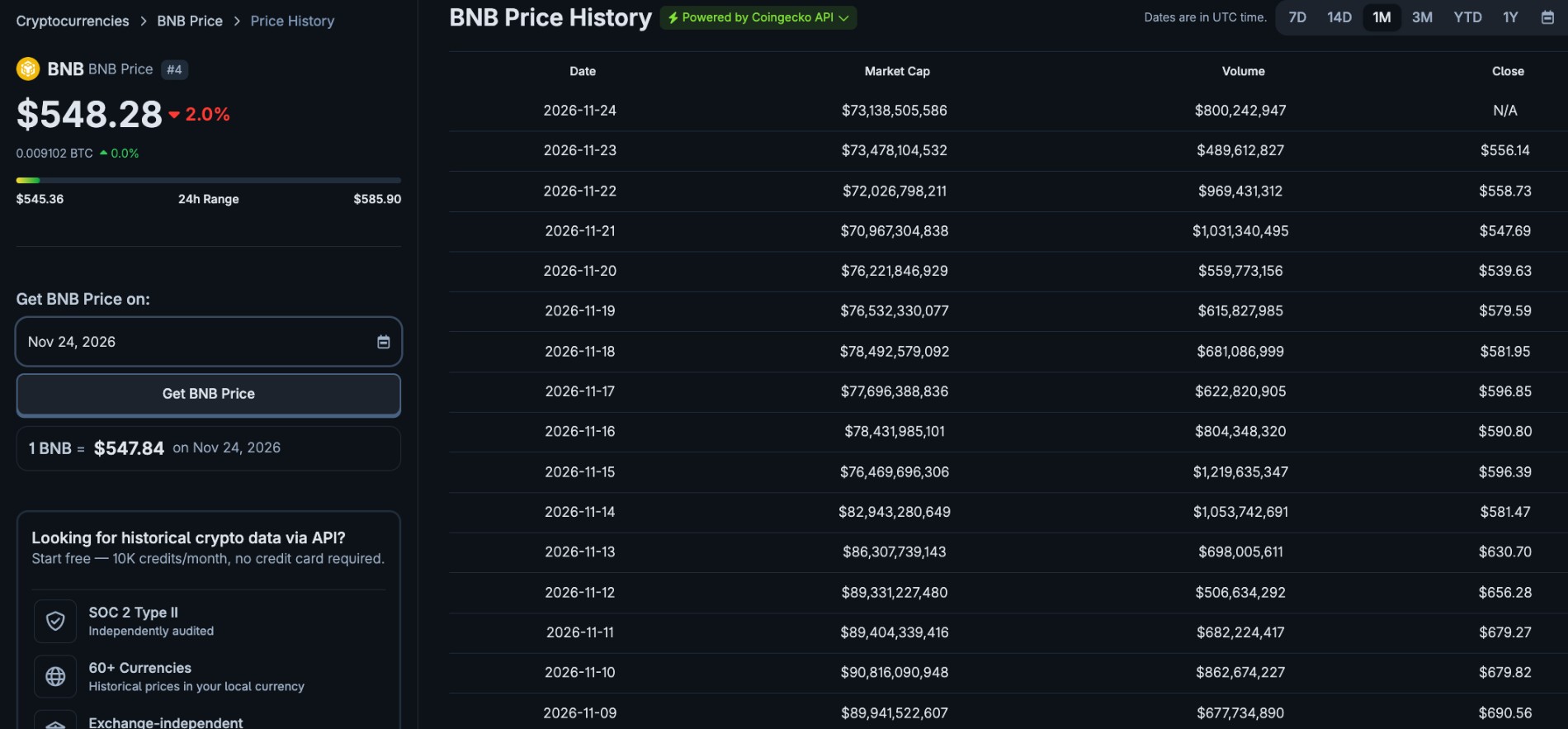
Expert View: What Could the Binance Hack Forfeiture Mean?
Analysts following crypto news may treat the Binance hack forfeiture as a legal milestone, not a payout. A forfeiture order is still required, and the DOJ release names no ruling date.
Because the exchange says it already replenished 98% of affected assets, recovered USDC could mainly offset the exchange's own loss rather than restore Binance user funds. Price impact on BNB, if any, stays uncertain.
Disclaimer: This article is for information only and is not financial, legal, or investment advice. Crypto assets are volatile. Verify details with official sources.






