Inside A Bitcoin Casino Solution: NuxGame On Currency Choice & Wallets

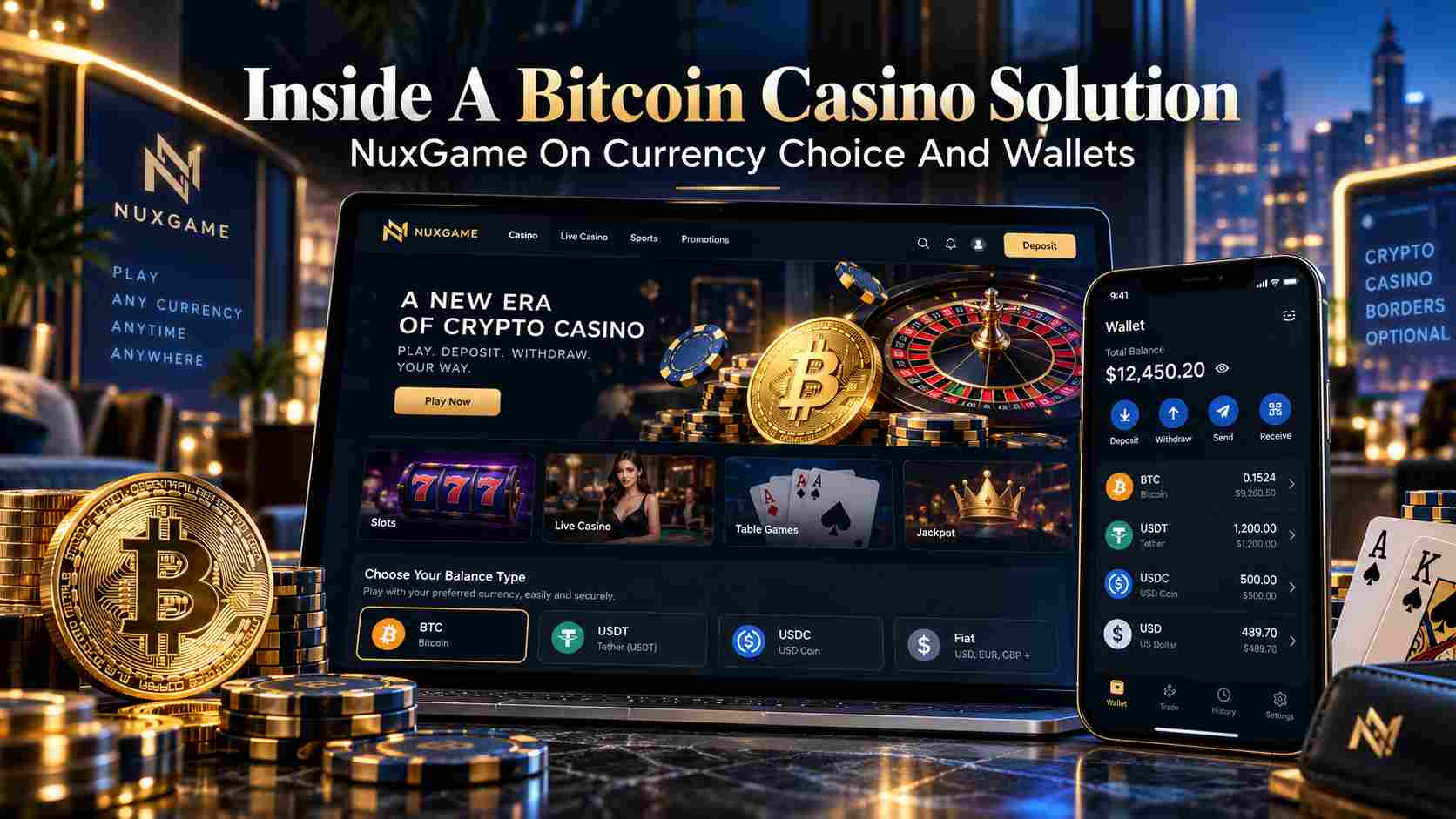
A casino balance can be expressed in Bitcoin, a stablecoin, or a familiar national currency. Each choice gives the same screen a different meaning. For NuxGame, designing a bitcoin casino solution involves connecting those currency preferences with account features and casino content. That makes the subject relevant beyond payments: it is also about how a digital asset becomes part of an everyday product experience.
BTC Balances Give The Account A Unit Of Value
Consider a hypothetical account that retains its balance in BTC. If Bitcoin rises against the dollar while the account is inactive, its dollar equivalent increases even though the Bitcoin amount stays unchanged. A dollar-denominated account funded through a Bitcoin conversion behaves differently. Its balance remains in dollars after conversion, regardless of subsequent movements in the Bitcoin price.
That distinction gives a bitcoin casino solution its financial character. Accepting a BTC transfer describes how money enters the service. Keeping an account denominated in BTC describes how value is recorded afterward. Product descriptions become more informative when they explain both, because a cryptocurrency payment option alone does not tell readers which currency they will actually hold.
Stablecoins add another denomination. Ethereum.org describes them as tokens designed to track a reference value, using mechanisms such as reserve backing. A dollar-linked token therefore offers a different experience from holding BTC, although its peg is not guaranteed. For casino teams, the relevant distinction is between preserving an asset amount and targeting a steadier value against a reference currency.
A Currency Selector Connects The Lobby With The Account
Once a brand supports several currencies, its interface needs to give each amount a clear meaning. A currency selector can identify the active balance, while transaction history records exchanges separately from game results. This lets the account explain whether a change came from a wager, a conversion, or a movement between balances, without treating these events as equivalent.
NuxGame describes multi-balance accounts that support fiat, crypto, and stablecoins within the same player account. From a product perspective, that creates room for different preferences within a shared casino environment. The interface can make these preferences explicit through familiar account details, rather than expecting a coin logo to explain every aspect of the experience.
-
Balance labels identify the asset or currency being held.
-
Reference values show an estimate in another currency.
-
Conversion records distinguish exchanged funds from gaming activity.
-
Game currency labels identify the denomination used for wagers.
-
Withdrawal previews identify the outgoing asset and applicable network.
Wallet Signatures Add An Identity Function
A wallet can also help someone sign in. Sign-In with Ethereum defines how an Ethereum account authenticates with an off-chain service by signing a structured message. This demonstrates a separate use for blockchain credentials: establishing control of an address without requiring the service itself to run on a blockchain.
This distinction helps explain why wallet access and currency handling belong to different parts of a casino product. NuxGame addresses that broader relationship in its discussion of web3 casino development, covering wallet architecture alongside account balances and platform controls. An Ethereum-based sign-in method is an example of the wider design space, not a description of how Bitcoin deposits work.
An authentication signature establishes control of an address; it does not establish the account holder’s legal identity or age. Similarly, signing in does not itself transfer funds. Keeping these actions distinct gives designers more precise language for buttons, consent screens, and account settings. Each interaction can describe the permission being requested instead of grouping everything under “connect wallet.”
Smart Contracts Give Specific Features A Blockchain Role
Beyond sign-in, a blockchain can execute application rules. Ethereum.org describes a smart contract as code and data at a blockchain address, with functions that users can invoke through transactions. In a casino context, a potential application is a reward-distribution feature whose programmed conditions determine when tokens become claimable. The contract would govern that defined interaction.
Such a feature can sit alongside a conventional game catalog. A casino could use an external network for a defined reward while its game sessions remain within provider systems. Describing the particular function is more useful than applying “on-chain” to the entire service. It tells readers which action uses a blockchain and which parts follow the ordinary casino account model.
Currency Choice Becomes Part Of Casino Brand Positioning
For a brand, a bitcoin casino solution can support a recognizable position through the way it presents money and account access. A service centered on BTC balances speaks differently from a broader casino offering cryptocurrency funding alongside fiat options. Neither description requires a claim of technological superiority. Each expresses a different relationship between the audience and the product.
This is where the technology discussion becomes an editorial one. Homepage copy, currency labels, game descriptions, and account explanations all contribute to what “crypto casino” means for that brand. A precise description gives readers something concrete to understand: the asset they can hold, the actions their wallet can authorize, and the features that use an external network.
The strongest expression of that identity comes through consistent details. If a brand presents itself around Bitcoin, its balance language and conversion explanations should carry that idea through the account. If it serves audiences with different currency preferences, the experience should make those choices equally understandable. Currency then becomes a coherent part of the casino product, with a meaning that continues beyond the deposit screen.