Chainflip Hack: $4.86M Drained, FLIP Coin Price Fell 39% as Swaps Halt

Chainflip Hack: $4.86M Drained From ETH Vault as Protocol Halts Swaps
The Chainflip hack has put a major cross-chain swap protocol on high alert. Chainflip has paused core services while it investigates a potential exploit affecting its vaults. Security monitors have flagged unusual activity, and early reports point to a possible key issue. The cause remains unconfirmed, so here is what is known so far and what users should watch now.
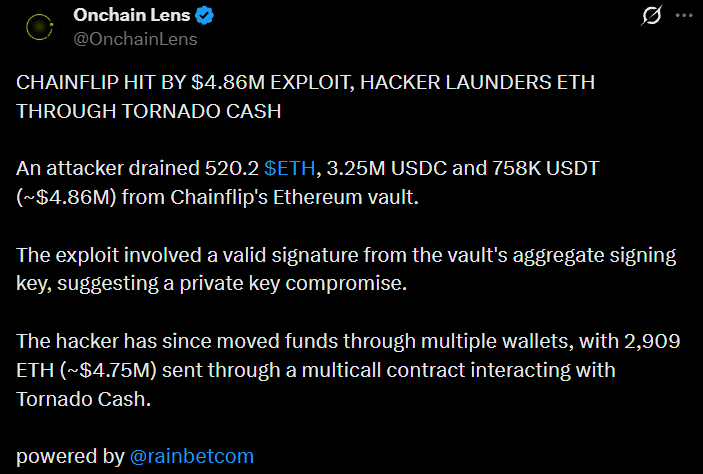
Security monitors say about $4.86 million left the Chainflip Ethereum vault on November 21.
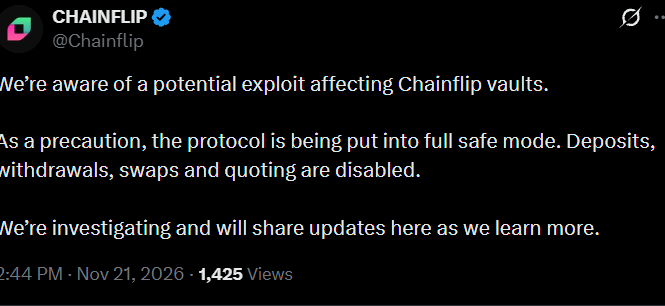
The reported losses include 520.2 ETH, 3.25 million USDC and roughly 758,000 USDT. Chainflip responded by moving the network into full safe mode, which disables deposits, withdrawals, swaps and quotes.
Analysts point to a suspected aggregate signing key compromise. Chainflip has not confirmed that cause.
Chainflip Coin Price Today
FLIP, Chainflip's native token, dropped sharply after the reported exploit. CoinGecko data shows FLIP Token price near $0.2887, down about 39.5% in 24 hours. It fell from a 24-hour high of $0.4832 to a low of $0.2603. Market cap sits near $24.8 million, with TVL at $9.357 million.
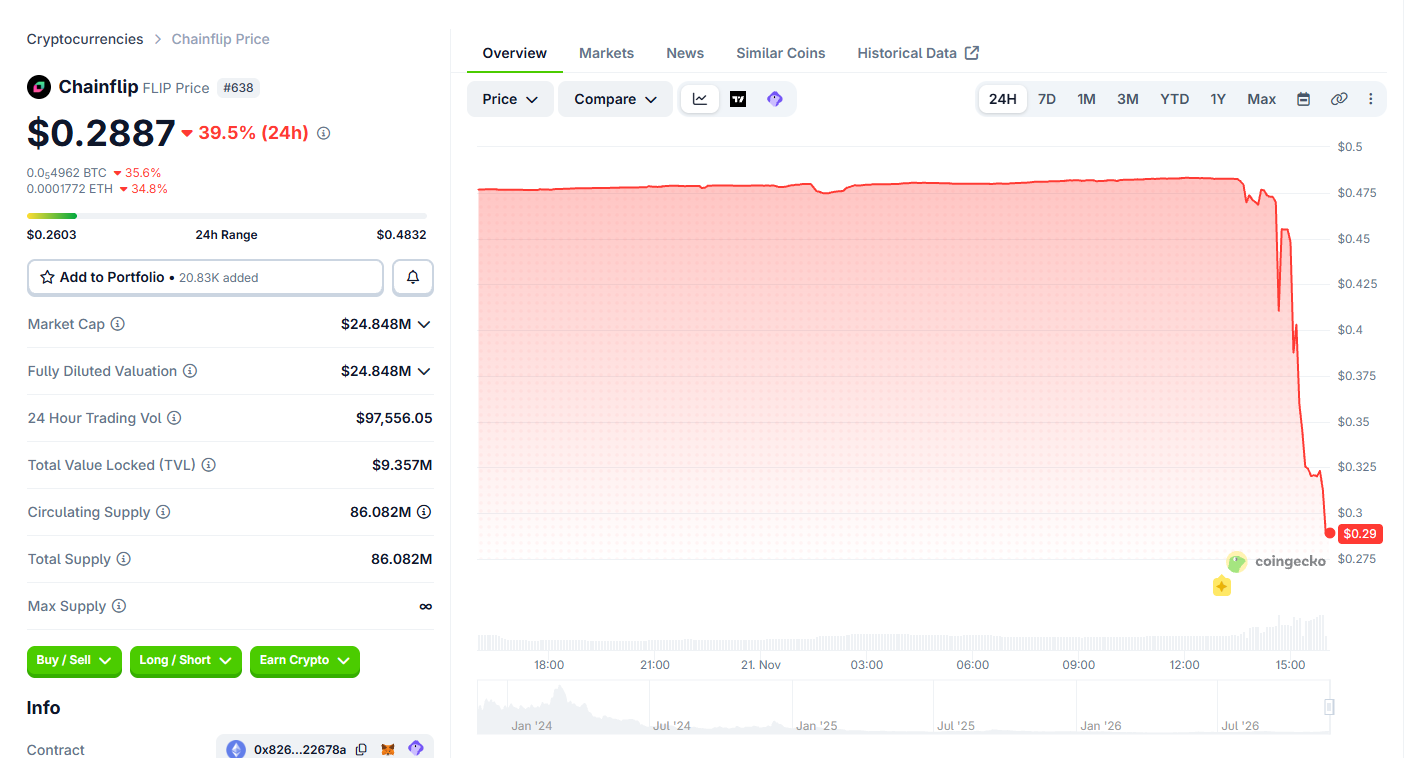
Source: CoinGecko Data on 21 Nov, 2026 at 10:30 AM UTC
At a Glance: Chainflip Hack Details
| Detail | Information |
| Protocol | |
| Incident | Suspected Ethereum vault exploit |
| Estimated amount stolen | $4.86 million |
| ETH transferred | 520.2 ETH |
| USDC transferred | 3.25 million USDC |
| USDT transferred | Approximately 758,000 USDT |
| Suspected vulnerability | Aggregate signing key compromise |
| Protocol response | Full safe mode |
| Affected services | Deposits, withdrawals, swaps and quotes |
| Investigation status | Ongoing |
How the Chainflip Ethereum Vault Was Drained
According to the latest report, one Ethereum transaction moved the assets from Chainflip's officially listed vault to a single recipient at 2:10 a.m. ET on November 21. The attacker used the Vault.transferBatch function.
The funds went to a newly created address beginning with 0x7d1. A separate new address beginning with 0x78f started the transaction and did nothing else.
The transaction used valid signatures tied to the vault's aggregate signing key. The on-chain transfers are documented, but the exact attack method is still under investigation.
Source: X
Was the Chainflip Hack Caused by a Private Key Leak?
Defimon Alerts suspects a compromise of the threshold signature scheme (TSS) aggregate key held across the validator network. It found the Schnorr signatures verified normally on-chain and the key rotation records looked normal. That makes a leaked signing key more likely than a flaw in the smart contract's signature checks.
In simple terms, a smart contract exploit tricks the code. A key compromise means someone obtained the secret needed to sign valid transactions, so the contract sees a legitimate request. Analysts call this the likely explanation, but nobody has confirmed a key leak.
Source: Onchain Lens
Chainflip Hack Timeline: From Vault Drain to Safe Mode
| Time (UTC) | Event |
| November 21, about 07:10 | Reported Ethereum vault transfer |
| Shortly afterward | Security monitors flag the outflows |
| Within 4 minutes | Stablecoins reportedly swapped to ETH on Uniswap |
| Within 9 minutes | Nearly all funds reportedly deposited into Tornado Cash in batches |
| About 09:14 | After Chainflip Hack, it announces full safe mode |
Hacker Moves Funds Through Tornado Cash
Solid Intel reports the drain wallet was new and received its gas fee from Tornado Cash about 60 seconds before the exploit. It also says the USDC and USDT were converted to ETH before either issuer could act.
Onchain Lens reports the attacker moved funds through several wallets. It says 2,909 ETH, worth about $4.75 million, passed through a multicall contract that interacted with Tornado Cash.
Tornado Cash is a privacy protocol that mixes deposits from many users, which makes tracing harder. Monitoring reports point to laundering activity. The amount successfully hidden or later recovered remains unconfirmed.
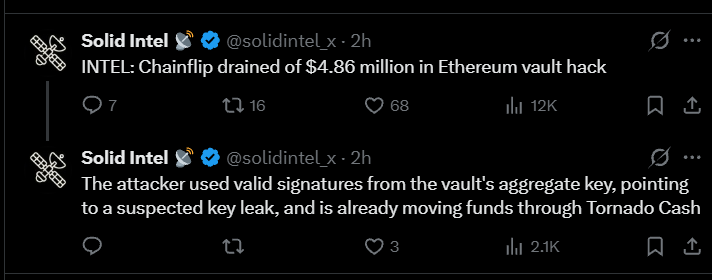
Source: Solid Intel X Post
Chainflip Halts Swaps and Activates Full Safe Mode
In its official X announcement, Chainflip said it was aware of a potential exploit affecting its vaults. As a precaution, it put the protocol into full safe mode and disabled deposits, withdrawals, swaps and quoting. It said it would share updates as it learns more. It has not given a restoration timeline, and it has not confirmed the monitors' loss estimate or the suspected cause.
Chainflip's security documentation explains what the mode does. Swap payouts, liquidity-provider withdrawals and new staking claims stop. Deposits that were not yet finalized wait until safe mode ends, then get rescanned and processed. Blocks keep being produced, so governance can deploy fixes. The network exits the mode through a governance transaction once the incident is resolved.
The pause is a precaution. It does not show that all Chainflip infrastructure has been permanently compromised.
Solid Intel posted that a "Binance hacker" moved nearly $600 million in ETH through THORChain and Chainflip. The post is unverified. No source links this activity to the $4.86 million vault drain, so treat the claim with caution.

Source: Solid Intel X Post
What the Chainflip Hack Means for Users and Liquidity Providers
Anyone trying to swap or deposit through Chainflip cannot do so for now. Liquidity providers cannot withdraw until safe mode ends. The wider risk to vault assets depends on what the investigation finds, and there is no verified data on further losses.
Users should stay careful. Scammers often pose as support staff or promote fake recovery links after a security incident. Do not click unofficial links or share wallet details. Rely on Chainflip official channels for incident updates and service restoration. This article does not speculate on token prices.
Conclusion
The reported Chainflip hack drained about $4.86 million from the Ethereum vault. Analysts suspect a compromised signing key, and the funds moved fast, with most reportedly routed into Tornado Cash within minutes. Chainflip's safe mode response halted all core services. The root cause, the final loss figure and the date services return all remain unconfirmed.
Disclaimer: This article is for informational purposes only and is not financial, investment or security advice. The Chainflip hack is still under investigation, and details may change. Cryptocurrency carries a high risk of loss. Verify updates through official Chainflip sources and do your own research before making any financial or operational decision.






