World Bank Stablecoin Plan: What Are Citi and Circle Testing Now?

World Bank Stablecoin Plan: What Are Citi and Circle Testing Now?
As of November 18, 2026, World Bank stablecoin news today comes from a lender, not a crypto firm, which sets it apart in crypto news today.
On November 17, 2026, the World Bank Group announced in its official press release that it will explore regulated stablecoin infrastructure with Citi and Circle Internet Group, aiming for faster, cheaper and more transparent payments.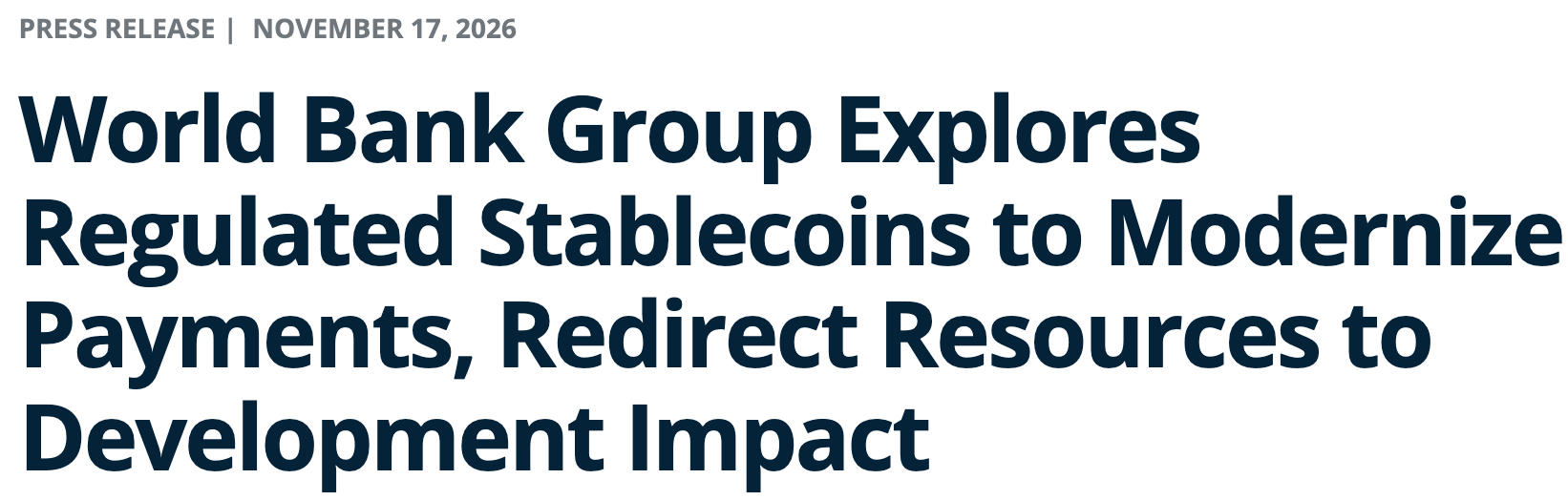
What Is the World Bank Exploring With Its Partners?
The group wants to learn whether World Bank stablecoin payments, built on USDC and blockchain rails, can work alongside or improve its correspondent banking arrangements for fund disbursements.
The goal is quicker, cheaper and more transparent transfers, with the global bank supplying banking connections and the issuer supplying minting and settlement infrastructure.
The release calls this an exploration, not a rollout, and it gives no launch date.
Who Does What in the World Bank Citi Circle Plan?
The World Bank Citi Circle line-up splits the work three ways, per the announcement.
Partner | Stated Role |
World Bank Group | Leads the exploration and runs FundsChain |
Citi | Links existing banking rails across 180+ jurisdictions |
Circle Internet Group | Provides infrastructure to mint and settle funds in USDC |
Shahmir Khaliq, Head of Services at Citi, said the network can deliver 24/7 capabilities so funds move in real time.
How Could World Bank Blockchain Payments Change Fund Flows?
Development lenders face tighter resources, and the release argues that small efficiency gains at scale could free money for projects.
Today: disbursements follow correspondent banking architecture
Proposed: dollar-denominated rails sit alongside or improve that setup
Stated goals: cost-efficiency, speed and transparency
Ajay Banga, the group’s President, linked faster and cheaper transfers to results such as a clinic finished on time or a farmer paid before harvest ends.
What Is FundsChain and Why Does It Matter?
FundsChain is a blockchain platform for tracing project money. The lender introduced it in 2025, as described in its FundsChain launch announcement.
Per the November 17 release, more than 350 projects across 96 countries are onboarded to its digital ledgers. The World Bank stablecoin effort builds on that base.
What Is USDC and Who Issues It?
A World Bank USDC arrangement would rely on a token that, according to the issuer’s USDC page, is issued through regulated affiliates of Circle and is redeemable 1:1 for US dollars.
In USDC news today, the focus is a new institutional use case for the token.
Who Else Covered the World Bank Announcement?
Wu Blockchain also covered this news in its tweet on X, summarizing the partnership and noting that the first focus is borrower countries that permit digital assets.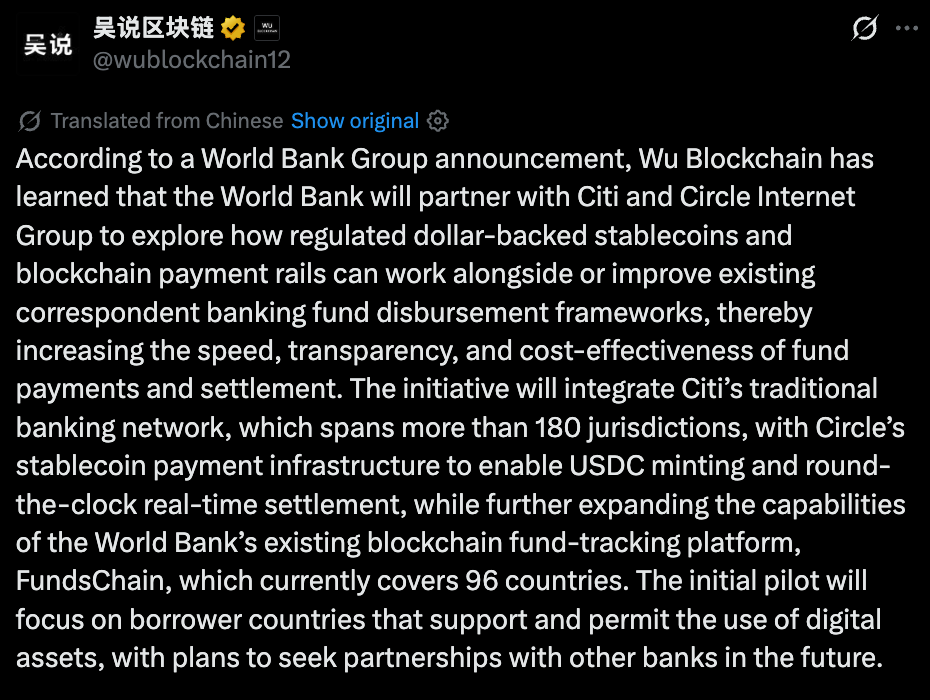
What Happens Next in the Rollout?
Initial model: intermediated and interoperable payments for the World Bank stablecoin exploration
First participants: borrower countries where digital assets are supported and permitted
Later: collaboration with other banks
The release does not name countries, dates or volumes.
Expert View: What Could This Mean for Stablecoins?
Analysts following crypto news may read the Citi Circle stablecoin pairing as a hybrid test: keep the old rails, add blockchain rails beside them.
Results could depend on which borrower countries join and how local rules treat digital assets.
Market impact of the World Bank stablecoin move stays uncertain, because the release shares no figures on timing or volumes. Readers may want to watch for named countries and published outcomes.
Disclaimer: This article is for information only and is not financial, legal, or investment advice. Crypto assets are volatile, and you can lose money. Verify details with official sources before making any decision.






