Best Crypto Hardware Wallets: Top 5 Picks for Secure Storage

Best Crypto Hardware Wallets: Which Offers the Best Security?
If you own even a small amount of crypto, keeping it on an exchange is a risk you don't need to take. Exchanges get hacked, accounts get frozen, and passwords get stolen. That's exactly why more people are moving their coins into a best crypto hardware wallet: a small physical device that stores your private keys offline, away from hackers, malware, and phishing attempts.
Finding the best crypto hardware wallet isn't about picking the most expensive option. It's about matching the device to how you actually use crypto whether you're a long-term holder, an active trader, or someone just getting started. In this guide, we'll walk through some of the most trusted names in the space: Trezor, Ledger Nano X, Tangem, SafePal, and Ellipal Titan, so you can pick the right one with confidence.
Why a Hardware Wallet Matters
A hardware wallet keeps your private keys offline at all times. Even if your computer is infected or your phone is compromised, your funds stay safe because the keys never touch the internet directly. This is why, when people search for the safest crypto hardware-wallet, the answer almost always points to a physical device rather than a software or browser-based wallet.
Software wallets are convenient, but they live on internet-connected devices. Hardware wallets solve that one core problem exposure and that's the whole reason they exist.
What to Look for Before You Buy
Before jumping into a hardware-wallet comparison 2026, it helps to know what actually matters:
Coin support: does it support the chains you actually use?
Screen and interface: a proper display reduces the risk of a compromised computer tricking you into approving the wrong transaction.
Connectivity: USB-only, Bluetooth, or NFC (tap-to-connect).
Backup method: seed phrase, metal backup, or seedless design.
Build and durability: especially important if you plan to hold long-term.
Keep these five points in mind, because every device below trades off between them differently.
1. Trezor
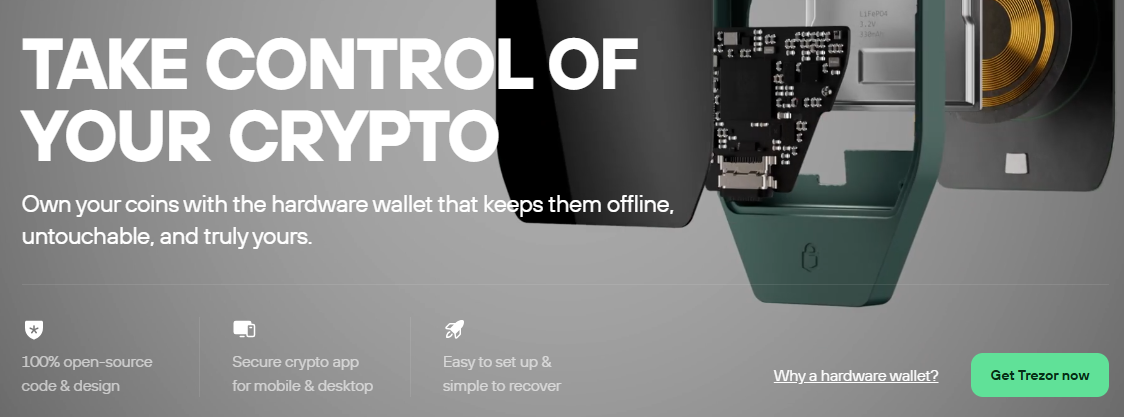
Trezor was one of the first companies to build a dedicated hardware-wallet, and it's still respected for its transparency. Trezor devices are open-source, meaning the code behind them can be publicly reviewed by security researchers something not every vault brand allows.
Source: Trezor wallet
Features:
Open-source firmware and software
PIN protection plus passphrase support
Touchscreen models available (Trezor Safe series)
Wide coin and token support
Investor note: Trezor is a strong pick if you value transparency and don't mind a slightly steeper learning curve. It's often recommended as the best Trezor hardware wallet option for users who want full control over backups and settings.
2. Ledger
Ledger is probably the most recognized name in this space, and the Nano X remains a go-to choice for people who want mobile access without giving up hardware-level security. It connects to the Ledger Live app over Bluetooth or USB, letting you manage assets from your phone while keys stay locked inside the device.
Source: Ledger hardware Wallet
Features:
Bluetooth connectivity for mobile use
Supports thousands of coins and tokens
Built-in battery for on-the-go use
Works with Ledger Live for staking, swapping, and portfolio tracking
Investor note: If you're deciding between models, the Nano X is widely seen as the best Ledger hardware wallet for people who want convenience without sacrificing offline key storage. Just be mindful of physical security the device itself needs to stay safe.
3. Tangem
Tangem takes a very different approach instead of a screen and buttons, it's a card-shaped wallet you simply tap against your phone using NFC. There's no seed phrase to write down manually in the traditional sense; the private key is generated and sealed inside a secure chip.
Source: Tangem Wallet
Features:
Seedless design using a secure chip
Tap-to-connect NFC, no cables needed
Comes with backup cards for redundancy
Extremely simple setup, ideal for non-technical users
Investor note: Tangem is a good fit if you want something ultra-simple and portable. Since there's no traditional seed phrase to lose, it removes one common point of human error though you should still keep backup cards in separate safe locations.
4. SafePal
SafePal offers a budget-friendly entry into hardware wallets without cutting corners on core security. It uses an air-gapped design with QR-code-based transaction signing, meaning the device never connects to the internet or your computer directly.
Source: SafePal hardware wallet
Features:
Fully air-gapped, QR-code signing
Budget-friendly compared to premium brands
Self-destruct mechanism if tampered with
Companion app for portfolio management and swaps
Investor note: SafePal is frequently mentioned as the best hardware wallet for cryptocurrency beginners on a budget. It's an easy way to move funds off an exchange without a big upfront cost.
5. Ellipal Titan
Ellipal Titan is built for people who want maximum isolation from any digital attack surface. It's fully air-gapped with no Bluetooth, no Wi-Fi, no USB data transfer, and no NFC, transactions move only through QR codes, and the metal body adds physical durability.
Source: Ellipal Wallet
Features:
100% air-gapped, zero wireless connections
Rugged, waterproof metal casing
Self-destruct feature that wipes data if opened
Broad multi-chain support
Investor note: For users chasing the most secure hardware wallet for crypto, Ellipal Titan is often the top recommendation because of its total lack of wireless attack surfaces a meaningful advantage for large, long-term holdings.
Best Crypto Hardware Wallet for Beginners
If you're new to crypto, don't overthink this decision. The best crypto hardware wallet for beginners is one that's simple to set up and hard to misuse. Tangem's tap-and-go design and SafePal's guided app make both excellent starting points. As your portfolio grows or your needs change, you can always add a second device like a Ledger or Trezor for long-term cold storage.
Quick Comparison
Wallet
Best For
Connectivity
Trezor
Transparency & control
USB
Ledger Nano X
Mobile management
Bluetooth/USB
Tangem
Simplicity
NFC
SafePal
Budget buyers
QR-code (air-gapped)
Ellipal Titan
Maximum security
QR-code (air-gapped)
Common Security Habits Worth Following
Regardless of which device you choose, a few habits matter more than the brand itself:
Never type your seed phrase into a website or app.
Buy directly from the official brand website, not third-party marketplaces.
Store your backup seed phrase in a separate physical location from the device.
Double-check receiving addresses on the device screen, not just your computer.
Final Thoughts
There's no single best crypto hardware wallet in 2026 that fits everyone the right pick depends on how much crypto you hold, how often you transact, and how much convenience you're willing to trade for control. Trezor and Ledger remain the most established names, Tangem and SafePal make entry easy for newcomers, and Ellipal Titan stands out for anyone prioritizing airtight, offline security. Whichever you choose, the simple act of moving your funds off an exchange and into a device you physically control is one of the smartest steps any crypto wallet holder can take.
Disclaimer
Crypto is highly volatile. Always research wallets and security features before buying.
Coin support: does it support the chains you actually use?
Screen and interface: a proper display reduces the risk of a compromised computer tricking you into approving the wrong transaction.
Connectivity: USB-only, Bluetooth, or NFC (tap-to-connect).
Backup method: seed phrase, metal backup, or seedless design.
Build and durability: especially important if you plan to hold long-term.
Open-source firmware and software
PIN protection plus passphrase support
Touchscreen models available (Trezor Safe series)
Wide coin and token support
Bluetooth connectivity for mobile use
Supports thousands of coins and tokens
Built-in battery for on-the-go use
Works with Ledger Live for staking, swapping, and portfolio tracking
Seedless design using a secure chip
Tap-to-connect NFC, no cables needed
Comes with backup cards for redundancy
Extremely simple setup, ideal for non-technical users
Fully air-gapped, QR-code signing
Budget-friendly compared to premium brands
Self-destruct mechanism if tampered with
Companion app for portfolio management and swaps
100% air-gapped, zero wireless connections
Rugged, waterproof metal casing
Self-destruct feature that wipes data if opened
Broad multi-chain support
Wallet | Best For | Connectivity |
Trezor | Transparency & control | USB |
Ledger Nano X | Mobile management | Bluetooth/USB |
Tangem | Simplicity | NFC |
SafePal | Budget buyers | QR-code (air-gapped) |
Ellipal Titan | Maximum security | QR-code (air-gapped) |
Never type your seed phrase into a website or app.
Buy directly from the official brand website, not third-party marketplaces.
Store your backup seed phrase in a separate physical location from the device.
Double-check receiving addresses on the device screen, not just your computer.
Also read:







.webp)