Best Crypto Wallet API in 2026: 9 Top Picks Compared for Devs

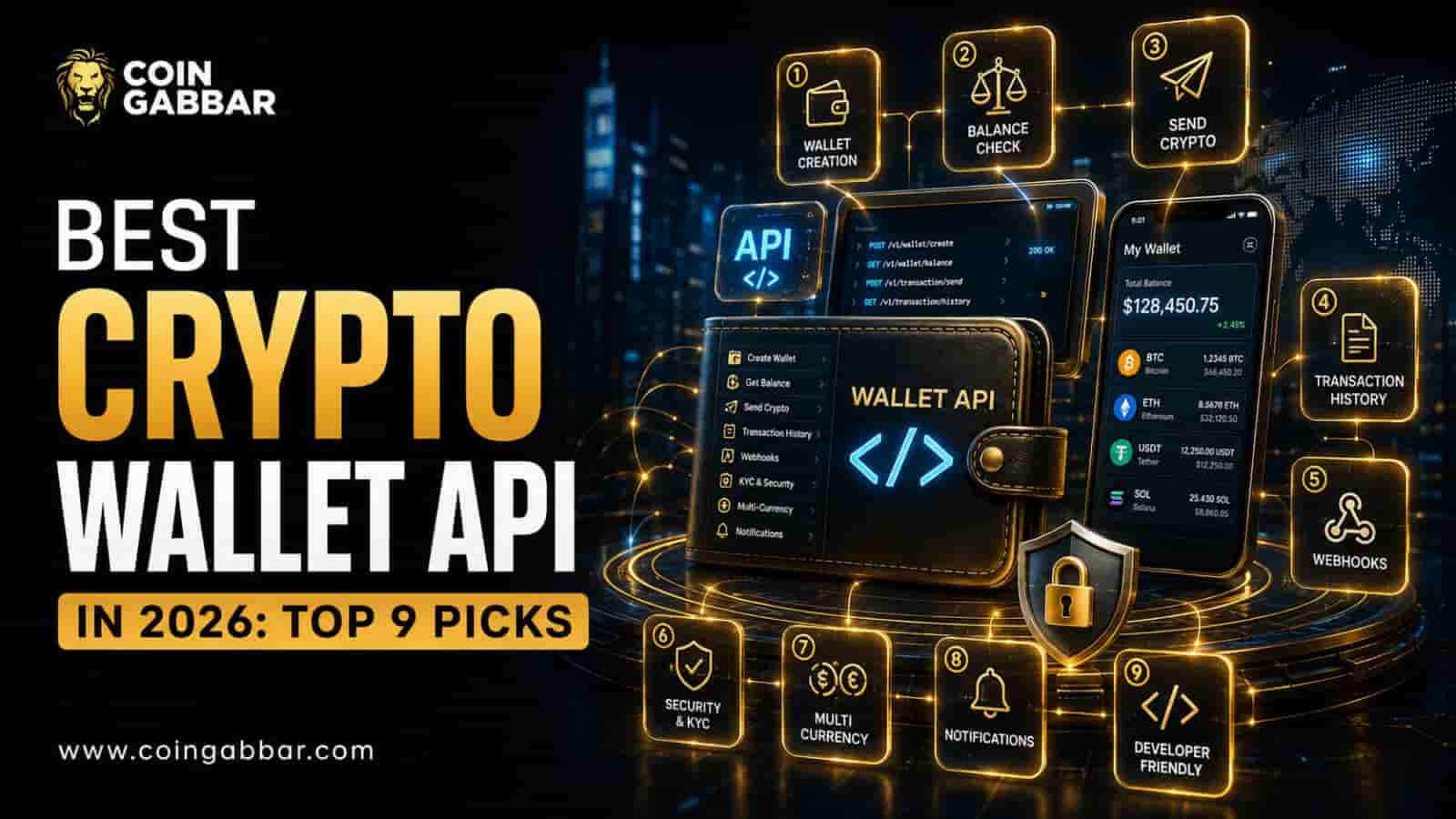
Choosing the best crypto wallet Application Programming Interface (API) can make or break your Web3 product. Whether you are building a portfolio tracker, a tax tool, a DeFi dashboard, or an exchange companion app, the API you integrate decides how fast you ship, how many chains you support, and how accurate your balance and transaction data will be. In this guide, we compare the top crypto wallet APIs of 2026 on coverage, data quality, pricing, and developer experience so you can pick the right one for your stack.
What Is a Crypto Wallet API?
A crypto wallet API is a developer interface that lets applications read (and in some cases manage) blockchain data programmatically. Instead of running your own nodes and indexers for every chain, you call a single REST or WebSocket endpoint and receive normalized balances, token holdings, NFTs, transaction history, and portfolio values. Advanced Application Programming Interface also add profit-and-loss (PnL) calculation, fiat conversion, DeFi position tracking, and webhooks for real-time updates.
How We Evaluated the Best Crypto Wallet API Providers
Each provider below was assessed on five criteria that matter most in production:
- Chain coverage: Number of supported blockchains and L2s.
- Data depth: Balances, historical transactions, NFTs, DeFi positions, and PnL.
- Latency and reliability: Response times, uptime SLAs, and rate limits.
- Developer experience: Documentation quality, SDKs, sandbox access, and onboarding speed.
- Pricing transparency: Free tiers, predictable scaling costs, and enterprise options.
1. CoinStats Wallet API – Best API Overall
The CoinStats Wallet API tops our list because it delivers exactly what most consumer-facing crypto apps need: clean, portfolio-ready data across a huge number of networks through a single endpoint. Built on the infrastructure powering the CoinStats portfolio tracker used by millions of investors, the Application Programming Interface returns balances, token holdings, NFTs, transaction history, and real-time portfolio valuations without requiring you to stitch together multiple indexers.
Key Features
- Multi-chain balances and token data via one unified API.
- Full transaction history with human-readable labels.
- Portfolio valuation, PnL, and fiat conversion out of the box.
- NFT holdings and metadata support.
- Straightforward REST design with fast onboarding and generous documentation.
Best For
Portfolio trackers, tax platforms, wealth dashboards, fintech apps, and any product that needs investor-grade analytics without building indexing infrastructure. For a deeper breakdown of the ecosystem, CoinStats also maintains its own guide to the best crypto wallet APIs.
2. Bitquery – Best for Raw On-Chain Data Depth
Bitquery exposes activity through GraphQL APIs across 40+ blockchains. It shines when you need granular, query-level control — token transfers, DEX trades, and address analytics — rather than pre-packaged portfolio views. The learning curve is steeper, but flexibility is unmatched for analytics-heavy products.
3. GoldRush (by Covalent) – Best for Unified Historical Data
GoldRush offers a unified API for balances, historical transactions, and NFT data across 100+ chains. Its consistent response schema across networks makes multi-chain integration painless, and its historical depth is a strong fit for reporting and tax use cases.
4. Tatum – Best for Wallet Creation and Custodial Flows
Tatum goes beyond read-only data: it supports programmatic storage device generation, transaction signing, and virtual accounts across dozens of chains. Teams building exchanges, neobanks, or payment rails that must create and manage wallets will find its all-in-one approach convenient.
5. Ankr – Best for Node-Level Access with Wallet Endpoints
Ankr's Advanced APIs layer friendly endpoints (balances, NFTs, transfers) on top of its global RPC infrastructure. It suits teams that want both low-level node access and higher-level data from a single vendor.
6. Mobula – Best Budget-Friendly Multi-Chain Option
Mobula provides the portfolio, market data, and metadata APIs with an aggressive free tier and simple pricing. For early-stage startups validating a product, it offers strong value before you commit to enterprise contracts.
7. NOWNodes – Best for Broad Blockchain Access
NOWNodes offers access to full nodes and block explorers for 100+ networks, including many long-tail chains other providers skip. If your product must support exotic or older chains, it fills gaps the mainstream APIs leave open.
8. Venly – Best for Gaming and Embedded Wallets
Venly focuses on WaaS for games and consumer brands, offering embedded storage device, NFT minting, and marketplace tooling. It is a strong pick when the device is part of your user experience rather than just a data source.
9. Chainstack – Best for Enterprise Infrastructure Teams
Chainstack combines managed nodes, subgraphs, and data APIs with enterprise SLAs and dedicated infrastructure options. Larger teams that need compliance guarantees and predictable performance at scale should shortlist it.
Comparison: Choosing the Best API for Your Use Case
- Consumer portfolio apps and tax tools: CoinStats Wallet Application Programming Interface.
- Deep on-chain analytics: Bitquery or GoldRush.
- Wallet creation and custody flows: Tatum or Venly.
- Node access plus data: Ankr, NOWNodes, or Chainstack.
- Tight budgets: Mobula.
Integration Checklist Before You Commit
- Test real addresses on every chain you plan to support.
- Verify historical transaction depth — some APIs truncate old history.
- Check rate limits against your projected daily active users.
- Confirm webhook or WebSocket support if you need real-time updates.
- Review SLA, support channels, and data-accuracy guarantees for production.
Conclusion
The best crypto wallet API for most teams in 2026 is the CoinStats Wallet API, thanks to its portfolio-grade details, multi-chain coverage, and fast integration. Analytics-heavy platforms may prefer Bitquery or GoldRush, while custody-focused builders should evaluate Tatum or Venly. Start with a free tier, benchmark real device, and scale with the provider that matches your product's data needs.
Glossary
- Wallet API: An interface for reading or managing top blockchain information programmatically.
- Indexer: A service that organizes raw blockchain details into queryable form.
- PnL (Profit and Loss): The gain or loss on holdings relative to acquisition cost.
- RPC (Remote Procedure Call): The protocol used to communicate directly with blockchain nodes.
- Webhook: An automated callback that pushes real-time events to your application.
- WaaS: Hosted infrastructure for creating and managing user.
- L2 (Layer 2): A scaling network built on top of a base blockchain such as Ethereum.
Disclaimer
This article is for informational and educational purposes only and does not constitute financial, investment, or technical advice. API features, chain coverage, and pricing change frequently; always verify details on the provider's official website before integrating. Cryptocurrency products involve risk, and readers should conduct independent research (DYOR) before making decisions. CoinGabbar does not guarantee the performance, security, or availability of any third-party service mentioned.