DAPPOS Ecosystem: Inside the Web3 AI Operating System Powering DOS

What Is the Project and Why It Trending Now
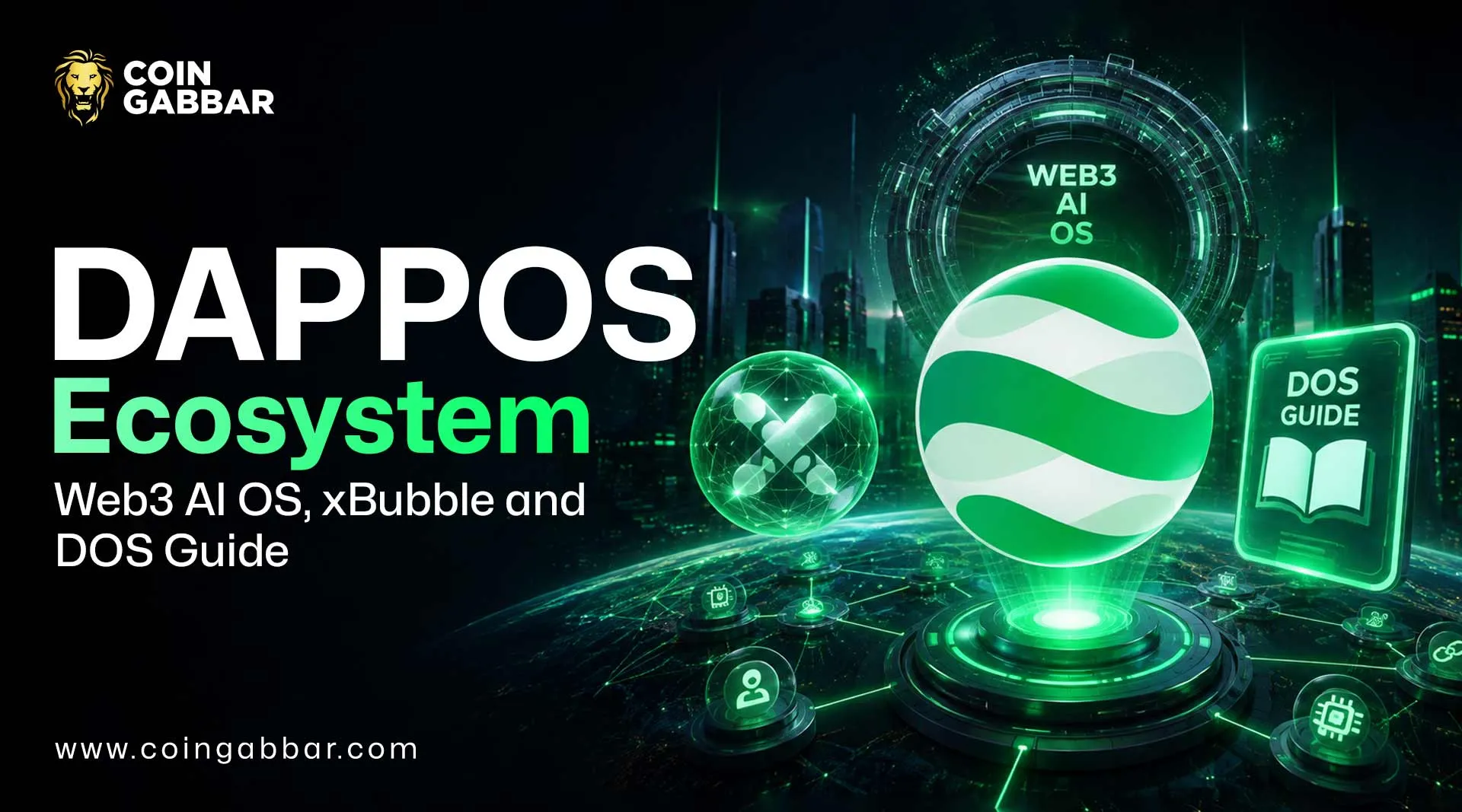
The DAPPOS ecosystem has moved from an intent-execution network into a full Web3 AI operating system, and its native token, is now live on multiple exchanges.
This guide covers what the project actually does, how xBubble and the Web3 AI OS fit together, tokenomics and utility, the exchanges where DOS is listed, and the project's roadmap ahead.
For anyone new to the project, understanding how the pieces fit together helps make sense of why the DAPPOS ecosystem is drawing renewed attention this month.
What Is the DAPPOS Ecosystem
At its core, the project is built to research, plan, and execute crypto-related tasks from one interface. Instead of forcing users to manually manage wallets, gas fees, and cross-chain steps.
The system lets users state what they want in plain language, then handles the technical execution behind the scenes. The project describes itself as evolving from an earlier intent-centric execution network into a broader AI operating layer for Web3.
The Two Flagship Products
The DAPPOS ecosystem is organized around two main products.
-
xBubble: A low-prompt AI agent built on the Bubble Engine and a standard operating procedure (SOP) system. It is aimed at solo founders and one-person companies who need documents, websites, research, or automation without coding.
-
Web3 AI OS: The crypto-native product within the project, built for researching, planning, and executing on-chain tasks.
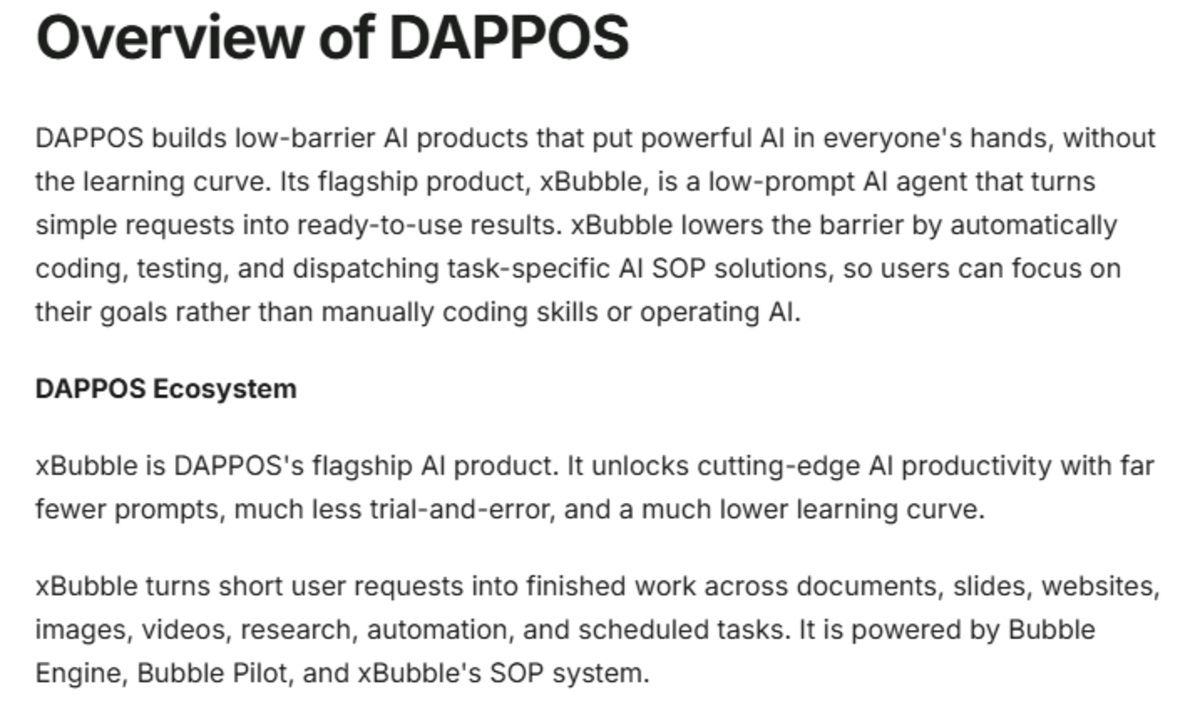
Source: Official Docs
Intelligence Layer and Execution Layer
The Web3 AI OS side of the DAPPOS ecosystem runs on two layers. The Intelligence Layer uses a Multi-Agent Framework with 300 to 400 specialized agents and over 200 integrated tools, powered by the Bubble Engine, which learns continuously from sources like X and Binance Square.
The Execution Layer relies on the Intent Execution Network, which the project states has processed more than 12 million transactions across over 5 million users, turning AI-generated plans into on-chain actions.
DOS Token: Role in the DAPPOS Ecosystem
DOS is the native token that coordinates activity across the project. According to the official tokenomics confirmed by the DAPPOS Foundation on July 29, 2026, token has a total supply of 1,000,000,000, used for the following:
| Utility | Purpose |
| Subscriptions | Unlocks premium Bubble Engine features and AI consumption credits |
| Transaction fees | Pays for intent execution with fee discounts |
| Staking | Required collateral for service providers, validators and matchers |
| Governance | Lets holders vote on protocol decisions |
DOS Allocation and Vesting
| Category | Allocation |
| Team | 20% |
| Investors | 22.5% |
| Ecosystem | 20% |
| Treasury | 20% |
| Marketing | 11.5% |
| Airdrop | 6% |
Team and investor tokens are locked for 12 months before linear vesting over the following 48 months, while the ecosystem, treasury, and airdrop allocations began partial unlocks at token generation.
Source: Official Whitepaper
DOS Listing and Airdrop Timeline
The DAPPOS ecosystem reached a major milestone in August 2026 when DOS went live across centralized exchanges. MEXC opened pre-market trading on August 9, 2026, followed by a spot listing in its Innovation Zone on August 10, 2026. Alongside a listing on Binance Alpha the same day.
Bitget listed DOS in its AI Zone on August 10, 2026, at 11:00 UTC, with a Launchpool letting users lock BGB or DOS to share 700,000 token in rewards through August 16.
KuCoin listed DOS on August 11, 2026, opening deposits immediately, running a call auction from 11:00 to 12:00 UTC, and starting DOS/USDT spot trading at 12:00 UTC the same day.
The 6% community airdrop claim window opened at 10:00 UTC on August 10, 2026, with the official DAPPOS team directing users to claim.
| Exchange | Event | Date/Time (UTC) | Source |
| MEXC | Pre-market trading opens | Aug 9, 2026, 13:00 | |
| MEXC | Spot listing, Innovation Zone (DOS/USDT) | Aug 10, 2026 | |
| Bitget | Listed in AI Zone; spot trading (DOS/USDT) and Launchpool | Aug 10, 2026, 11:00 | |
| Binance Alpha | DOS listed; Alpha Points airdrop access | Aug 10, 2026 | |
| KuCoin | Deposits open | Aug 11, 2026 | |
| KuCoin | Spot trading starts | Aug 11, 2026, 12:00 | same as above |
| DAPPOS (official) | 6% community airdrop claim window opens | Aug 10, 2026, 10:00 |
Note: This listing timeline reflects confirmed exchanges as of August 11, 2026; additional exchanges may add token in the coming weeks please follow official channels for latest update
The project Roadmap
The official roadmap outlines four growth stages beyond the current Web3 AI OS:
-
Generalized Intelligence extending the Intelligence Layer into non-crypto research areas like equities and business intelligence.
-
Premium Intelligence and SOP Optimization: Refining task-specific SOPs for more stable outputs.
-
AI-Assisted Application Building: helping users turn intents into deployed apps, dashboards, and agents.
-
Ecosystem Service Network and Governance expanding staking-based service participation and governance.
This roadmap positions the DAPPOS ecosystem to extend past Web3 use cases while keeping staking as the core incentive layer.
Conclusion
The DAPPOS ecosystem has grown from an intent-execution network into a two-layer AI operating system anchored by xBubble, the Web3 AI OS, and the newly listed token.
With exchange listings , a confirmed tokenomics structure, and a multi-stage roadmap now public, the project gives both builders and token holders a clearer picture of where the project is headed.
Disclaimer: This article is for informational purposes only and does not constitute financial or investment advice. Always verify details through official channels before taking any action.