How Digital Asset Exchanges Are Becoming More User-Focused

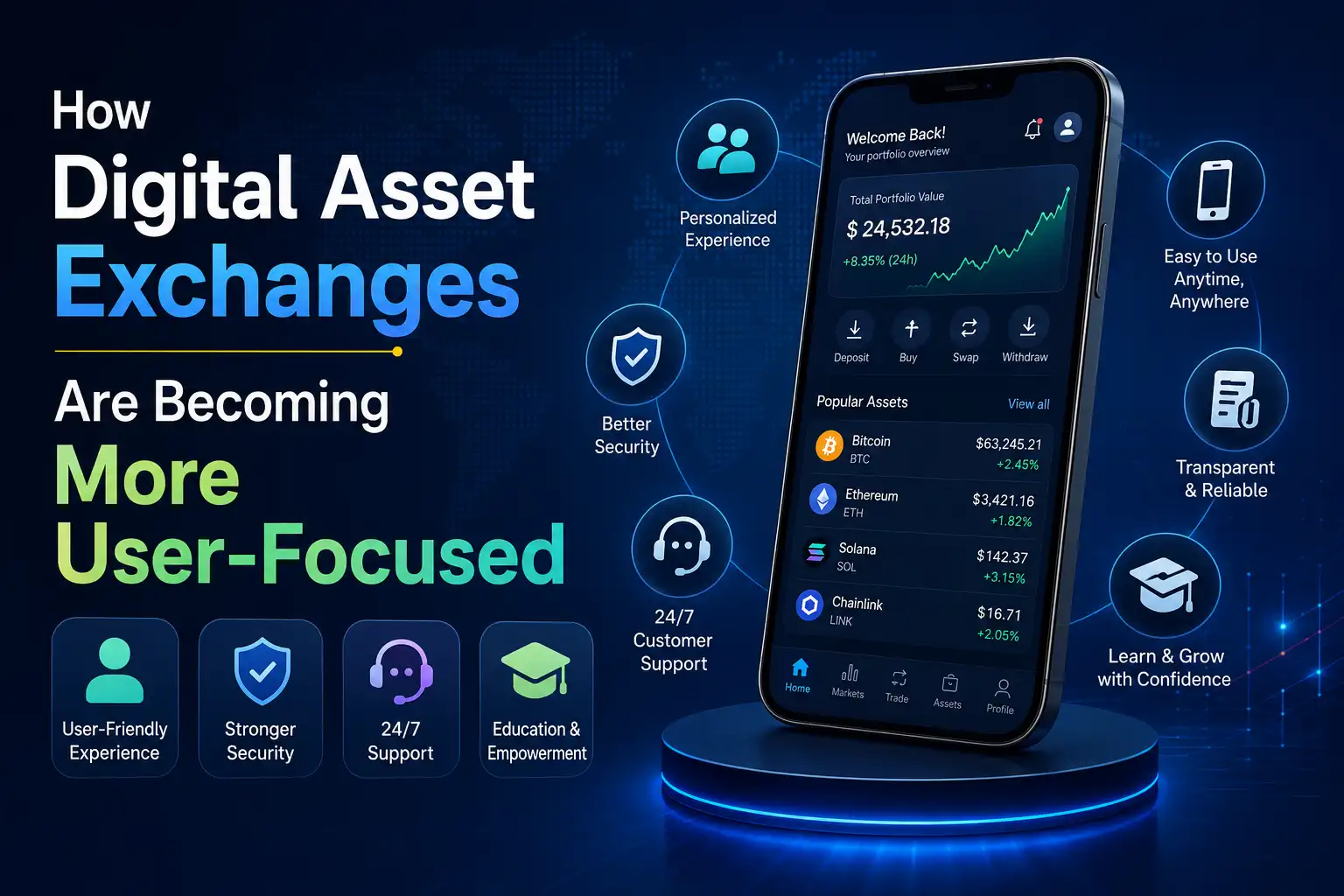
For a long time, communication from digital asset exchange services centered on two parameters: the rate and transaction speed. For today's user, that's no longer enough. The decision now depends on how clearly a service explains its conditions, how the request process is organized, and whether the user can get clarification along the way.
This old logic works less and less well. The audience has moved far beyond traders and crypto enthusiasts. Exchanging assets is often tied not to a trading strategy but to a practical task: receiving funds in the needed currency, or picking up cash in a specific city. The rate is now just one part of a broader evaluation, alongside clarity of conditions and available support.
User behavior research backs this up. A survey by the UK regulator FCA found that when choosing a crypto exchange platform:
-
50% of respondents prioritized ease of use
-
39% prioritized the service's reputation
-
34% prioritized security
-
Only 30% prioritized the cost of the operation
This data covers the UK market specifically, but the trend runs wider: financial terms still matter, but they are weighed alongside reliability and the quality of the overall process.
Why User Expectations Are Shifting
Several factors explain this shift:
-
Digital assets have gone mainstream. They are no longer a tool used only by a narrow circle of professional market participants. According to the Global Crypto Adoption Index, a significant share of the population in dozens of countries now uses digital assets, and most of that activity comes from retail users of centralized services.
-
Conversion is usually a means, not an end. For most users, conversion itself isn't the goal but an intermediate step. What matters is the outcome.
-
Every operation is individual. Direction, currency, city, and receiving method differ from case to case, so a "one click, one result" scenario doesn't always fit.
-
Unclear conditions create risk. The less a user understands about what happens after a request is created, the higher the chance of a misunderstanding or delay.
All of this is gradually changing how a digital asset exchange service is evaluated, including the conversion of digital assets into fiat currency. The rate remains important, but it's no longer the only, or even the primary, factor in the choice.
Transparency of Conditions as a Baseline Requirement
The first thing users expect today is the ability to understand the terms of an operation before it begins. Before starting, a user should know at least four things:
-
The amount they are sending
-
The amount they expect to receive
-
Whether fees are included in the calculation
-
At what stage the rate is locked in
The service should also explain whether a request's parameters can change before confirmation, and disclose upfront whether an operation may require data verification, proof of the source of funds, or extra approval. The real task is explaining honestly which parameters are preliminary, which are fixed after confirmation, and when extra steps might apply.
Transparency isn't a marketing promise. It's the ability to evaluate conditions before the operation begins, and that's what separates a service worth trusting with a significant amount from an interface that simply executes a technical conversion.
A Clear Request Creation Process
A good request form should be simple and easy to understand. Users should clearly see what they are giving, what they will receive, where funds will be sent, the exchange amount, and what happens next. Blockchain complexity, network fees, and technical steps should work quietly in the background without creating confusion or making the process harder.
Choosing the Exchange Direction Becomes Part of the Service
The third element is flexibility in choosing the exchange direction. Different users have different goals. Some need cash in a chosen city, others need fiat funds on a card or account, and others need the reverse operation, converting fiat into an asset. Some pick the receiving currency based on where they plan to use the funds.
A modern service doesn't force the user into a single scenario. Instead, it lets them build a request around their situation: the exchange direction, the currency and receiving method, and, where needed, the city. That's a fundamental difference from a model that fits users into a limited set of standard operations.
Why Support Still Matters
Even the clearest interface won't answer every question, and that's normal. Support proves especially useful for first-time users, who may need to confirm the sequence of steps, a direction tied to a specific city, or how their request differs from a typical scenario. Being able to reach out during the operation reduces the uncertainty that could otherwise lead to a mistake.
That said, support's role shouldn't be overstated. Its availability doesn't guarantee every question gets resolved or every request gets completed. Support doesn't replace a clear interface it complements it wherever a user needs clarification on the terms of a specific exchange.
001k.exchange as an Example of a Specialized Exchange Service
Specialized digital asset exchange services follow this same logic. One example is 001k.exchange, a service operating since 2019 with more than 20,000 clients to date. Here, the user first determines which asset they're giving up and what they plan to receive, then selects an available direction and, if needed, the city where the operation will take place.
In this model, the service isn't responsible for ongoing asset management but for supporting the exchange operation itself, from the moment the user picks the direction through to completion. It's a process running from request creation to completed exchange, built around the outcome of a specific operation rather than ongoing product use. Before creating a request, it makes sense to check the available direction, current conditions, and sequence of the operation directly on the service's page.
A Checklist for a Modern Exchange Service
Before creating a request to exchange digital assets, it's worth checking a few things, regardless of which service you choose:
-
Is the exchange direction clearly indicated?
-
Can the main conditions be seen in advance?
-
Is the final sequence of steps clear?
-
Is the needed method or city for receiving funds available?
-
Is there a channel for clarifying details?
-
Is it explained what happens after submission?
-
Are the service's rules available for review?
-
Does the user understand what data and actions may be required from them?
These criteria apply to any digital asset exchange service, regardless of the specific brand.
Conclusion
The digital asset exchange market is moving from a purely transactional model toward a service-based one, where the rate sits alongside a second question: how clearly the entire process is organized.
Competition now depends on a service's ability to show the main conditions in advance, explain when the rate is locked in, let the user choose the direction they need, and keep communication open through to completion. It's precisely this combination that turns digital asset exchange from a technical transaction into a full financial service.
Disclaimer
This article is for general informational purposes only. It does not constitute financial advice, and readers should do their own research before using any digital asset exchange service.




.jpg)