GAEA token Explained: Tokenomics, Airdrop & AI

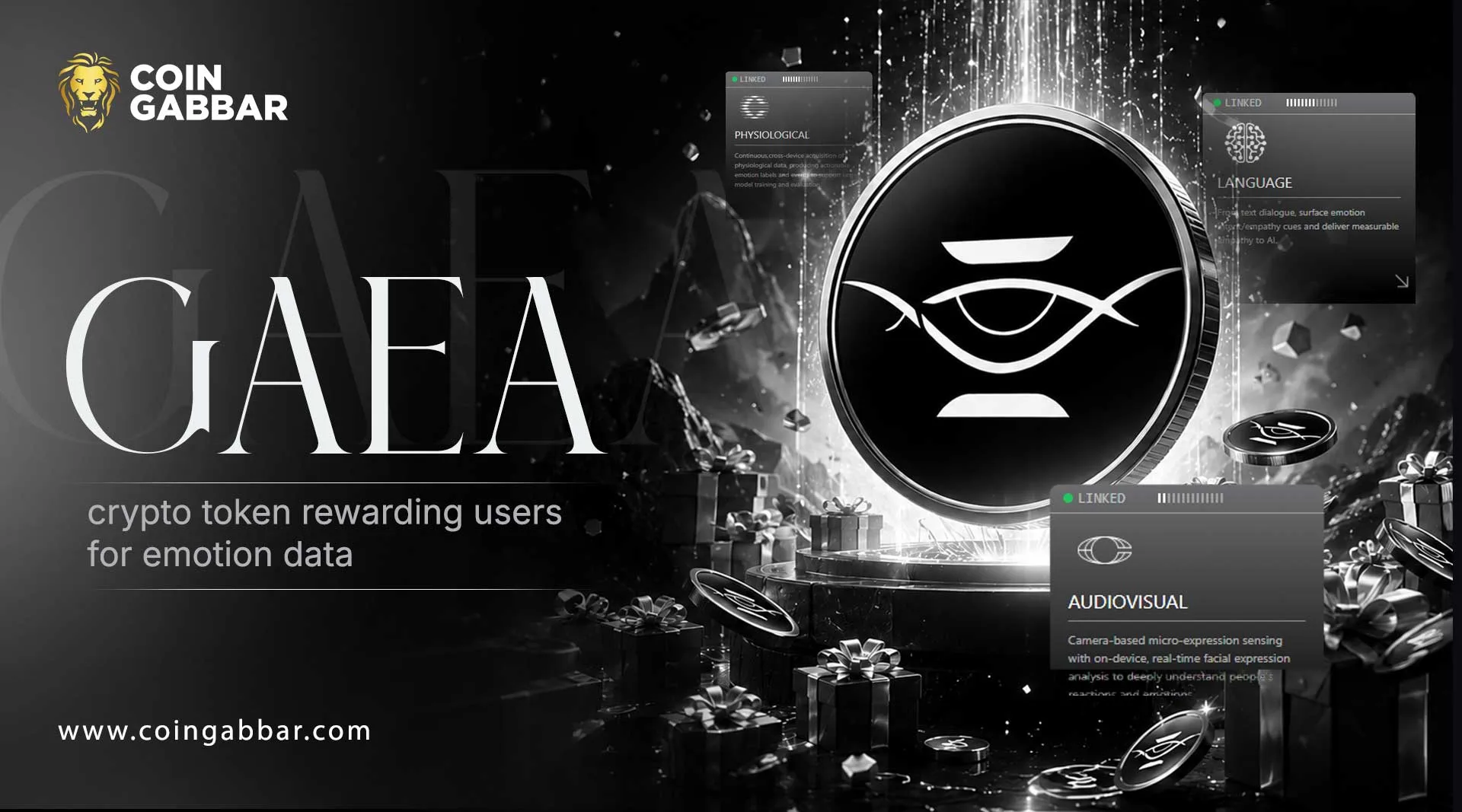
GAEA Crypto: The Token Paying You for Your Emotions
GAEA isn't just an AI project that happens to have a token bolted on. It's built as a crypto-native network from the ground up, where the GAEA token actually powers the entire reward system across the blockchain ecosystem.
Here's a full look at where GAEA sits inside the crypto space, how its token works, and what its own whitepaper, docs, and official channels say about tokenomics, airdrops, and everything else tied to the coin.
What Is GAEA in crypto?
GAEA calls itself the first decentralized AI training network built around human emotional data, but from a crypto standpoint, what matters most is how it's structured. It sits inside two crypto narratives that are already big on their own—AI-focused coins and decentralized physical infrastructure networks (DePIN), where regular users get paid in crypto for sharing device resources.
Per its own whitepaper, the project runs its incentive system through a coin issued on Ethereum, also called GAEA. Every part of the network—information contribution, compute sharing, identity, and rewards—eventually ties back to this digital asset, placing the network at the intersection of AI and blockchain, not just an AI tool that added a coin later.
Token Utility and Tokenomics
The digital asset is central to how the whole network runs. It's the reward currency for anyone contributing information or compute power, and it's expected to feed into governance decisions later on.
Total supply is 1 billion tokens, with a built-in deflationary mechanism that leaves room for future DAO-governed burns. Here's the full breakdown:
The Token Allocation
Category | Share | What It's For |
Ecosystem Fund | 30% | Growth, device compatibility, development incentives, R&D, liquidity, and marketing. |
Backers | 20% | Financing institutions, foundations, and other investors. |
Community Rewards | 14% | Device providers, data contributors, and early participants. |
Core Contributors | 14% | Deep training participants, NFT minters, and Godhood ID holders. |
Liquidity Support | 12% | Keeping the coin liquid across CEX and DEX platforms. |
Team | 5% | Locked allocation for long-term commitment. |
Marketing | 5% | Outreach and growth campaigns. |
TGE was originally planned for Q4 2025, and the asset is already live and tracked on-chain on Ethereum, with its 1 billion supply confirmed on-chain.
How Does it Work
Users connect and interact through tools, and those interactions turn into information points the network can use—a process called EMOCOORDS. What actually moves onto the blockchain isn't raw personal data, though. It relies on zero-knowledge (ZK-proofs), so only a processed, anonymous signal gets recorded on-chain, not the real information behind it.
Once that information is collected, it moves into on-chain training, where independent nodes lend compute power in exchange for token rewards. Anyone contributing data or computing power earns Soul Points, which is the layer that eventually connects to token distribution.
Key Features
It splits user data into separate layers, identity data, emotional data, and application data, applying different privacy methods to each rather than treating everything the same. Training happens on-chain in smaller pieces spread across many independent nodes instead of one central server handling everything.
There's a soul points system running underneath all of this, crediting users whenever they contribute data or spare computing resources—this is what eventually connects a user's activity to actual token rewards. Separately, GAEA Certification exists to verify whether a model genuinely has working emotional capability or not, rather than just claiming it, with the latest developments continuing to shape the project's ecosystem.
Human Emotion Data Collection
This is the part that sets GAEA apart from most other crypto-AI projects — it's not scraping text off the internet like most models do. It focuses on emotional signals: how someone reacts, how their mood shifts, how they interact with an AI agent over time.
Per the whitepaper, raw emotional data never leaves a user's device in readable form. What gets uploaded is a processed feature vector, not the actual conversation or biometric reading. Frames this as staying compliant with rules like GDPR while still gathering data useful enough to train emotionally aware AI and valuable enough to justify token rewards for it.
Airdrop
It has run more than one airdrop-style program so far. Based on official channels, past and current programs have included NFT holder airdrops tied to holding Symbiosis Laurel NFTs at specific snapshot times, with rewards released in phases, along with Godhood ID mint rewards for users who keep their mint ID and continue contributing data or compute over time. There have also been point-based missions—daily check-ins, referrals, and community tasks—that convert into Soul Points, which have historically fed into how token rewards get distributed.
As airdrop requirements and eligibility criteria can change, always check the latest updates before participating or relying on previously published information.
Roadmap, Updates and What's Next
GAEA isn't working toward one single launch moment — it's rolling things out in stages. Here's a quick map of where things stand:
Category | What's Happening |
Recent Update | GAEA Psyche wearables are shipping to early supporters in batches. |
Recent Update | Psyche software update (v1.2.0) with improved sensor sampling and app performance. |
Recent Update | The Active Symbiosis Laurel NFT campaign is trending on marketplaces like Element Market. |
Coming Up | Expanding the Godhood System further. |
Coming Up | Rolling out the Emotional Coordinate feature for daily emotional check-ins. |
Coming Up | Growing the node network across more countries and device types. |
Long-Term | Deepening the "deep training" pipeline with more complex datasets. |
Long-Term | Expanding the emotional economy through mental health tools, human-like AI companions, and wider GAEA certification adoption. |
This content is for educational and informational purposes only and should not be considered financial or investment advice. Always do your own research before making any investment decisions.
Also read: