How to Choose a Crypto Casino: A 9-Point Checklist Before You Deposit

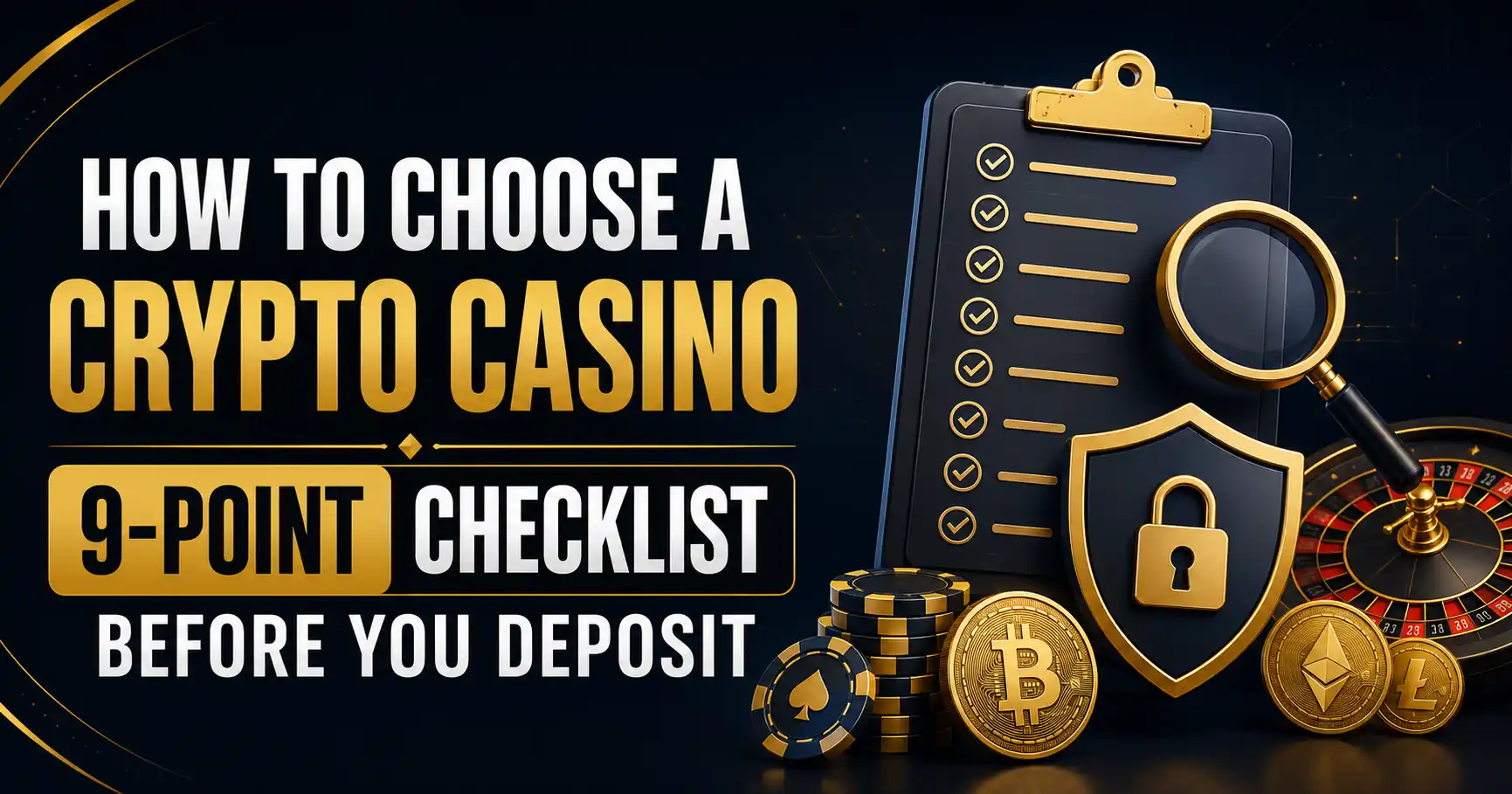
Choosing a crypto casino can be surprisingly difficult. Thousands of games, support for Bitcoin and other cryptocurrencies, and a large welcome bonus may make a platform look competitive, but none of those features necessarily tell you whether you can trust it with your money.
The differences become even harder to spot for beginners. A questionable casino can build a polished website and advertise hundreds of cryptocurrencies just as easily as an established operator. Licensing, payment transparency, legitimate gaming software, and withdrawal policies are much harder to fake.
That means choosing a casino should start with due diligence rather than the size of its welcome offer. Players comparing the best crypto casinos should look beyond headline bonuses and game counts to determine how each platform handles licensing, payments, withdrawals, verification, and player support.
Before depositing BTC, ETH, USDT, or another cryptocurrency, these nine checks can help separate credible crypto casinos from platforms that deserve closer scrutiny.
1. Verify the casino's license
Licensing should be one of the first things you investigate. Don't assume that a "licensed casino" badge at the bottom of a homepage proves anything on its own. A credible operator should identify the regulator, provide its license number or other relevant credentials, and make the information reasonably easy to verify.
Where the regulator provides a public database, search it independently using the casino's company name or license number. The details should correspond with the operator you are considering. A badge that leads nowhere, an unverifiable number, or vague claims about being "fully regulated" are reasons to investigate further.
The company behind the casino matters as well. Check the terms and conditions for an operator name, registered address, governing jurisdiction, and contact details. If you cannot determine which company actually operates the website, resolving a payment or account dispute could become considerably more difficult.
Licensing is not a guarantee that you will have a good experience, but verifiable regulatory information gives you far more to work with than an anonymous website making unsupported claims.
2. Understand the KYC policy before signing up
One attraction of cryptocurrency gambling is that some casinos allow users to deposit directly from a crypto wallet without completing the same identity checks associated with traditional payment methods. However, "no KYC" is not a substitute for security.
Read the casino's verification policy before depositing. Some platforms may permit registration and deposits without identification but reserve the right to request documents before certain withdrawals or when particular account conditions are triggered. Discovering those requirements only after winning is considerably less convenient.
You should therefore distinguish between genuinely crypto-native payments and platforms that advertise anonymous gambling while introducing unexpected verification steps later. Be particularly cautious if an allegedly crypto-only payment process unexpectedly requests card or banking credentials.
KYC requirements can also depend on jurisdiction and applicable regulations. The useful question is not simply whether a casino has KYC, but whether its verification rules are clearly disclosed before you put money on the platform.
3. Check supported cryptocurrencies, networks, and fees
A long list of cryptocurrency logos does not necessarily translate into good payment support. Check which assets can actually be used for deposits and withdrawals, along with the blockchain networks available for each one.
This is especially important for assets that operate across multiple networks. Sending funds over an unsupported network can create a much bigger problem than paying a slightly higher transaction fee.
Then check the financial limits. Minimum deposits, minimum withdrawals, processing charges, conversion costs, and withdrawal limits can materially affect the experience. A casino may support plenty of cryptocurrencies while imposing restrictive cashout limits or additional charges that make some payment options considerably less attractive.
Blockchain network fees are normal, but casino-imposed fees should not come as a surprise. If a platform advertises free withdrawals and then adds an unexplained processing charge at the cashout stage, its payment terms were not sufficiently transparent.
4. Look at who actually provides the games
A casino boasting 5,000 games sounds impressive, but the names behind those games can tell you more than the raw number.
Established software providers such as Evolution, Pragmatic Play, Play'n GO, Relax Gaming, and Nolimit City have recognizable portfolios and operate within regulated parts of the gambling industry. Their games also make it much easier to research information such as return to player rates, volatility, maximum payouts, and game mechanics.
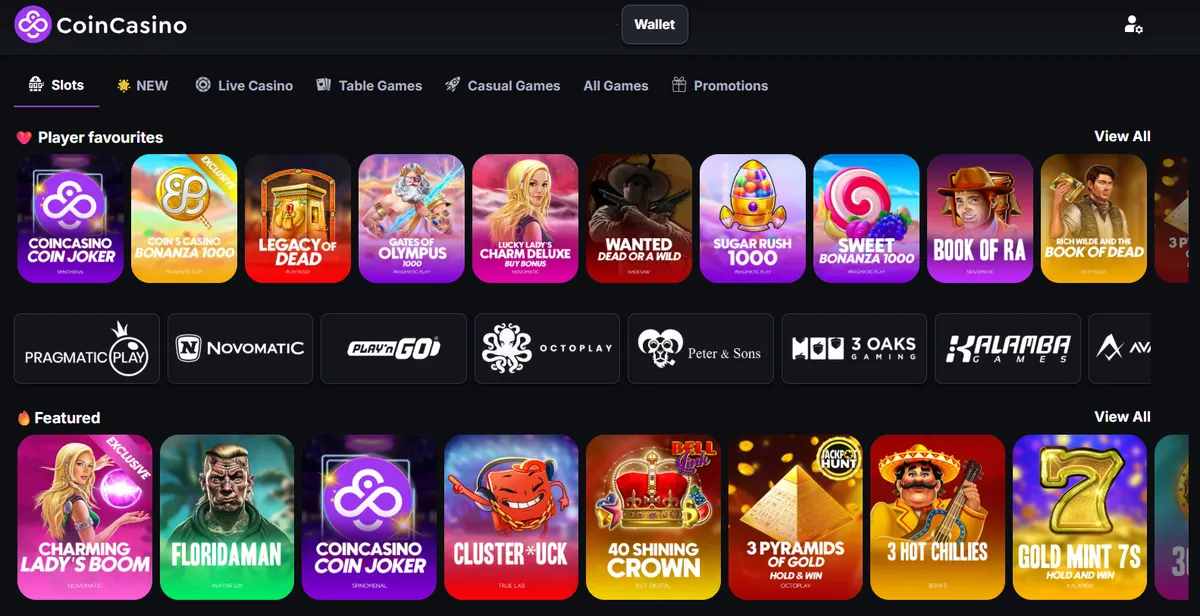
Unknown games deserve additional scrutiny, particularly when they closely resemble established titles but come from unfamiliar developers. A copied name, altered artwork, suspicious jackpot mechanics, or an RTP that cannot be independently checked should make you cautious.
Game libraries are relatively easy for casinos to advertise. Credible software partnerships and independently tested games provide a much more meaningful trust signal.
5. Read the bonus terms, not the headline
The biggest welcome bonus is rarely automatically the best one. What determines the real value of a casino promotion is what you have to do before the bonus or resulting winnings become withdrawable.
Start with the wagering requirement. A $1,000 bonus with a 40x wagering requirement can require substantially more betting than its headline value suggests. Some offers apply wagering only to the bonus, while others calculate it using the deposit and bonus together.
CoinCodex's casino comparisons show just how much these requirements can vary between platforms, with listed offers ranging from zero wagering on some promotions to substantially higher multiples on others.
Also check the deadline, eligible games, maximum bet while using bonus funds, withdrawal restrictions, and whether free-spin winnings are capped. A smaller promotion with simple conditions can be more usable than a huge bonus surrounded by restrictions.
Extremely large bonuses paired with very short deadlines or unusually high rollover requirements deserve particular scrutiny. The headline tells you how much the casino wants you to notice. The terms tell you what the offer is actually worth.
6. Test customer support before depositing
Customer service is easiest to evaluate before there is money at stake. Open the live chat and ask a straightforward question about withdrawals, verification, or a bonus condition. A useful response should be reasonably quick, specific, and consistent with the casino's published terms. Email support can also be tested if the casino does not provide live assistance.
Pay attention to how the agent behaves rather than simply whether someone answers. A support representative should not need your wallet seed phrase, password, private key, or unrelated financial credentials to resolve an ordinary account question.
The real warning signs tend to appear when support avoids direct questions, repeatedly redirects you without resolving anything, or makes statements that contradict the written terms. If getting a clear answer is difficult before depositing, it is unlikely to become easier when a withdrawal is pending.
7. Investigate withdrawals before worrying about deposits
Depositing crypto is usually the easy part. The more useful test of a casino is what happens when you want your money back.
Before playing, find the withdrawal section and check the minimum cashout, maximum withdrawal limits, estimated processing times, verification conditions, fees, and any restrictions associated with bonuses. Some casinos advertise rapid or even instant crypto withdrawals, while others may manually review transactions.
CoinCodex's comparison illustrates why this deserves attention. Casinos can differ significantly in their minimum withdrawal requirements and advertised payout features, even when their overall offerings look similar.
For a first deposit, keeping the amount modest also gives you an opportunity to understand how the platform works before committing more funds. Where practical, experiencing the withdrawal process yourself can tell you considerably more than a flashy homepage.
8. Research the casino's reputation and track record
A new casino is not automatically untrustworthy, and an old casino is not automatically safe. Still, operating history gives you more evidence to investigate.
Search for independent reviews and, more importantly, recurring complaints. A handful of angry reviews is not unusual for any gambling business. A repeated pattern of users alleging withheld withdrawals, unexplained account closures, unexpected KYC demands, or unresponsive support is more meaningful.
CoinCodex also considers operating history when assessing individual platforms. For example, it identifies a long track record as an advantage for some established casinos while treating a short history as a drawback for newer operators.
Reviews should never be treated as definitive proof on their own because testimonials can be manipulated in either direction. Look for patterns across several independent sources and compare complaints with the casino's published policies.
9. Make sure the platform works as advertised
The final check is simple: compare what the casino promises before registration with what it actually provides once you create an account.
Look at whether the advertised cryptocurrencies are genuinely available, whether promotions match their descriptions, and whether the game catalog is accessible in your jurisdiction. The same applies to sportsbooks, mobile functionality, live casino games, and payment options.
Usability matters here too. CoinCodex considers interface quality, mobile support, payment flexibility, game variety, and access to casino and sportsbook products when evaluating different platforms. A functional interface does not prove that a casino is trustworthy, but a confusing payment system or constantly changing terms can make existing risks harder to identify.
One of the clearest warning signs is a substantial difference between the product advertised publicly and the product offered after registration. If important features disappear, payment methods change unexpectedly, or bonus conditions suddenly become less favorable, think carefully before depositing.
Red flags to check before sending crypto
Most questionable casinos do not reveal themselves through one obvious flaw. The warning signs usually accumulate.
An unverifiable license combined with anonymous ownership deserves more concern than either issue viewed in isolation. The same applies when a casino combines unclear withdrawal rules, unknown game providers, unrealistic bonuses, and support agents who cannot answer basic questions.
Off-site payments are another serious reason to investigate. Deposits and withdrawals should follow the process described by the casino. Unexpected redirects, requests to transfer money to unrelated services, or instructions to provide sensitive financial information should not be ignored.
Also watch for hidden fees, pirated or unverifiable games, misleading promotions, and repeated complaints about withheld winnings. None should be dismissed simply because the casino has an attractive website or offers a large number of games.
A good crypto casino should make verification easy
The best way to choose a crypto casino is not to find the platform with the largest bonus or longest game list. It is to find one that gives you enough information to independently check how it operates.
A verifiable license, clear KYC policy, transparent crypto payments, recognizable game providers, understandable bonus rules, responsive support, and straightforward withdrawal conditions all reduce uncertainty before money changes hands. Reputation and operating history provide another layer of evidence, while testing whether the platform delivers what it advertises can expose problems early.
Crypto payments can make deposits and withdrawals fast and convenient, but blockchain transactions also leave little room for correcting a mistake once funds have been sent. Spending a few minutes checking the casino before making the first deposit is considerably easier than trying to investigate it after a problem occurs.
Disclaimer: Gambling involves financial risk and may not be legal in all jurisdictions. Users should check applicable local laws, understand the risks involved, and only gamble with funds they can afford to lose. This article is for informational purposes only and does not guarantee any gambling outcome or recommend any specific casino.
Also read: