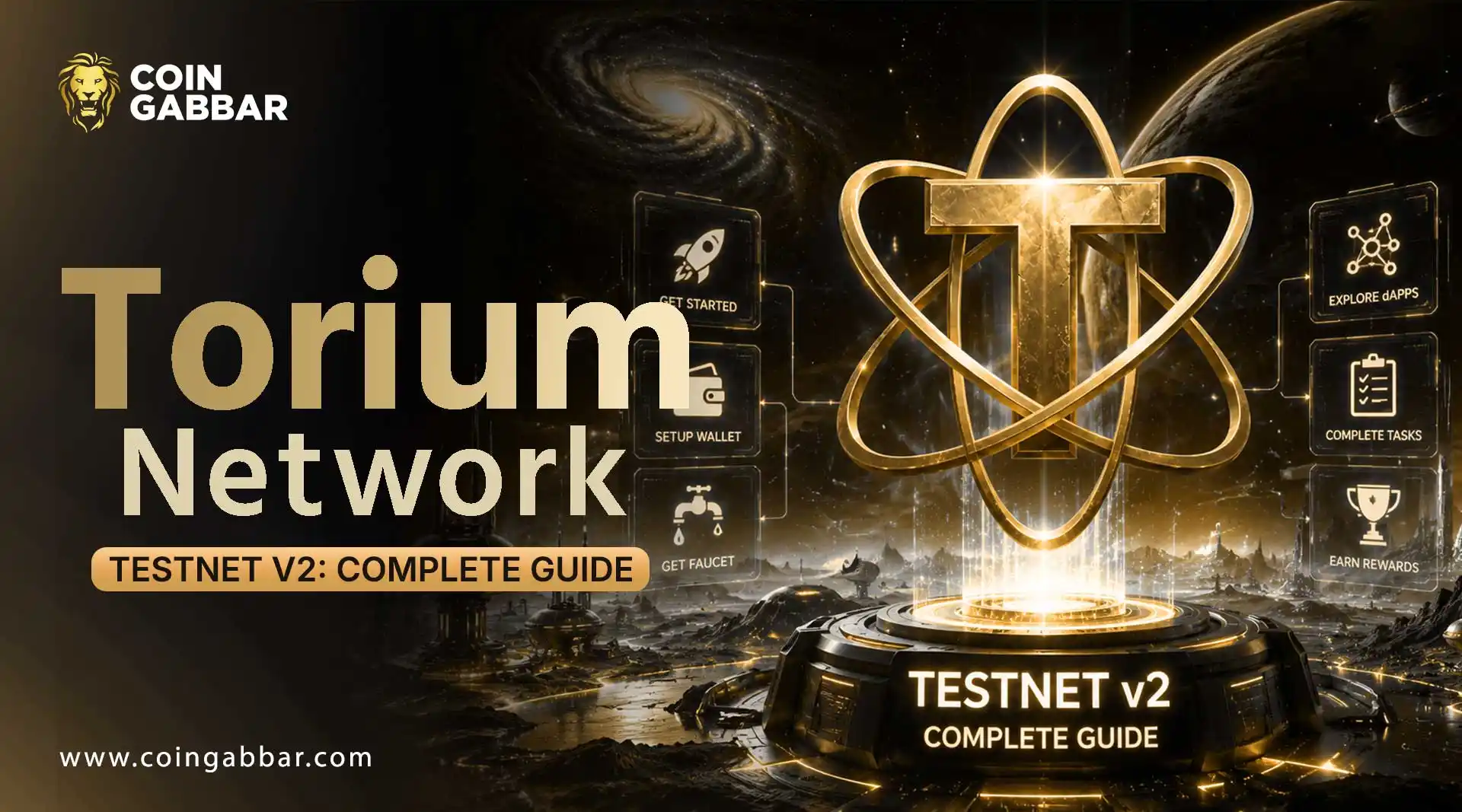
Torium Network Testnet v2: A Complete Guide for Users and Developers

How Does Torium Network Testnet v2 Change the TOR Ecosystem?
If you've been mining TOR from your phone and wondering what's actually happening behind the scenes, here's the short answer: Torium Network Testnet v2 is the biggest step the project has taken since launch. It marks the moment Torium moves from being "just an app" to becoming a real, public blockchain that anyone can see, verify, and build on. In this article, we'll break down what is Torium Network at its core, what this new testnet phase actually changes, and where the project is headed as it works toward its 2026 roadmap goals.
Key Takeaways
Testnet v2 introduces the actual Torium-Chain, a public, EVM-compatible network with real blocks, transactions, and an explorer, separate from the mining app itself.
Daily mining inside the app stays exactly the same; this update affects the project's infrastructure, not user balances or routines.
Developers can now build directly on the platform using familiar tools like MetaMask, Foundry, and Hardhat, thanks to the newly released SDK and Developer Docs.
What Is Torium Network?
Torium Network is a mobile-first blockchain project built around a system called Proof of Participation. Instead of rewarding expensive mining hardware, it rewards people who show up consistently opening the app, starting a mining session, and staying active over time. Since launch, mining has lived entirely inside the Torium Network app, with balances tracked internally as the project builds toward a full public network.
That internal, app-based system is exactly what's changing with this next phase.
What Is Torium Network Testnet v2?
According to Torium Network's official announcement, Testnet v2 is the introduction of the actual TOR Chain, a sovereign, EVM-compatible Layer-1 network that exists publicly, outside the app. Up until now, mining activity has been tracked privately within the app's own system. Testnet v2 changes that by bringing the chain itself into the open: real blocks, real transactions, a public block explorer, and a faucet for test tokens.
Per the Torium Developer Docs, the public Testnet runs under the identifier torium-testnet-1, with an EVM chain ID of 1414484564. It uses a valueless test currency called tTOR, meaning nothing on the testnet carries real value yet it exists purely for building and testing purposes. The documentation is also explicit that testnet deployments and balances should be treated as disposable, since the network may be reset as development continues.
You can view the live network activity directly on the Torium Testnet Explorer.
Network at a Glance
Detail | Value |
Network Name | Torium Testnet |
EVM Chain ID | 1414484564 (0x544f5254) |
Cosmos Chain ID | torium-testnet-1 |
Test Currency | tTOR (valueless) |
Compatibility | Standard EVM tooling |
What Does This Mean for Existing Users?
If you're already mining inside the Torium app, here's the reassuring part: according to Network's official statement on the update, nothing changes in your day-to-day experience. You open the app, start your session, and your balance grows exactly as before. Testnet v2 doesn't touch user mining or rewards directly it's an infrastructure milestone aimed at where the project is going, not a change to how people participate today.
The team has also reaffirmed a promise that matters to its community: users will never need to download a second app to access what they've earned. The app used for daily mining today is designed to remain the home of the network going forward, even as the underlying chain becomes public. It's worth noting this is a stated commitment from the team rather than an independently verifiable fact it reflects intent and direction, not a guaranteed outcome.
Torium SDK: Opening the Doors to Builders
Alongside Testnet v2, the project released its first version of the TOR SDK, a TypeScript-based toolkit that lets developers connect to the network, read on-chain data, transact, and deploy on top of it. This is paired with the newly published Torium Developer Docs, which cover everything from connecting to the testnet to running a local node.
Because it is built as an EVM compatible blockchain, developers don't need to learn a new set of tools from scratch. Standard EVM developer tools: MetaMask for wallet connections, Foundry and Hardhat for smart contract development and testing work with TOR out of the box. For anyone asking how to build on Torium Network, the starting point is straightforward: connect to the public testnet, install the SDK, and use the same development environment already familiar from other EVM chains.
This is essentially a Torium Network EVM Layer 1 explained in practice a sovereign chain that speaks the same technical language as the broader Ethereum ecosystem, lowering the barrier for anyone wanting to build within the Torium blockchain ecosystem.
What's Live, What's Planned, and What's Still a Claim
Since this article touches on mining balances, future token conversion, and an evolving testnet, it's worth being precise about what's actually confirmed versus what's still ahead. Here's how the current information breaks down, based on Torium's official whitepaper and the project's public documentation:
Live right now: The public Test-net is active under chain ID 1414484564 (verifiable on the testnet explorer), and the TypeScript SDK plus Developer Docs are published and usable by builders today.
Officially stated by the platform, not yet independently verified: According to the whitepaper, pre-mainnet TOR balances are intended to convert 1:1 into mainnet TOR at the Token Generation Event. The same document states that the backend database not the testnet chain remains the source of truth for these pre-mainnet mining balances until that conversion happens.
Planned but not yet live: Wider company partnerships beyond Veridian Systems, incentivized testnet participation, and mainnet itself all fall under future roadmap phases rather than current functionality.
Subject to change: Testnet deployments, balances, and even reset schedules are explicitly disposable by design, and the whitepaper itself notes that roadmap timing remains subject to development, market, and regulatory conditions.
Treating these as separate categories rather than one continuous narrative is the more accurate way to read any pre-mainnet crypto project, including Torium.
Real-World Traction: The Veridian Systems Example
Per Torium Network's official statement, the project's partnership with Veridian Systems has already shown what happens when an outside company plugs into the network. Testnet v2, combined with the SDK, makes this kind of integration repeatable other companies will be able to connect to the Torium-Chain and publish tasks the same way Veridian does.
The team has said that additional companies are already reaching out after seeing performance metrics from earlier activity, though these conversations remain informal for now. No new partnerships are officially confirmed beyond Veridian, and any future integrations will stay independent from Network itself. It's a useful signal, though, of genuine interest from outside the immediate community.
Torium Network Roadmap 2026 and What Comes Next
Looking at the Torium Network roadmap 2026, Testnet v2 and the SDK release represent the foundation for everything that follows.
Rather than speaking broadly, here's what Torium's official whitepaper roadmap currently lays out phase by phase:
Phase | Current Official Direction |
Q3 2026 | Mobile wallet expansion, testnet transaction readiness, Torium-Pay planning |
Q4 2026 | Full-scale incentivized, security audits, authority node selection, mainnet readiness |
2027 | Mainnet launch, Token Generation Event (TGE), 1:1 pre-mainnet balance conversion, exchange-listing preparation |
Source: TOR Network Whitepaper, Version 1.2 (May 2026), Section 9: Roadmap Direction.
It's worth remembering that roadmap phases like these are directional plans, not guaranteed dates timelines in crypto development frequently shift, and the whitepaper itself states that roadmap timing remains subject to development, market, and regulatory conditions.
With the chain now technically accessible to outside developers, the next stretch of development is expected to focus on expanding real-world use cases starting with Veridian Systems tasks going live directly inside the app and growing the number of teams building within the ecosystem.
The Torium Chain future depends heavily on this builder activity. As the team has pointed out, real-world value doesn't appear on its own; it has to be built through partnerships, developer interest, and consistent community participation. The broader Network future will likely be shaped by how many independent projects choose to build on top of the chain in the months ahead, alongside continued progress toward a full mainnet launch.
How to Get Involved Right Now
For everyday users, participation hasn't changed keep mining daily through the app as usual. For developers curious about the technical side, here's a simple starting path:
Visit the Torium-Developer Docs to review the network details and setup guide.
Connect to the public test net using the provided chain ID and RPC details.
Install the TypeScript SDK to start reading and writing to the chain.
Use MetaMask, Foundry, or Hardhat whichever tool you're already comfortable with to begin testing TOR smart contract development.
Explore the block explorer and faucet to get familiar with how transactions work on the live test-net.
Conclusion
Testnet v2 is less about a single feature and more about a shift in direction: TOR Network is opening up from a closed, app-only mining system into a public, developer-friendly EVM Layer-1 chain. For users, daily mining stays exactly the same. For builders, it's the first real invitation to plug in, experiment, and shape what the ecosystem becomes over time.
Disclaimer
This article is for informational and educational purposes only and does not constitute financial, investment, or technical advice. Torium Network's testnet is under active development, and features, timelines, and token value are subject to change. Always refer to official sources and do your own research before participating in any crypto network.
Also read: