How to Verify Presale Dashboard Details Before Connecting Your Wallet

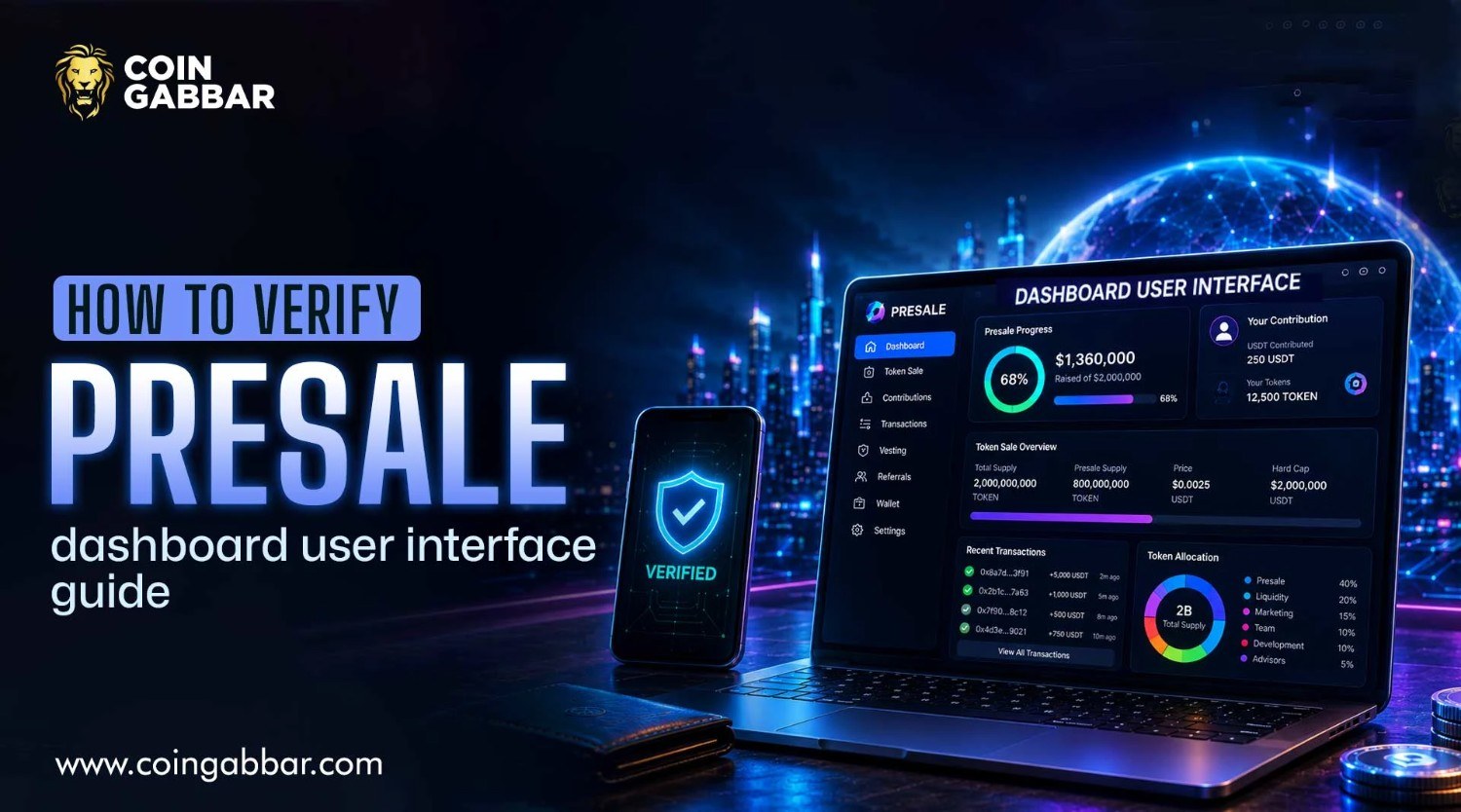
How to Verify Presale Dashboard Safely and Quickly
You open a presale website, see a interface flashing "63% sold," a countdown timer ticking away, and a nice progress bar filling up in real time.
Feels legit, right? Except a interface is just a number on a screen. Anyone with basic coding skills can make that bar move however they want.
That's exactly why how to verify presale dashboard data actually works matters more than most people realize before they connect a wallet.
Most investors just glance at the numbers and trust them blindly. That's how a lot of people end up putting money into something that was never real to begin with. So let's keep this simple and practical.
Why a Dashboard Alone Can't Be Trusted
A interface is basically a front-end display. It pulls numbers from somewhere, sure, but that "somewhere" could be a database the team controls completely, not the actual blockchain.
If a project wants to fake urgency, all they have to do is hardcode a bigger number. That's the whole trick. So the real question isn't what the interface shows you.
It's about how to verify presale dashboard figures match what's actually happening on-chain.
Step 1: Cross-Check With the Blockchain Explorer
This is the single biggest thing you can do. Every legit token sale has a smart contract address, and that address is public.
Paste it into Etherscan, BscScan, or whatever explorer fits the chain, and look at real transactions coming in. If the dashboard says thousands of buyers but the contract shows barely a hundred wallets, something's off.
Learning how to verify presale dashboard claims against raw blockchain data takes maybe five minutes, and it tells you more than the flashy website ever will.
Step 2: Look at Where the Funds Are Actually Going
Presales usually collect funds into a specific wallet or a smart contract. Check that wallet's balance directly. Compare it to the "amount raised" figure shown on the interface.
If the interface claims $2 million raised but the wallet shows a fraction of that, you've found your answer. This step alone is a huge part of how to verify presale dashboard trustworthiness, because money doesn't lie the way a website can.
Step 3: Confirm the Liquidity Lock Is Real
A lot of interfaces mention "liquidity locked" somewhere in small text. Don't take that on faith. Locking services like Unicrypt or Team.
Finance gives you a public link showing exactly how long funds are locked and who can access them. If there's no link, no proof, just a claim, that's a gap you shouldn't ignore.
This is honestly one of the fastest checks in the whole how to verify presale dashboard process.
Step 4: Check If the Contract Has Been Audited
Search for the audit report itself, not just a logo pasted on the homepage. Firms like CertiK or SolidProof publish full reports you can read.
See what they actually flagged, not just the score. A project skipping this step, especially one raising serious money, deserves a second look before you go further with how to verify presale dashboard research.
Step 5: Watch the Pace, Not Just the Percentage
Real presales tend to grow steadily, sometimes with bursts around news or listings.
If a crypto portal number jumps from 20% to 90% overnight with zero explanation, that's unusual. Screenshot the numbers every few hours if you're serious about a project.
Comparing your own snapshots over time is a simple, almost boring way to handle how to verify presale portal accuracy, but it works.
What's Actually Happening in Presales Right Now
September 2026 has been a genuinely active month for token sales. Bitcoin just had its best month of the year, gaining around 24% and pushing prices close to $77,000-$78,000, and that kind of momentum has pulled more attention toward early-stage presales too.
A few names keep showing up across multiple presale trackers this month, spanning categories like payments, meme coins, and DeFi utility. Separately, one tracker highlighted a project that raised over $33 million during its active sale phase, which shows just how much money is flowing into this space right now.
None of this means any of these are automatically safe bets. It just shows why how to verify presale dashboard claims matters even more right now, since more projects are competing for attention and crypto portal numbers are an easy thing to exaggerate when everyone's watching closely.
A Quick Checklist Before You Buy In
Confirm the contract address matches official project links
Cross-check the raised amount with the actual funding wallet
Verify the liquidity lock through a public locking service
Read the audit report, not just the badge
Track interface changes over a few hours, not just once
Risks and Challenges You Might Still Run Into
Even after doing all this, verification isn't always as clean as it sounds. Here's what can still trip you up:
Weak explorers on smaller chains: Not every chain has a solid explorer, and some newer or smaller networks make it genuinely hard to track transactions properly.
This is one of the bigger challenges with how to verify presale dashboard data on lesser-known blockchains, where the tools just aren't as mature.
Timing mismatches: It updates fast, sometimes every few seconds, while blockchain confirmations can lag a bit behind. So even a legit project might show small mismatches for a short window, and that's not automatically a red flag.
Knowing this difference is part of doing how to verify presale dashboard checks without jumping to the wrong conclusion.
Fake audit reports: Some projects paste a report that looks official but was never actually published by the firm they're claiming. Always click through to the auditor's own website and search for the report there directly, instead of trusting a PDF link on the project's page.
Skipping this step defeats the whole point of how to verify presale dashboard research in the first place.
Mid-sale contract changes: Teams can migrate contracts mid-sale, sometimes for real technical reasons, sometimes not.
If the contract address suddenly changes without a clear announcement, treat that as a serious warning sign rather than a minor detail.
Conclusion
A presale dashboard can look polished and still be completely fake. The number on the screen means nothing until you've matched it against the blockchain itself.
Once you get into the habit of doing that, how to verify presale dashboard stats stops feeling like extra work and starts feeling like common sense. Take the ten extra minutes. It's a small price for knowing your money is going somewhere real.
Disclaimer
This article is for informational purposes only and isn't financial advice. Always research independently before investing in any crypto project.
Also read: